
.svg)






%201.avif)
The retail landscape has shifted dramatically over the past decade, with consumers expecting seamless experiences whether they shop online, in-store, or through social channels. For UK retailers running Shopify stores, Shopify point of sale bridges the gap between digital and physical commerce, creating a unified system that manages inventory, customer data, and sales across every touchpoint. This integration eliminates the headaches of managing separate systems whilst providing the flexibility to sell anywhere your customers are.
Understanding how Shopify point of sale fits into your broader retail strategy matters more than ever in 2026, particularly for businesses looking to scale beyond pure eCommerce or add physical locations to their existing online presence.
What Is Shopify Point of Sale
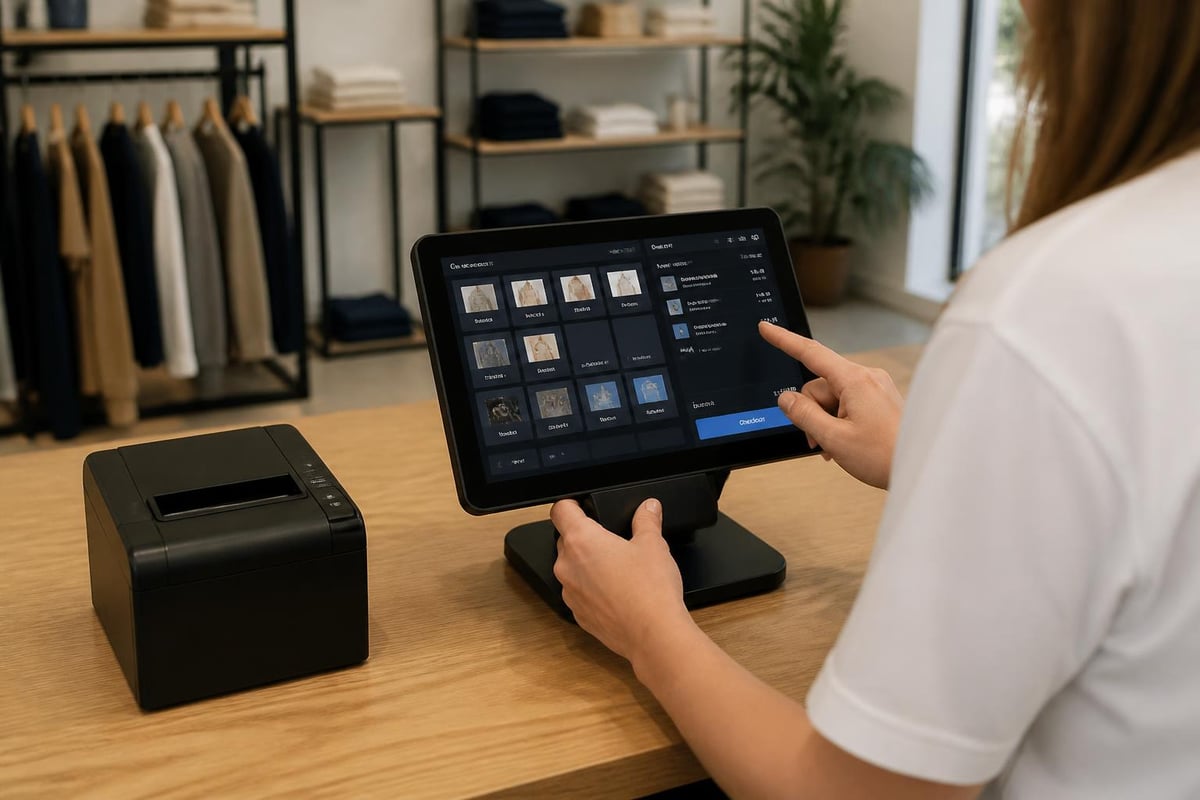
Shopify point of sale is a comprehensive retail solution that transforms mobile devices and iPads into fully functional checkout systems for physical retail locations. The system connects directly to your Shopify admin, ensuring that every sale, whether completed online or in person, flows into a single source of truth for inventory, customer profiles, and reporting.
The platform operates through the Shopify POS app, available for iOS and Android devices, which retailers can use alongside compatible hardware like card readers, receipt printers, and barcode scanners. This flexibility means businesses can start with a minimal investment using just a smartphone and a card reader, then expand to full counter setups as they grow.
Core Components of the System
At its foundation, the system consists of several integrated elements working together:
- The POS app that runs on mobile devices and tablets
- Card readers that accept chip, contactless, and mobile payments
- Inventory management synchronised across all sales channels
- Customer profiles that track purchase history and preferences
- Reporting tools that consolidate data from every location
The real strength lies in how these components communicate with your Shopify store backend. When a customer purchases a product in your physical shop, the inventory count updates automatically online, preventing overselling and maintaining accurate stock levels across channels.

Shopify POS Plans and Pricing Structure
Shopify offers two distinct point of sale tiers in 2026, each designed for different business requirements and scales of operation. Understanding these options helps retailers choose the right configuration without paying for unnecessary features.
Shopify POS Lite comes included with all Shopify subscriptions at no additional cost. This entry-level option provides basic retail functionality suitable for occasional in-person selling, pop-up shops, or businesses just testing physical retail. Lite includes fundamental features like accepting payments, basic inventory tracking, and simple staff permissions.
Shopify POS Pro costs £79 per location per month and unlocks advanced retail capabilities essential for serious brick-and-mortar operations. The Pro tier includes unlimited staff accounts, advanced inventory management, smart inventory counts, and detailed analytics that break down performance by staff member, location, and product category.
| Feature | POS Lite | POS Pro |
|---|---|---|
| Price | Included | £79/location/month |
| Staff accounts | Limited | Unlimited |
| Inventory transfers | No | Yes |
| Store credit | No | Yes |
| Advanced analytics | No | Yes |
| Custom sale attributes | No | Yes |
The financial decision between tiers typically hinges on how central physical retail is to your business model. Brands operating multiple locations or employing several staff members find Pro essential, whilst those selling primarily online with occasional market stalls often manage perfectly well with Lite.
Essential Hardware for Shopify Point of Sale
Setting up Shopify point of sale requires carefully selected hardware that balances functionality, durability, and budget. The platform supports various manufacturers, giving retailers flexibility in building their ideal setup.
Card Readers and Payment Processing
Shopify's official card readers integrate seamlessly with the POS app, supporting chip and PIN, contactless, Apple Pay, and Google Pay transactions. The Shopify Tap & Chip reader costs approximately £49 and handles the vast majority of UK payment preferences. For higher-volume locations, the WisePad 3 offers a more robust build quality and faster processing at around £99.
Beyond Shopify's own hardware, the system works with external payment terminals from providers like Zettle and SumUp, though this may introduce additional complexity in reconciliation and reporting.
Receipt Printers and Cash Drawers
Thermal receipt printers remain standard in most retail environments, with Star Micronics TSP143III models being widely compatible and reliable. These connect via Bluetooth or USB and cost between £150 and £250 depending on specifications.
Cash drawers typically connect to receipt printers and open automatically when processing cash sales. Budget options start around £80, whilst heavy-duty models designed for high-traffic locations can exceed £200.
Barcode Scanners and Label Printers
For retailers with extensive product catalogues, barcode scanners dramatically speed up checkout and inventory processes. Socket Mobile scanners integrate directly with Shopify POS and cost approximately £150 to £300.
Label printers become essential when adding new stock or creating custom product tags. The Brother QL-820NWB handles both standard and durable labels, priced around £200.
Setting Up Your First Shopify POS Location
Implementing Shopify point of sale requires methodical planning to ensure smooth operations from day one. The setup process involves both technical configuration and operational preparation that determines how efficiently your team can serve customers.
Initial Configuration Steps
- Install the Shopify POS app on your iOS or Android device from the respective app store
- Add your retail location in Shopify admin under Settings > Locations
- Assign inventory to your new location, determining which products are available for in-person sales
- Configure tax settings specific to your physical location's jurisdiction
- Connect payment hardware by pairing card readers through the app's hardware settings
- Create staff accounts with appropriate permissions based on roles
- Test transactions using Shopify's test mode before processing real sales
The official Shopify tutorial video provides step-by-step visual guidance through this process, which typically takes 30 to 60 minutes for a basic setup.
When setting up a Shopify store that will support both online and offline channels, consider how products are organised and categorised, as this structure affects both customer experience and operational efficiency across all touchpoints.
Product and Inventory Preparation
Before launching, ensure your product data is comprehensive and accurate. Each item should include clear titles, SKUs, barcodes (if applicable), pricing, and high-quality images. Products missing critical information create friction during checkout and reduce staff efficiency.
Inventory allocation between locations requires strategic thinking. Some businesses maintain separate stock for online and retail to prevent channel conflicts, whilst others prefer a unified pool that automatically allocates based on proximity to customer. The right approach depends on your fulfilment capabilities and customer expectations.
Key Features That Drive Retail Success
Shopify point of sale delivers numerous capabilities that improve both customer experience and operational efficiency. Understanding which features matter most for your business type ensures you leverage the system's full potential.
Omnichannel Customer Profiles
Every transaction creates or updates a customer profile that follows shoppers across channels. When someone purchases in-store, their profile captures that purchase history. If they later buy online, both transaction histories merge into a single view.
This unified data enables powerful marketing opportunities. You can identify customers who buy specific products in-store and retarget them online with complementary items, or recognise loyal retail customers and surprise them with exclusive online discounts.
Staff Management and Permissions
POS Pro allows unlimited staff accounts with granular permission controls. Assign specific roles like "sales associate" with basic checkout access or "manager" with permissions to process refunds, view reports, and adjust inventory.
The system tracks individual staff performance, showing which team members drive the most sales, maintain the highest average order values, or convert browsers into buyers most effectively. These insights inform training priorities and recognise top performers.
Smart Inventory Management
Advanced inventory features in POS Pro include:
- Inventory transfers between locations to rebalance stock
- Purchase orders to reorder products directly from suppliers
- Stock takes using the POS app to audit physical inventory
- Low stock alerts that prevent sellouts of popular items
For retailers operating Shopify Plus stores with multiple locations, these inventory tools become critical infrastructure for maintaining operational efficiency at scale.
Payment Processing and Transaction Fees
Understanding the complete cost structure of Shopify point of sale requires examining both hardware expenses and ongoing transaction fees. These fees vary based on your Shopify subscription tier and payment methods used.
Shopify Payments Card Processing Rates
When using Shopify Payments with Shopify point of sale, UK retailers pay the following in-person card rates in 2026:
| Shopify Plan | In-Person Card Rate |
|---|---|
| Basic | 1.7% + 0p |
| Shopify | 1.6% + 0p |
| Advanced | 1.5% + 0p |
| Plus | 1.4% + 0p |
These rates apply to chip and PIN, contactless, and mobile wallet transactions processed through Shopify's card readers. Online and manually entered transactions incur slightly higher fees.
Alternative Payment Methods
Cash transactions through Shopify point of sale carry no processing fees, though they require careful handling procedures and cash drawer infrastructure. Many retailers encourage card payments due to security, tracking benefits, and reduced banking time.
External payment processors can integrate with Shopify POS, though this typically introduces additional transaction fees on top of your standard Shopify subscription costs. Most businesses find Shopify Payments offers the most streamlined and cost-effective solution.
Integration with Online Store Operations
The seamless connection between Shopify point of sale and your eCommerce store creates operational efficiencies impossible with disconnected systems. This integration touches every aspect of retail management from inventory to customer service.
Unified Inventory Across Channels
When inventory synchronises in real-time, selling a product in-store immediately updates availability online. This prevents the common retail problem of overselling items that appear available online but have actually sold in a physical location.
The system also enables "endless aisle" selling, where staff can complete purchases for items currently out of stock in-store by ordering from online inventory for home delivery. This captures sales that would otherwise be lost whilst maintaining positive customer experiences.
Click and Collect Fulfilment
Buy online, pick up in-store (BOPIS) has become standard customer expectation. Shopify point of sale manages this workflow by alerting staff when online orders are ready for collection, tracking pickup status, and completing the handoff process through the POS app.
Retailers using this model often see higher average order values, as customers making collection trips frequently purchase additional items whilst in-store. The convenience also builds customer loyalty and reduces shipping costs.
Returns and Exchanges Across Channels
Customers increasingly expect to return online purchases in physical stores. Shopify point of sale handles these cross-channel returns smoothly, processing refunds back to original payment methods and updating inventory counts accordingly.
This flexibility reduces friction in the customer journey and demonstrates the kind of service quality that builds long-term brand loyalty. According to Shopify POS reviews, this cross-channel return capability ranks among the most valued features for businesses with both online and offline presence.

Analytics and Reporting Capabilities
Data-driven decision making separates thriving retailers from those merely surviving. Shopify point of sale provides comprehensive reporting that reveals patterns, opportunities, and areas requiring attention across your retail operations.
Sales Performance Metrics
The analytics dashboard breaks down sales by countless dimensions including time period, location, staff member, product, category, and customer segment. This granularity helps identify which products perform best in physical retail versus online, which staff members need additional training, and which times of day generate peak traffic.
Custom reports allow retailers to answer specific questions about their business, such as average transaction value by day of week, conversion rates from browsers to buyers, or how promotional discounts impact margin.
Inventory Insights
Understanding inventory movement prevents both stockouts and excess inventory tying up capital. Reports show which products sell quickly versus those gathering dust, informing purchasing decisions and markdown strategies.
The inventory forecast feature predicts when stock will run out based on historical sales velocity, enabling proactive reordering before popular items disappear from shelves.
Customer Behaviour Analysis
Customer reports reveal purchasing patterns, frequency, and lifetime value. Identify your most valuable customers, understand what they buy together, and spot opportunities for personalised marketing.
For businesses focused on conversion rate optimisation, these customer insights inform both online and offline experience improvements that drive revenue growth.
Shopify POS for Different Business Types
Different retail formats have unique requirements that Shopify point of sale addresses through flexible configuration and diverse feature sets. Understanding how the system supports various business models helps retailers maximise value.
Retail Shops and Boutiques
Traditional high street shops benefit from Shopify point of sale's full feature set, particularly unlimited staff accounts, advanced inventory management, and detailed analytics. These businesses typically run POS Pro to manage multiple employees and track performance across different product categories.
Integration with online stores means boutiques can compete with larger retailers by offering omnichannel convenience whilst maintaining personalised service that builds customer relationships.
Pop-Up Shops and Markets
Temporary retail requires portable, quick-setup solutions. A smartphone or tablet with a Shopify card reader provides everything needed for market stalls or pop-up events. The lightweight hardware packs easily whilst maintaining professional checkout experiences.
POS Lite often suffices for occasional selling, though businesses running regular pop-ups may justify Pro for better analytics and customer data capture that fuels future marketing.
Restaurants and Hospitality
Whilst Shopify point of sale wasn't specifically designed for food service, many cafes and quick-service restaurants use it successfully. The system handles basic ordering, payment processing, and inventory tracking for food businesses without complex table service requirements.
Limitations include lack of native table management and kitchen display systems, which dedicated restaurant POS solutions handle better. However, for coffee shops, bakeries, and grab-and-go concepts, Shopify POS provides adequate functionality at competitive pricing.
Service-Based Businesses
Salons, spas, and studios use Shopify point of sale for retail product sales alongside their services. The system tracks product inventory whilst integrating with appointment booking systems through apps from the Shopify App Store.
This hybrid approach allows service businesses to build retail revenue streams using familiar Shopify infrastructure rather than adopting separate POS systems.
Common Challenges and Solutions
Despite its strengths, Shopify point of sale presents certain limitations and challenges that retailers should understand before committing. Awareness of these issues enables proactive planning and realistic expectations.
Offline Functionality Limitations
Shopify POS requires internet connectivity for most operations, though it can process sales offline in emergency situations. Transactions completed offline sync when connection restores, but staff cannot access customer profiles, check inventory at other locations, or apply certain discounts whilst disconnected.
Solution: Ensure reliable internet at retail locations through redundant connections. Many retailers maintain both fixed broadband and mobile hotspot backup to prevent connectivity disruptions during busy periods.
Hardware Compatibility Constraints
Not all retail hardware works seamlessly with Shopify point of sale. Some barcode scanners, receipt printers, and payment terminals require specific configurations or aren't supported at all.
Solution: Research hardware compatibility thoroughly before purchasing. Stick with Shopify-recommended devices when possible, and test all equipment during setup rather than discovering incompatibilities during your first busy trading day.
Learning Curve for Staff
Transitioning to new POS systems requires training time and temporary productivity losses. Staff accustomed to traditional till systems may initially struggle with tablet-based interfaces and new workflows.
Solution: Schedule comprehensive training before launch, create reference materials for common tasks, and maintain patient expectations during the adjustment period. Most teams become proficient within one to two weeks of regular use.
According to merchant experiences shared on YouTube, the initial learning investment pays dividends through improved efficiency once staff master the system.
Advanced POS Pro Features Worth Considering
For retailers serious about physical commerce, Shopify POS Pro unlocks capabilities that justify its £79 monthly cost per location through improved operations and customer experience.
Custom Sale Attributes
Add custom data to transactions such as "gift purchase," "referred by," or "marketing source." This metadata enriches analytics and enables sophisticated customer segmentation for targeted marketing campaigns.
These attributes help answer questions like "which marketing channels drive in-store traffic?" or "what percentage of sales are gift purchases versus personal use?" that inform strategic decisions.
Store Credit and Gift Cards
Issue store credit for returns or customer service recovery, creating future purchase commitment whilst maintaining positive relationships. Physical and digital gift cards drive new customer acquisition when recipients visit your store or website.
The integrated gift card system tracks balances across channels, allowing customers to purchase gift cards online and redeem them in-store or vice versa.
Exchange-Only Returns
Process returns that must be exchanged for different products rather than refunded, protecting margins whilst maintaining customer satisfaction. This feature particularly benefits fashion retailers managing size exchanges and seasonal returns.
Staff Permissions Granularity
Control exactly which functions each staff member can access, from basic checkout-only permissions for new employees to full administrative access for managers. This security reduces errors and prevents unauthorised discounting or inventory adjustments.
Comparing Shopify POS to Alternatives
The retail POS market offers numerous options, each with distinct strengths and target audiences. Understanding where Shopify point of sale fits helps retailers make informed decisions based on their specific requirements.
TechRadar's comparison of the best POS systems evaluates Shopify alongside Square, Lightspeed, and other leading platforms based on features, pricing, and suitability for different business types.
Shopify POS vs Square
Square pioneered accessible mobile payments and remains a strong competitor, particularly for service businesses and restaurants. Square's free basic plan undercuts Shopify's pricing, though Shopify provides superior eCommerce integration for businesses prioritising online sales.
Retailers already running Shopify stores online gain significant advantages choosing Shopify POS due to native integration, whilst businesses focused primarily on physical retail with minimal online presence may find Square more appropriate.
Shopify POS vs Lightspeed
Lightspeed targets larger, multi-location retailers with complex inventory and purchasing requirements. Its retail-specific features surpass Shopify in areas like purchase orders, supplier management, and advanced inventory controls.
However, Lightspeed's higher pricing and steeper learning curve make it excessive for smaller operations. Businesses planning significant retail expansion may eventually outgrow Shopify POS and migrate to Lightspeed, though most retailers find Shopify sufficient for their needs.
Decision Criteria Summary
Choose Shopify point of sale if you:
- Already operate a Shopify online store
- Prioritise seamless omnichannel integration
- Need scalable solutions that grow with your business
- Value ecosystem benefits of Shopify apps and integrations
Consider alternatives if you:
- Operate primarily offline with minimal eCommerce plans
- Require highly specialised features for restaurants or complex retail
- Need the absolute lowest cost entry point with no online store
Future Developments and Roadmap
Shopify continues evolving its point of sale offering, with recent updates and anticipated developments shaping how retailers operate in coming years. Staying informed about these changes helps businesses plan infrastructure investments and operational strategies.
Recent Platform Improvements
Throughout 2025 and early 2026, Shopify introduced several POS enhancements including improved offline mode capabilities, enhanced customer search functionality, and streamlined checkout flows that reduce transaction time. The ongoing TechRadar review notes these improvements addressing previously identified limitations.
Enhanced analytics arrived with customisable dashboards allowing retailers to surface the metrics most relevant to their business without wading through generic reports. This personalisation saves management time whilst improving decision quality.
Anticipated Feature Developments
Industry speculation and Shopify's public roadmap suggest upcoming capabilities around advanced customer segmentation, improved subscription management for retail contexts, and deeper integration with emerging payment technologies.
Academic research into intelligent POS systems and retail verification technologies hints at innovations that may eventually integrate into mainstream platforms like Shopify, including AI-powered inventory predictions and automated fraud detection.
For businesses working with Shopify development specialists, custom features can extend POS capabilities beyond out-of-box functionality, creating competitive advantages through bespoke solutions.
Security and Compliance Considerations
Handling customer payments and personal data requires robust security measures and regulatory compliance. Shopify point of sale addresses these requirements through multiple layers of protection and built-in compliance features.
PCI DSS Compliance
All card transactions processed through Shopify Payments meet Payment Card Industry Data Security Standard (PCI DSS) requirements. Shopify maintains Level 1 PCI DSS certification, the highest security standard in the payments industry, protecting both merchants and customers.
Retailers using Shopify Payments inherit this compliance rather than managing certification independently, significantly reducing administrative burden and technical requirements.
Data Protection and Privacy
Customer data collected through Shopify point of sale falls under UK GDPR regulations. The platform provides tools for managing consent, handling data access requests, and implementing retention policies that comply with privacy laws.
Retailers remain responsible for policies and procedures around data collection and use, though Shopify's infrastructure handles technical compliance requirements like encryption, secure storage, and audit logging.
Physical Security Best Practices
Beyond digital security, physical retail requires sensible operational security:
- Secure devices when not in use to prevent theft of hardware containing customer data
- Implement staff access controls limiting system permissions to necessary functions
- Regular cash drawer reconciliation identifying discrepancies before they become significant
- Clear refund and discount policies preventing internal fraud through excessive staff privileges
These operational measures complement Shopify's technical security, creating comprehensive protection for both business and customer interests.
Getting the Most from Shopify Point of Sale
Maximising return on investment from Shopify point of sale requires strategic implementation and ongoing optimisation. Retailers who treat POS as core infrastructure rather than simple checkout tools achieve superior results.
Staff Training and Engagement
Comprehensive training ensures staff can execute advanced functions like customer profile lookup, inventory checks across locations, and processing complex returns. Beyond basic operation, educate teams on how their POS usage affects business metrics they influence.
When staff understand that capturing customer email addresses enables future marketing, or that noting purchase occasions in sale attributes improves targeting, they become partners in growth rather than passive system operators.
Regular Performance Reviews
Schedule monthly reviews of POS analytics examining trends in average order value, conversion rates, and product performance. These sessions identify opportunities for merchandising improvements, staffing adjustments, and inventory optimisation.
Compare performance across locations if operating multiple sites, identifying best practices at high-performing stores that can transfer to underperforming locations.
Integration with Broader Strategy
Shopify point of sale should connect to your overall retail and marketing strategy. Use in-store customer data for email campaigns, retarget online visitors who haven't purchased with in-store exclusive offers, and create loyalty programmes that reward omnichannel engagement.
For retailers focused on improving conversion rates, the combination of online behavioural data and in-store purchase patterns reveals insights impossible from either channel alone.
Continuous Improvement Mindset
Technology evolves rapidly. Review new Shopify POS features quarterly, assess whether hardware upgrades improve efficiency, and solicit staff feedback about workflow friction points. This continuous improvement approach prevents operational stagnation and maintains competitive advantage.
Working with experienced Shopify support partners provides ongoing guidance as your retail operations evolve, ensuring you leverage platform capabilities fully whilst avoiding common pitfalls.
Shopify point of sale offers UK retailers comprehensive tools for unifying online and offline commerce through seamless integration, flexible hardware options, and powerful analytics. The platform scales from occasional pop-up selling to multi-location retail operations whilst maintaining the same core infrastructure that powers your eCommerce store. Whether you're launching your first physical location or optimising existing stores, understanding how to leverage Shopify POS capabilities determines how effectively you serve customers across every touchpoint. Futur Media helps ambitious UK brands build high-performing Shopify ecosystems that connect digital and physical retail seamlessly, from initial store design through ongoing optimisation and support.



.svg)