
.svg)





%201.avif)
Modern eCommerce demands more than template-based storefronts. As customer expectations evolve and brands seek differentiation through unique digital experiences, traditional monolithic platforms can feel restrictive. Headless Shopify has emerged as a compelling solution for ambitious brands that need complete control over their frontend whilst leveraging Shopify's robust commerce infrastructure. This architectural approach separates the presentation layer from the commerce engine, enabling unprecedented flexibility in how products are displayed and sold across multiple channels. However, the decision to adopt headless Shopify isn't straightforward, requiring careful consideration of technical capabilities, budget, and long-term business objectives.
What Is Headless Shopify Architecture
Headless Shopify refers to a decoupled architecture where Shopify's backend commerce functionality operates independently from the frontend presentation layer. Unlike traditional Shopify stores where the theme controls both data management and display, headless Shopify uses APIs to connect the commerce engine to custom-built frontends.
The separation creates distinct layers. Shopify manages inventory, payments, checkout, and order processing through its Admin API and Storefront API. Meanwhile, developers build the customer-facing experience using modern frameworks like React, Vue, or Next.js. This division enables brands to create completely bespoke shopping experiences whilst maintaining Shopify's reliable commerce foundation.
How the Storefront API Powers Headless Commerce
Shopify's Storefront API serves as the communication bridge between backend and frontend systems. It exposes product data, collections, customer information, and cart functionality through GraphQL queries, allowing developers to request precisely the data they need.
This API-first approach differs fundamentally from Liquid templating. Rather than rendering pages server-side through Shopify's infrastructure, the frontend application fetches data and constructs pages independently. The result is faster page loads, smoother interactions, and greater control over user experience.

Key architectural components include:
- Backend commerce engine handling business logic
- Storefront API providing data access
- Custom frontend application built with modern frameworks
- Content management system (optional) for marketing content
- CDN for optimised content delivery
The headless approach also enables omnichannel experiences. A single Shopify backend can power multiple frontends simultaneously, from websites to mobile apps, digital kiosks, and voice commerce platforms.
Benefits of Choosing Headless Shopify
The shift to headless architecture delivers tangible advantages for brands with specific requirements. Performance improvements top the list, as developers can implement advanced optimisation techniques impossible within traditional theme constraints.
Performance and speed gains:
Custom frontends built with frameworks like Next.js leverage static site generation and incremental static regeneration. Pages load nearly instantaneously, reducing bounce rates and improving conversion potential. Unlike theme-based stores that load unnecessary JavaScript, headless builds include only essential code.
Progressive Web App (PWA) capabilities become achievable, enabling app-like experiences directly in browsers. Offline functionality, push notifications, and home screen installation transform how customers interact with your brand.
Unlimited Design Flexibility
Traditional Shopify themes impose structural limitations. Even with extensive customisation, you're working within predetermined frameworks. Headless Shopify removes these constraints entirely.
Designers can implement any visual concept without compromising on functionality. Complex animations, unconventional navigation patterns, and interactive product configurators become straightforward to build. The frontend serves purely presentational purposes, free from commerce logic constraints.
This flexibility particularly benefits brands with strong visual identities or unique product presentation requirements. Fashion retailers can create immersive lookbooks, while technical products can integrate 3D configurators or AR try-on features.
| Traditional Shopify | Headless Shopify |
|---|---|
| Theme-based limitations | Complete design freedom |
| Predefined section structures | Custom component architecture |
| Limited animation capabilities | Advanced interaction possibilities |
| Single frontend constraint | Multi-channel flexibility |
Enhanced Customisation and Integration Capabilities
Headless architecture simplifies complex integrations. Because data flows through APIs, connecting third-party services becomes more straightforward than working within theme limitations.
Enterprise resource planning (ERP) systems, product information management (PIM) platforms, and custom databases integrate cleanly. Marketing automation tools, personalisation engines, and loyalty programmes connect without wrestling with Liquid constraints.
For brands requiring advanced Shopify development, headless opens possibilities that theme-based builds cannot match. Complex business logic, custom pricing rules, and sophisticated product configurations become manageable.
Challenges and Considerations
Whilst headless Shopify offers compelling benefits, it introduces complexities that traditional builds avoid. The decision requires honest assessment of technical capabilities, budget, and business needs.
Development complexity increases significantly:
- Frontend and backend require separate development expertise
- API integration demands solid technical knowledge
- Custom solutions need ongoing maintenance and updates
- Testing complexity grows with architectural separation
Traditional Shopify builds benefit from Shopify's managed infrastructure. Updates, security patches, and performance optimisations happen automatically. Headless frontends require dedicated maintenance, monitoring, and optimisation efforts.
Cost Implications and Resource Requirements
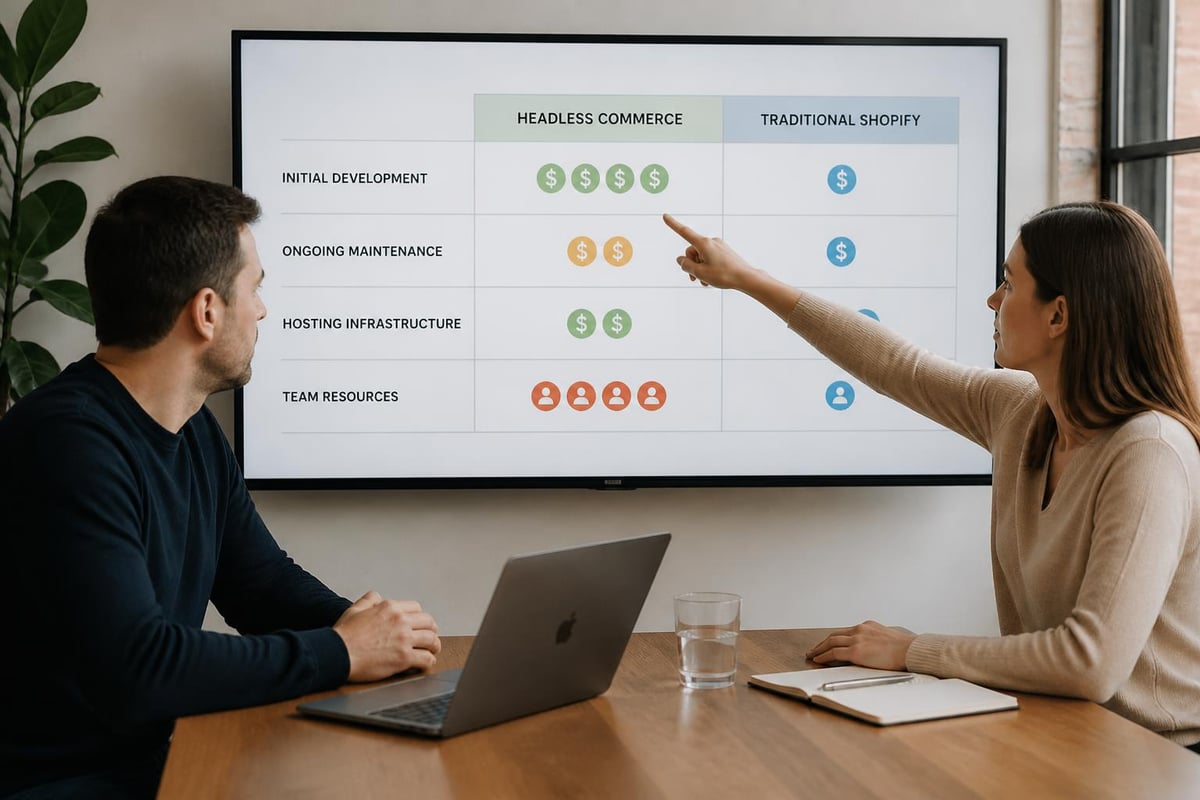
Budget represents the most significant barrier for many businesses. Headless Shopify projects typically cost substantially more than theme-based builds, both initially and ongoing.
Development costs include frontend application creation, API integration, checkout implementation, and testing across devices and browsers. Unlike purchasing a theme for hundreds of pounds, headless builds often require five-figure investments minimum.
Ongoing costs compound through hosting (separate from Shopify), development resources for updates, and potential third-party service fees. Teams need frontend developers, backend specialists, and DevOps expertise, whilst traditional builds might require only Shopify theme developers.
Typical cost considerations:
- Initial frontend development (£15,000–£100,000+)
- Backend customisation and integration (£5,000–£30,000)
- Monthly hosting and infrastructure (£100–£1,000+)
- Ongoing development and maintenance (£2,000–£10,000+ monthly)
- Additional tooling and service subscriptions
SEO Challenges in Headless Environments
Search engine optimisation requires careful planning with headless Shopify. Unlike traditional stores where Shopify handles technical SEO fundamentals, headless implementations demand manual configuration.
SEO for headless Shopify requires attention to server-side rendering, metadata management, structured data implementation, and crawlability. JavaScript-heavy frontends can prevent search engines from indexing content properly without correct rendering strategies.
Metadata and heading structures need deliberate implementation. As this resource on headless Shopify metadata explains, proper semantic HTML and meta tag management become developer responsibilities rather than theme defaults.
Dynamic routing, canonical URLs, and XML sitemaps all require custom implementation. For brands investing in Shopify SEO strategies, ensuring the headless frontend supports optimisation efforts is critical.
When Headless Shopify Makes Commercial Sense
Not every business benefits from headless architecture. The investment only makes sense when specific requirements align with headless capabilities.
Ideal candidates for headless Shopify:
- Enterprise brands with complex, unique UX requirements
- Multi-channel retailers selling across web, mobile, and physical touchpoints
- Businesses requiring extensive third-party integrations
- Brands with strong in-house development teams
- Companies needing extreme performance optimisation
- Retailers with unique product configuration needs
Conversely, businesses with straightforward requirements, limited budgets, or small technical teams typically achieve better results with traditional Shopify builds. Theme-based stores deliver excellent performance and conversion rates when properly designed and optimised.
Assessing Your Technical Readiness
Before committing to headless Shopify, evaluate your team's capabilities honestly. Successful headless projects require ongoing technical involvement, not just initial development.
Does your team include experienced frontend developers comfortable with React, Vue, or similar frameworks? Can they debug API issues, optimise bundle sizes, and implement proper caching strategies? Will you rely on agencies for every update, or can internal resources handle routine changes?
As discussed in this Shopify Community thread about getting started with headless, even Liquid knowledge becomes less relevant, replaced by JavaScript expertise and API familiarity.
Popular Technology Stacks for Headless Shopify
Several frontend frameworks and tools have emerged as popular choices for headless Shopify builds. Each offers different strengths depending on project requirements.
| Framework | Best For | Key Advantages |
|---|---|---|
| Next.js | Most projects | SSR, SSG, excellent performance |
| Gatsby | Content-heavy sites | Static generation, GraphQL |
| Hydrogen | Shopify-optimised builds | Native Shopify integration |
| Vue/Nuxt | Vue ecosystem preference | Progressive framework |
Shopify Hydrogen and Oxygen
Shopify developed Hydrogen specifically for headless commerce. This React-based framework includes pre-built components optimised for Shopify's Storefront API, reducing development time and complexity.
Hydrogen pairs with Oxygen, Shopify's hosting platform designed for headless storefronts. Together, they offer tighter integration than generic frameworks, though they introduce platform lock-in considerations.
For brands new to headless, Hydrogen reduces complexity whilst maintaining flexibility. Pre-built cart, product, and collection components accelerate development, whilst customisation remains possible for unique requirements.
Content Management in Headless Builds
Traditional Shopify stores manage content through the Shopify admin, pages, and blog functionality. Headless architectures often require separate content management systems for flexibility beyond product data.
Popular headless CMS options include:
- Contentful for enterprise-scale content management
- Sanity for developer-friendly structured content
- Strapi for open-source flexibility
- Prismic for marketing team accessibility
Integrating a headless CMS creates additional complexity and cost, but enables marketing teams to manage content independently from developers. Rich media libraries, content scheduling, and multi-language support become more powerful than Shopify's native capabilities.
Some brands choose Strapi with headless Shopify for enhanced content flexibility, particularly when managing extensive editorial content alongside commerce functionality.

Migration Path to Headless Shopify
Transitioning from traditional Shopify to headless requires strategic planning. Unlike theme changes, headless migration involves fundamental architectural shifts.
Migration planning considerations:
- Audit current functionality and identify critical features
- Define technical requirements and select frontend framework
- Plan phased rollout versus complete rebuild approach
- Establish testing protocols for commerce functionality
- Prepare SEO preservation strategy
- Brief stakeholders on timeline and resource requirements
For businesses already on Shopify considering headless, the Shopify migration process differs from platform migrations. Your commerce data remains in Shopify, but the customer-facing experience requires complete rebuilding.
Phased approaches mitigate risk. Some brands launch headless frontends for specific product lines or regions before full migration. Others maintain traditional themes as fallbacks during initial headless deployment.
Preserving SEO Value During Migration
SEO preservation during headless migration requires meticulous planning. URL structures, redirects, canonical tags, and structured data all need careful implementation to avoid ranking losses.
Ensure your development team understands technical SEO requirements from project inception. Server-side rendering or static generation prevents indexing issues common with client-side rendered applications. Metadata, alt text, and heading hierarchies need programmatic implementation rather than relying on theme defaults.
Working with specialists in conversion rate optimisation during migration helps ensure new frontends maintain or improve performance metrics beyond rankings.
Making the Headless Decision
Choosing headless Shopify represents a significant strategic commitment. The architecture, costs, and trade-offs demand careful evaluation against business objectives.
For most growing eCommerce brands, traditional Shopify builds deliver excellent results at lower cost and complexity. Modern themes offer impressive flexibility, and Shopify's ecosystem provides robust solutions for most requirements.
However, brands with specific needs around performance, customisation, or multi-channel commerce find headless architecture transformative. The key lies in honest assessment of whether your requirements justify the investment.
Questions to guide your decision:
- Do your UX requirements exceed traditional theme capabilities?
- Can you sustain ongoing development costs?
- Does your team possess necessary technical expertise?
- Will the performance gains justify complexity?
- Do you need truly omnichannel commerce?
Many ambitious UK brands benefit from strategic Shopify consulting before committing to headless. Professional assessment helps determine whether headless architecture aligns with commercial objectives or if optimised traditional builds better serve your needs.
Future of Headless Commerce
Headless architecture continues evolving rapidly. Shopify's investment in Hydrogen signals commitment to supporting headless approaches, whilst maintaining traditional theme options for businesses with different needs.
Composable commerce, where brands assemble best-of-breed services through APIs, builds on headless foundations. This approach lets businesses swap components without complete rebuilds, though it increases architectural complexity further.
Edge computing and distributed systems are making headless implementations faster and more cost-effective. As technology matures and development tools improve, barriers to headless adoption may lower, making it accessible to more businesses.
Headless Shopify delivers powerful capabilities for brands with specific performance, customisation, or multi-channel requirements, but demands significant technical and financial investment. Understanding the architecture, weighing benefits against complexity, and honestly assessing your resources ensures you make the right decision for your business. Whether you're exploring headless possibilities or need expert guidance on the best approach for your eCommerce store, Futur Media brings deep Shopify expertise to help ambitious UK brands build high-performing online stores that drive measurable growth.



.svg)