
.svg)





%201.avif)
Every eCommerce store loses potential revenue to abandoned carts. The average abandonment rate hovers between 67% and 79%, meaning roughly three out of four shoppers leave without completing their purchase. For UK Shopify merchants, this represents a significant opportunity. Implementing effective shopify abandoned cart recovery strategies can reclaim 15-25% of those lost sales, translating to substantial revenue gains without increasing marketing spend. The difference between stores that recover effectively and those that don't often comes down to strategic automation, proper timing, and customer-centric messaging.
Understanding Shopify Abandoned Cart Behaviour
Shopify's built-in analytics track abandoned carts automatically when customers add items but leave without purchasing. The platform captures the customer's email address if they've reached the checkout stage, creating a valuable recovery opportunity.
Common reasons customers abandon include:
- Unexpected shipping costs revealed at checkout
- Mandatory account creation requirements
- Complicated or lengthy checkout processes
- Payment security concerns
- Comparison shopping across multiple sites
- Distraction or interruption during purchase
Research from abandoned cart recovery benchmarks shows that addressing these friction points systematically can dramatically improve conversion rates. The window for recovery is narrow-most successful recoveries happen within the first 24 hours, with diminishing returns after 72 hours.
The Financial Impact of Cart Abandonment
For a Shopify store generating £50,000 monthly revenue with a 75% abandonment rate, approximately £150,000 worth of initiated transactions are being lost. Recovering just 20% of those abandoned carts would add £30,000 to monthly revenue-a 60% increase without acquiring a single new customer.

The mathematics makes clear why shopify abandoned cart recovery deserves dedicated attention. Unlike paid advertising or SEO, which require continuous investment, recovery systems work on traffic you've already paid to acquire.
Setting Up Shopify's Native Recovery Features
Shopify provides built-in abandoned cart recovery through automated email sequences. Setting this up correctly forms the foundation of any recovery strategy.
Enabling Automated Cart Recovery Emails
Navigate to Settings > Checkout > Customer contact method and ensure you're collecting email addresses before the payment step. This captures contact information early, maximizing your recovery database.
Configuration steps:
- Go to Settings > Notifications
- Select "Abandoned checkout" from the customer notifications section
- Enable the automated email toggle
- Customize the email template with your branding
- Set the send delay (recommended: 1 hour after abandonment)
The default Shopify template includes the cart contents, product images, and a direct checkout link. While functional, customization significantly improves performance. Test different subject lines, preview text, and call-to-action buttons to optimize open and click-through rates.
Timing Your Recovery Sequence
Single emails recover some carts, but multi-touch sequences perform substantially better. Industry data suggests a three-email sequence as optimal:
| Timing | Purpose | Expected Recovery | |
|---|---|---|---|
| First | 1-2 hours | Reminder, convenience | 40-50% of total |
| Second | 24 hours | Social proof, urgency | 30-35% of total |
| Third | 72 hours | Final reminder, incentive | 15-20% of total |
The first email captures customers who were genuinely interrupted. The second targets those comparison shopping or hesitant. The third serves as a final opportunity, often including a small discount for fence-sitters. Comprehensive recovery strategies demonstrate that this cadence balances persistence with customer respect.
Advanced Email Optimization Techniques
Moving beyond Shopify's default emails requires strategic thinking about customer psychology and persuasion.
Personalization Beyond First Names
Effective shopify abandoned cart recovery emails leverage data to create relevance. Include the specific products abandoned, reference browsing behaviour if available, and segment by customer type (first-time visitor versus returning customer).
High-performing personalization elements:
- Product recommendations based on cart contents
- Customer-specific pricing or loyalty discounts
- Location-based shipping information
- Previously viewed items as cross-sell opportunities
Segmentation matters significantly. A returning customer who's purchased three times previously receives different messaging than a first-time visitor. The former needs a gentle reminder; the latter may need reassurance about quality, shipping, or return policies.
Subject Line Testing and Optimization
Subject lines determine whether your recovery email gets opened. Testing reveals what resonates with your specific audience, but general principles hold across industries.
Strong performers typically:
- Create curiosity without clickbait
- Reference the abandoned item specifically
- Use personalization tokens thoughtfully
- Communicate urgency when genuine
- Ask questions that prompt engagement
Avoid aggressive or manipulative language. "Still interested in your canvas backpack?" outperforms "WAIT! Your cart is expiring!" for most quality brands. The case study of Ridgeline Outdoor Co. demonstrates how authentic, brand-aligned messaging contributed to reducing abandonment from 79% to 48%.
Preventing Abandonment Through UX Optimization
Recovery is valuable, but prevention is more profitable. Every cart you prevent from abandoning saves the cost and effort of recovery while improving customer experience.
Checkout Process Refinement
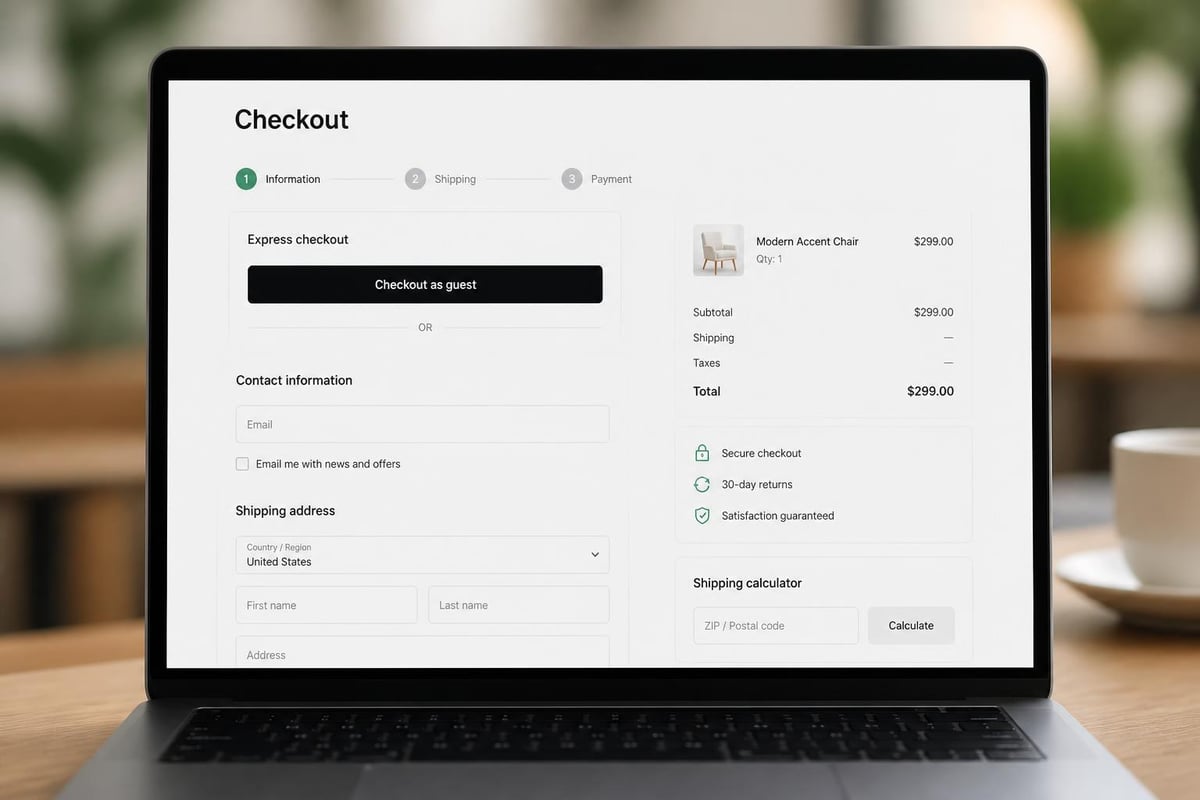
Shopify's checkout is already streamlined, but configuration choices impact abandonment rates significantly. Enable Shop Pay for one-click purchasing. Offer guest checkout prominently. Minimize form fields to essential information only.
Critical checkout optimizations include:
- Clear shipping cost calculator before checkout
- Multiple payment method options
- Mobile-optimized form fields and buttons
- Progress indicators for multi-step checkouts
- Exit-intent popups capturing hesitant browsers
- Trust badges and security certifications
- Transparent return and refund policies
Professional Shopify CRO services can identify friction points specific to your store through heatmapping, session recording, and conversion funnel analysis. Small improvements compound-a 2% reduction in abandonment plus a 5% improvement in recovery rate creates meaningful revenue impact.
Addressing Shipping Cost Concerns
Unexpected costs are the primary abandonment driver. Transparency solves this. Display shipping costs early, offer free shipping thresholds prominently, and consider absorbing costs into product pricing where feasible.
A strategic approach:
- Calculate your average order value
- Set free shipping threshold 20-30% above that figure
- Communicate the threshold prominently on product pages
- Show progress towards free shipping in the cart
This encourages larger basket sizes while addressing the primary abandonment concern. For stores where shipping costs vary significantly, a calculator on the product page helps manage expectations.
Multichannel Recovery Strategies
Email forms the foundation, but additional channels increase total recovery rates substantially.
SMS Recovery Campaigns
Text messages achieve 98% open rates compared to 20-30% for email. SMS works exceptionally well for time-sensitive offers or high-intent customers who've abandoned recently.
SMS best practices:
- Only message customers who've explicitly opted in
- Keep messages concise-under 160 characters
- Include a direct checkout link
- Personalize with product name and customer name
- Limit frequency to avoid annoyance
- Combine with email for coordinated sequences
The comprehensive recovery guide notes that SMS performs best as a second or third touchpoint, not the initial contact. Email provides detail and visual product reminders; SMS creates urgency and convenience.
Retargeting Through Paid Channels
Facebook and Google retargeting ads reach customers who haven't provided email addresses or who need additional persuasion after receiving recovery emails.
Dynamic retargeting displays the specific products abandoned, creating personalized ad experiences. Set up conversion tracking properly to measure recovery attribution accurately and avoid double-counting sales that would have converted anyway.
Budget allocation matters. Focus retargeting spend on higher-value abandoned carts where the customer acquisition cost justifies the media spend. A £500 abandoned cart justifies more aggressive retargeting than a £25 cart.
Measuring and Improving Recovery Performance
What gets measured gets managed. Tracking the right metrics reveals optimization opportunities and demonstrates ROI.
Key Performance Indicators
Monitor these metrics weekly to identify trends and test improvements:
| Metric | Calculation | Target Range |
|---|---|---|
| Overall Abandonment Rate | (Abandoned / Initiated) × 100 | 60-70% |
| Recovery Rate | (Recovered / Abandoned) × 100 | 15-25% |
| Email Open Rate | Opens / Sent × 100 | 35-50% |
| Email Click Rate | Clicks / Opens × 100 | 20-35% |
| Conversion Rate | Purchases / Clicks × 100 | 15-30% |
| Revenue per Email | Total Recovery Revenue / Emails Sent | Varies by AOV |
Compare your performance against industry benchmarks to identify gaps. If your open rates lag, test subject lines. If clicks are low, improve email design or offer. If clicks are high but conversions low, the checkout process needs attention.
A/B Testing Your Recovery Sequence
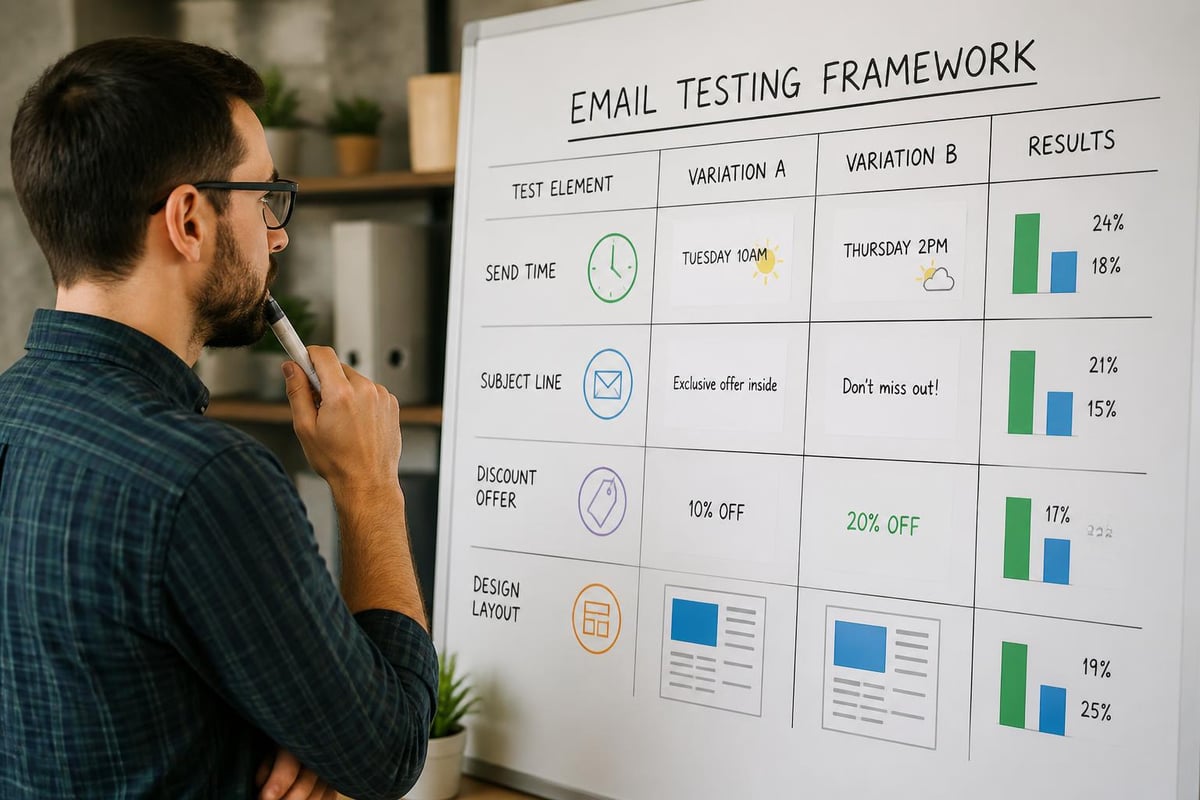
Continuous testing drives improvement. Test one variable at a time to isolate impact:
- Send timing (1 hour versus 3 hours for first email)
- Subject line variations
- Discount inclusion and amount
- Email design and layout
- Call-to-action button text and placement
- Sender name and email address
Run tests until statistical significance is achieved-typically requires at least 100 conversions per variation. Small improvements compound over time. A 10% improvement in recovery rate on a store with £10,000 in monthly abandoned cart value adds £1,200 annually.
Leveraging Automation Apps and Tools
Shopify's native features provide solid foundation, but specialized apps unlock advanced capabilities for shopify abandoned cart recovery.
Popular Recovery Apps Comparison
| App | Key Features | Best For | Pricing Model |
|---|---|---|---|
| Klaviyo | Advanced segmentation, SMS, email | Growing brands needing sophistication | Usage-based |
| Omnisend | Multichannel automation, templates | Mid-market stores | Tiered subscription |
| Privy | Email, SMS, exit-intent popups | Budget-conscious merchants | Freemium |
| Recart | SMS-focused, Messenger integration | Mobile-first audiences | Performance-based |
Selection depends on your specific needs, technical capabilities, and budget. For stores processing under £50,000 monthly, Shopify's built-in tools often suffice. Above that threshold, dedicated apps typically justify their cost through improved recovery rates and automation capabilities.
Advanced Automation Workflows
Sophisticated recovery systems branch based on customer behavior and attributes. A customer who abandoned a high-value cart receives different treatment than someone who abandoned a sale item.
Conditional workflow examples:
- Cart value thresholds trigger different discount amounts
- Returning customers bypass introductory messaging
- First-time visitors receive trust-building content
- High-value customers get personal outreach from sales team
- Abandoned carts during promotions exclude additional discounts
The TechSupply Pro case study illustrates how intelligent segmentation achieved 38% recovery rates by tailoring messaging to customer segments and cart characteristics. This level of sophistication requires either advanced apps or custom development.
Strategic Discount Use in Recovery
Discounts recover carts but impact margins and customer expectations. Use them strategically, not reflexively.
When Discounts Make Sense
Offer discounts selectively:
- Only in the final recovery email (third in sequence)
- For first-time customers as acquisition cost
- When cart value exceeds a profitable threshold
- To clear seasonal inventory
- After A/B testing proves incremental lift
Avoid training customers to expect discounts by abandoning deliberately. If recovery emails always include 10% off, sophisticated shoppers will game the system. Vary your approach and reserve discounts for specific scenarios.
Non-Discount Incentives
Alternatives to discounting maintain margins while providing value:
- Free shipping on the abandoned cart
- Free gift with purchase completion
- Loyalty points bonus
- Exclusive early access to new products
- Extended return window
- Priority customer service
These create value without eroding product pricing. For premium brands where discounting damages positioning, non-monetary incentives prove particularly valuable. The Neurogena case study shows how personalized service (AI-powered calls) recovered carts without price concessions.
Building a Complete Recovery System
Effective shopify abandoned cart recovery integrates prevention, capture, and recovery into a cohesive system. Each element supports the others.
System components:
- Prevention layer: Optimized checkout, transparent pricing, trust signals
- Capture layer: Early email collection, exit-intent popups, browser push notifications
- Recovery layer: Automated email sequences, SMS campaigns, retargeting ads
- Measurement layer: Analytics, attribution tracking, performance reporting
- Optimization layer: A/B testing, customer feedback, continuous refinement
The comprehensive recovery system guide demonstrates how these layers work together synergistically. Prevention reduces the abandonment pool. Better capture increases recoverable carts. Sophisticated recovery maximizes conversion. Measurement reveals opportunities. Optimization drives continuous improvement.
Integration with Broader Marketing
Recovery emails shouldn't exist in isolation. Coordinate messaging across channels. If a customer receives a promotional email the same day as a cart recovery message, prioritize the recovery-it addresses demonstrated intent.
Consider customer lifecycle stage. Someone who's purchased five times needs different recovery messaging than a first-time visitor. Integrate your cart recovery system with customer data platforms and email marketing tools for unified customer experiences.
For stores seeking professional support with conversion optimization and systematic improvement, working with experienced Shopify development partners ensures your recovery infrastructure scales as your business grows. Technical implementation matters-poorly configured systems create customer frustration rather than conversions.
Advanced Tactics for Sophisticated Merchants
Once fundamentals are mastered, advanced techniques extract additional performance.
Behavioral Trigger Sequences
Beyond time-based sequences, trigger emails based on specific actions:
- Customer views cart recovery email but doesn't click
- Customer clicks recovery link but doesn't complete checkout
- Customer adds additional items after receiving recovery email
- Product in abandoned cart goes on sale
- Stock levels drop on abandoned items (scarcity messaging)
These behavioral triggers require integration between your email platform and Shopify, typically through apps or custom development. The advanced AI tutorial demonstrates how machine learning can optimize send timing based on individual customer behavior patterns.
Predictive Abandonment Prevention
Emerging technologies predict abandonment likelihood in real-time, triggering interventions before the customer leaves. Exit-intent popups represent the simplest version-detecting cursor movement towards the browser close button.
More sophisticated systems analyze:
- Time spent on checkout page
- Form field interaction patterns
- Mouse movement and scroll behavior
- Comparison with successful checkout patterns
When abandonment probability exceeds a threshold, trigger interventions: live chat offers, limited-time discounts, shipping cost waivers, or reassurance messaging. This proactive approach prevents abandonment rather than recovering after the fact.
Real-World Implementation Results
Theory matters, but results prove effectiveness. UK Shopify merchants implementing comprehensive recovery systems consistently achieve measurable improvements.
A Birmingham-based fashion retailer reduced abandonment from 76% to 61% through checkout optimization while improving recovery rates from 8% to 22% through sophisticated email sequences. Combined impact: 47% increase in conversion rate without increasing traffic acquisition costs.
A Manchester electronics store implemented SMS recovery alongside email, achieving 31% overall recovery rates. SMS alone recovered 12% of abandoned carts, with email recovering an additional 19%. The multichannel approach captured customers who ignored email but responded to text messages.
These examples demonstrate that shopify abandoned cart recovery delivers tangible results when implemented systematically. Success requires commitment to testing, measurement, and continuous refinement rather than set-and-forget automation.
Technical Considerations and Platform Capabilities
Understanding Shopify's technical capabilities helps you leverage them fully while recognizing limitations.
Data Retention and Access
Shopify stores abandoned cart data for 90 days. Carts older than this disappear from reporting and can't be recovered through native tools. Third-party apps may store data longer, enabling extended analysis and recovery windows.
Access abandoned cart data through:
- Shopify admin dashboard (manual review)
- Email notifications (automated recovery)
- Shopify API (custom integrations)
- Analytics apps (reporting and analysis)
- Recovery apps (automated sequences)
For stores needing custom Shopify development, API access enables sophisticated custom recovery systems tailored to unique business models or customer journeys.
Privacy and Compliance Requirements
GDPR and UK data protection laws govern how you contact customers about abandoned carts. Ensure compliance by:
- Only emailing customers who've voluntarily provided contact information
- Including unsubscribe options in all recovery emails
- Honoring opt-out requests immediately
- Storing customer data securely
- Having clear privacy policies disclosed at checkout
Compliance isn't optional. Violations risk substantial fines and customer trust damage. When in doubt, consult legal counsel familiar with UK eCommerce regulations.
Mobile-Specific Recovery Considerations
Over 70% of eCommerce traffic comes from mobile devices, but mobile conversion rates lag desktop by 30-40%. Mobile-optimized recovery becomes critical.
Mobile Email Optimization
Recovery emails must render perfectly on smartphones:
- Single-column layouts that don't require horizontal scrolling
- Large, thumb-friendly buttons (minimum 44×44 pixels)
- Concise subject lines (under 40 characters for mobile preview)
- Compressed images that load quickly on cellular connections
- Prominent checkout links above the fold
Test emails across multiple devices and email clients. What looks perfect in desktop Gmail may break in mobile Outlook or iOS Mail.
Mobile Checkout Friction Points
Common mobile abandonment causes differ from desktop:
- Small form fields difficult to tap accurately
- Keyboard repeatedly covering form inputs
- Slow page load times on cellular connections
- Payment method entry challenging on small screens
- Lack of mobile wallet options (Apple Pay, Google Pay)
Address these specifically in your checkout configuration. Enable Shop Pay and mobile wallet options. Use large, clearly labeled form fields. Minimize required information. The step-by-step tutorial covers mobile-specific optimization alongside general recovery setup.
Shopify abandoned cart recovery transforms abandoned browsers into customers and lost revenue into profitable sales. The stores that succeed combine prevention through frictionless checkouts, sophisticated multi-channel recovery sequences, strategic incentive use, and continuous testing to optimize every element. Whether you're just starting with Shopify's built-in emails or implementing advanced behavioral automation, systematic focus on cart recovery delivers measurable results. If you're looking to build a high-converting Shopify store that minimizes abandonment and maximizes recovery, Futur Media helps ambitious UK brands optimize every stage of the customer journey through conversion-focused design, technical development, and strategic CRO. Let's turn your abandoned carts into completed sales.



.svg)