
.svg)





%201.avif)
Email marketing remains one of the highest-ROI channels for eCommerce brands, and the klaviyo shopify integration unlocks sophisticated automation capabilities that can transform how you communicate with customers. By connecting these two platforms, you create a unified system where customer data, purchase behaviour, and marketing campaigns work together seamlessly. For Shopify store owners looking to scale revenue without proportionally increasing ad spend, this integration provides the foundation for personalised, data-driven marketing that converts browsers into buyers and one-time purchasers into loyal customers.
Why Connect Klaviyo to Your Shopify Store
The klaviyo shopify integration creates a direct data pipeline between your eCommerce platform and your email marketing system. This connection enables real-time synchronisation of customer information, purchase history, browsing behaviour, and product catalogue data.
Key benefits include:
- Automatic customer profile creation when someone subscribes or makes a purchase
- Real-time tracking of cart abandonment, product views, and checkout behaviour
- Synchronised product data for dynamic email content and recommendations
- Segmentation based on purchase frequency, order value, and product preferences
- Pre-built automation flows specifically designed for Shopify merchants
Unlike basic email platforms, Klaviyo was built specifically for eCommerce. The platform understands metrics that matter to online retailers, tracking revenue attribution, customer lifetime value, and conversion rates across every campaign and automated flow.
Data Synchronisation Capabilities
When you complete the klaviyo shopify integration, the platform begins collecting hundreds of data points about your customers and their interactions with your store. This creates detailed customer profiles that update automatically as shoppers browse products, add items to their cart, or complete purchases.
The integration syncs bidirectionally in certain cases, allowing you to push subscriber status updates from Klaviyo back to Shopify. This ensures consistency across platforms and enables more sophisticated customer management workflows.

| Data Type | Direction | Update Frequency |
|---|---|---|
| Customer profiles | Shopify → Klaviyo | Real-time |
| Purchase history | Shopify → Klaviyo | Real-time |
| Product catalogue | Shopify → Klaviyo | Hourly |
| Email subscription status | Klaviyo → Shopify | Real-time |
| Custom properties | Both directions | Configurable |
Setting Up the Klaviyo Shopify Integration
The installation process is straightforward and typically takes less than ten minutes to complete. You'll need admin access to both your Shopify store and Klaviyo account before beginning.
Installation Steps
- Log into your Klaviyo account and navigate to Integrations
- Search for Shopify and select it from the available integrations
- Click "Connect Integration" and authorise Klaviyo to access your Shopify store
- Configure which data you want to sync and enable onsite tracking
- Verify the connection and confirm data is flowing correctly
The official Klaviyo integration guide provides detailed screenshots for each step, making the process simple even for non-technical users.
After completing the basic connection, you'll want to enable onsite tracking. This feature adds a JavaScript snippet to your Shopify store that captures browsing behaviour, including product views, category visits, and search queries. This behavioural data powers personalised product recommendations and targeted campaigns based on customer interests.
Configuring Your First Flows
Once your klaviyo shopify integration is active, you gain access to pre-built automation templates designed specifically for eCommerce scenarios. These flows trigger automatically based on customer actions, sending timely, relevant messages without manual intervention.
Essential flows to implement first:
- Welcome Series: Introduces new subscribers to your brand and typically includes a first-purchase incentive
- Abandoned Cart: Recovers lost revenue by reminding customers about items they left behind
- Post-Purchase: Thanks customers, requests reviews, and suggests complementary products
- Browse Abandonment: Re-engages visitors who viewed products but didn't add them to cart
- Winback Campaign: Reactivates customers who haven't purchased in a specific timeframe
For ambitious brands looking to maximise the technical capabilities of their store alongside marketing automation, Shopify development services can create custom integrations and advanced functionality that extends what's possible with standard platforms.
Advanced Segmentation Strategies
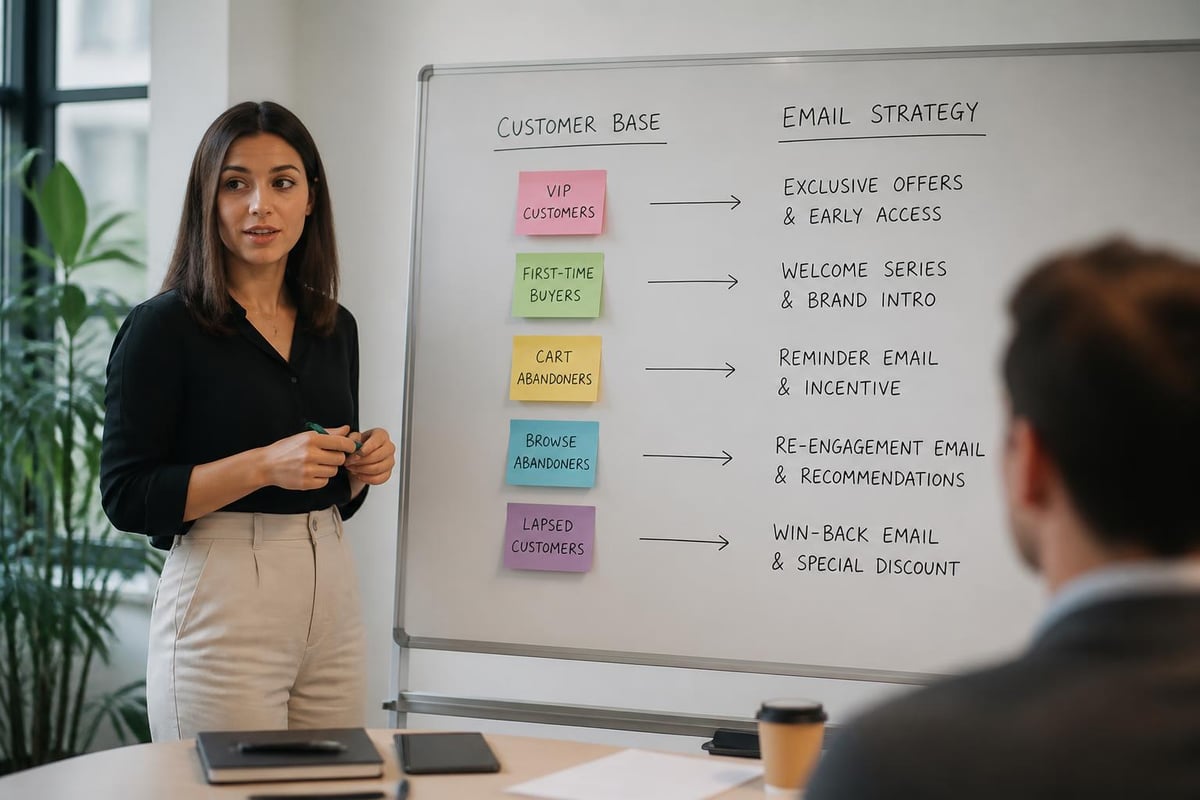
The true power of the klaviyo shopify integration emerges when you leverage the rich customer data for sophisticated segmentation. Rather than sending identical messages to your entire list, you can create highly targeted campaigns based on specific behaviours and characteristics.
Behavioural Segments
Create segments based on how customers interact with your store. Examples include customers who have viewed a specific product category multiple times but never purchased, or shoppers who consistently buy during sale periods but rarely at full price.
These behavioural insights allow you to tailor messaging that resonates with different customer motivations. A discount-sensitive shopper receives different content than a customer who regularly purchases new arrivals at full price.
Predictive Analytics
Klaviyo's predictive analytics features use historical purchase data to forecast future customer behaviour. The platform automatically calculates metrics like expected date of next order, predicted customer lifetime value, and churn risk.
You can create segments targeting customers likely to churn within the next 30 days, or identify high-value customers predicted to make their next purchase soon. This predictive capability transforms reactive marketing into proactive customer relationship management.
Syncing Shopify Customer Data Effectively
The data synchronisation process between Shopify and Klaviyo requires some configuration to ensure you're capturing the right information whilst respecting customer privacy preferences.
Managing Subscription Status
When setting up your klaviyo shopify integration, you'll need to decide how to handle existing Shopify customers. The platform can automatically import your current customer list, but you must ensure these contacts have proper consent to receive marketing emails.
Best practice involves syncing only customers who have explicitly opted in to marketing communications. Klaviyo provides options to filter imports based on Shopify's acceptance of marketing field, ensuring GDPR and data protection compliance from day one.
| Import Option | Use Case | Compliance Consideration |
|---|---|---|
| All customers | Initial setup with verified opt-ins | Requires proof of consent |
| Marketing opt-ins only | Standard approach | Shopify checkbox provides consent |
| Manual selection | Specific campaigns | Full control over import |
| Segment-based | Targeted lists | Combine behavioural and consent data |
Custom Properties and Metafields
Beyond standard Shopify data, you can sync custom metafields to Klaviyo for even more personalised campaigns. If you track custom product attributes, customer preferences, or subscription data in Shopify metafields, these can flow into Klaviyo profiles.
This capability proves particularly valuable for stores with complex product catalogues or unique customer attributes. A supplement brand might sync preferred flavours, a fashion retailer could track size preferences, or a B2B store might include account manager information.
The Shopify integration best practices documentation covers advanced configuration options that unlock these extended capabilities.
Optimising Email Campaigns With Shopify Data
Once your klaviyo shopify integration feeds rich customer data into the platform, you can craft campaigns that feel personally relevant to each recipient. Dynamic content blocks pull product information, purchase history, and browsing behaviour directly into email templates.
Product Recommendations
Klaviyo's product recommendation engine analyses purchase patterns across your entire customer base to suggest relevant items. You can configure recommendations based on several algorithms:
- Products frequently purchased together
- Items similar to recent purchases
- Bestsellers within specific categories
- Products the customer has viewed but not purchased
These recommendations update dynamically at send time, ensuring customers always see current products and accurate pricing. For stores with frequently changing inventory, this real-time data prevents the frustrating experience of clicking through to an out-of-stock item.
Revenue Attribution Tracking
One significant advantage of the klaviyo shopify integration is accurate revenue attribution. The platform tracks every penny generated by email campaigns and automated flows, providing clear ROI metrics for your email marketing efforts.
You can view revenue attributed to specific campaigns, individual flows, or even particular segments. This granular tracking helps identify which marketing activities drive genuine commercial results versus vanity metrics like open rates.
Building Effective Abandoned Cart Sequences
Cart abandonment represents one of the largest revenue opportunities for most eCommerce brands, with average abandonment rates exceeding 70% across industries. The klaviyo shopify integration enables sophisticated recovery sequences that bring customers back to complete their purchase.
Timing and Frequency
Research consistently shows that the first abandoned cart email should send relatively quickly, typically within one hour of abandonment. This catches customers who may have been interrupted or experienced a technical issue during checkout.
Recommended sequence timing:
- First email: 1 hour after abandonment
- Second email: 24 hours after abandonment
- Third email: 48-72 hours after abandonment (optional)
Each email should provide a clear path back to the cart whilst addressing potential objections. The first email typically acts as a gentle reminder, the second might address common concerns like shipping costs or return policies, and the third could include a time-limited incentive to create urgency.
Personalisation Elements
Abandoned cart emails perform significantly better when they include product images, names, and prices directly from the cart contents. The klaviyo shopify integration automatically pulls this information, creating visually appealing emails that remind customers exactly what they're missing.
Consider including customer reviews, size guides, or frequently asked questions for products commonly abandoned at checkout. If certain items consistently appear in abandoned carts, this signals potential concerns that could be addressed in the email content or on product pages themselves. Understanding how to set up a Shopify store properly from the beginning helps create smooth checkout experiences that reduce abandonment in the first place.

Post-Purchase Engagement Strategies
The customer relationship doesn't end at checkout. Post-purchase emails generate additional revenue through cross-sells, encourage repeat purchases, and build long-term customer loyalty. Your klaviyo shopify integration enables automated sequences triggered by completed orders.
Order Confirmation Enhancement
Whilst Shopify sends a basic order confirmation, you can use Klaviyo to send a more engaging version that reinforces the purchase decision and sets expectations. Include estimated delivery dates, care instructions for products purchased, or styling suggestions for fashion items.
This email achieves high open rates because customers actively want this information. Use this attention to showcase your brand personality and hint at complementary products without aggressive selling.
Review Request Timing
Product reviews significantly impact conversion rates, making review request emails valuable for long-term store performance. The optimal timing depends on product type and delivery speed. For physical products, wait until the customer has received and had time to use the item.
A supplement brand might wait 14 days post-delivery to request a review, giving customers time to experience results. A fashion retailer could request reviews 7 days post-delivery, once customers have worn the item. The klaviyo shopify integration tracks order dates and fulfilment status, enabling precisely timed review requests.
Creating Customer Loyalty Programmes
Long-term eCommerce success relies on repeat purchases, and the klaviyo shopify integration provides the data infrastructure needed to build sophisticated loyalty initiatives. By tracking purchase frequency, order values, and customer lifetime value, you can create tiered programmes that reward your best customers.
VIP Segment Management
Identify your top customers based on total spend, purchase frequency, or lifetime value. Create VIP segments that receive early access to new products, exclusive discounts, or special content.
These segments can trigger automatically as customers cross defined thresholds. When someone makes their fifth purchase or exceeds £500 in lifetime value, Klaviyo can automatically add them to VIP lists and send a welcome email acknowledging their status.
| Customer Tier | Criteria | Benefits |
|---|---|---|
| Bronze | 1-2 purchases or £0-£150 LTV | Standard communications |
| Silver | 3-4 purchases or £150-£400 LTV | Early sale access, birthday discount |
| Gold | 5+ purchases or £400-£800 LTV | Exclusive products, free shipping |
| VIP | 10+ purchases or £800+ LTV | Personal account management, special events |
Winback Campaigns for Lapsed Customers
Customer acquisition costs continue rising, making retention and reactivation more economically attractive than finding new customers. The klaviyo shopify integration enables automatic identification of customers who haven't purchased within a defined timeframe.
Create winback flows triggered when customers cross lapse thresholds. A 60-day lapse might trigger a gentle reminder email, whilst a 180-day lapse could include a special incentive to return. Tailor messaging based on the customer's historical purchase patterns, referencing categories or brands they previously enjoyed.
Technical Considerations and Troubleshooting
Whilst the klaviyo shopify integration typically works seamlessly, understanding common technical considerations helps maintain data accuracy and campaign effectiveness.
Double Opt-In Configuration
Klaviyo supports both single and double opt-in processes for email subscription. Double opt-in requires subscribers to confirm their email address before receiving marketing emails, improving list quality and deliverability rates.
For UK brands operating under GDPR, double opt-in provides additional proof of consent. However, it does reduce conversion rates on signup forms by 20-30% compared to single opt-in. Balance compliance requirements with list growth objectives based on your specific situation.
Multi-Currency and International Stores
Shopify stores selling internationally with multiple currencies can sync all transaction data to Klaviyo, but revenue reporting defaults to your Shopify store's primary currency. This ensures consistent analytics and attribution reporting.
If you operate multiple Shopify stores for different regions, you can connect all stores to a single Klaviyo account or maintain separate accounts for each market. The best approach depends on whether you want unified customer profiles or region-specific segmentation.
For brands considering expansion or Shopify migrations from other platforms, planning your Klaviyo structure alongside store architecture ensures smooth data management from day one.
API Rate Limits and Data Throttling
The klaviyo shopify integration uses API connections to sync data between platforms. Both Shopify and Klaviyo impose rate limits to prevent system overload. For most stores, these limits never become relevant, but high-volume merchants processing thousands of orders daily should understand potential throttling.
Klaviyo automatically manages these limits, queuing data updates when necessary. However, during major sales events, you might notice slight delays in real-time data synchronisation. This rarely impacts practical functionality, as most flows operate on delays measured in hours rather than minutes.
Measuring Success and Continuous Optimisation
The klaviyo shopify integration provides comprehensive analytics showing exactly how email marketing contributes to store revenue. Regular analysis of these metrics drives continuous improvement in campaign performance.
Key Performance Indicators
Focus on metrics that directly tie to commercial outcomes rather than vanity metrics. Whilst open rates and click rates provide directional information, revenue per recipient and conversion rate more accurately measure campaign success.
Essential metrics to monitor:
- Revenue per recipient: Total revenue divided by number of recipients
- Conversion rate: Percentage of recipients who make a purchase
- Average order value: For email-attributed orders versus store average
- List growth rate: New subscribers minus unsubscribes and hard bounces
- Deliverability rate: Percentage of emails successfully delivered
Compare these metrics across different campaign types, segments, and time periods. An abandoned cart flow consistently generating higher revenue per recipient than broadcast campaigns might warrant increased investment in automation development.
A/B Testing Frameworks
Klaviyo's built-in A/B testing enables systematic optimisation of subject lines, content, send times, and offers. Rather than random testing, develop hypotheses based on customer behaviour data and test variables that could materially impact results.
Test one variable at a time with statistically significant sample sizes. A subject line test needs at least several hundred recipients per variation to generate reliable results. For smaller lists, prioritise testing elements with potentially larger impact, like offer strategy or email timing.
Privacy Compliance and Data Management
Email marketing operates within an increasingly complex regulatory environment. The klaviyo shopify integration includes features designed to support GDPR, PECR, and other privacy regulations, but proper configuration remains your responsibility.
Consent Management
Ensure your Shopify checkout and signup forms clearly communicate what marketing communications customers will receive and how frequently. Klaviyo can suppress sending to recipients who have unsubscribed or marked emails as spam, but the initial consent collection happens on your Shopify store.
The integration respects Shopify's "accepts marketing" field, automatically syncing subscription status changes. When a customer unsubscribes in Klaviyo, their Shopify profile updates to reflect this preference. This bidirectional sync prevents the frustrating experience of unsubscribing but continuing to receive emails.
Data Retention Policies
Configure data retention policies that balance marketing effectiveness with privacy best practices. Klaviyo allows you to automatically suppress profiles that haven't engaged with emails for extended periods or delete profiles of customers who haven't purchased within defined timeframes.
These policies reduce list size, potentially lowering subscription costs, whilst ensuring you're not indefinitely storing data for customers who have clearly disengaged from your brand. Combining technical configurations with thoughtful approaches to eCommerce website development creates customer experiences that respect privacy whilst driving commercial results.
Integration With Broader Marketing Stack
The klaviyo shopify integration works most effectively as part of a coordinated marketing technology stack. Klaviyo connects with dozens of other platforms, enabling sophisticated cross-channel strategies.
Advertising Platform Connections
Sync Klaviyo segments to Facebook Custom Audiences, Google Customer Match, or other advertising platforms. This enables retargeting based on email engagement, purchase behaviour, or predicted customer value. You can exclude recent purchasers from acquisition campaigns, focus retention ads on high-value customers, or create lookalike audiences based on your best email subscribers.
These integrations close the loop between paid acquisition and owned channel development. Understanding which acquisition sources generate subscribers who become valuable email customers helps optimise advertising spend allocation.
Review and Loyalty Platform Integration
If you use dedicated review platforms like Trustpilot or loyalty apps like LoyaltyLion, connecting these to Klaviyo enriches customer profiles with additional data. Review submission triggers could initiate thank-you flows, whilst loyalty point balances enable targeted campaigns encouraging redemption.
The klaviyo shopify integration serves as the central hub, pulling data from multiple sources to create comprehensive customer profiles that inform increasingly personalised marketing.
The klaviyo shopify integration transforms email marketing from broadcast messaging into sophisticated, data-driven customer communication that drives measurable revenue growth. By leveraging real-time behavioural data, predictive analytics, and automated flows, you create personalised experiences that turn casual browsers into loyal customers. If you're looking to maximise your store's potential through expert development, strategic optimisation, and conversion-focused design, Futur Media helps ambitious UK brands build high-performing Shopify stores that integrate seamlessly with marketing platforms like Klaviyo to drive long-term growth.



.svg)