
.svg)



.webp)


%201.png)
The relationship between website design and marketing has never been more critical for eCommerce success. In 2026, businesses that treat these disciplines as separate entities are missing out on significant opportunities for growth, whilst those that integrate them strategically are seeing measurable improvements in traffic, engagement, and revenue. For Shopify brands especially, understanding how design choices influence marketing performance-and vice versa-can be the difference between a store that merely looks good and one that consistently converts visitors into loyal customers.
The Foundation: Why Website Design and Marketing Must Work Together
Effective website design and marketing integration starts with recognising that every visual element, layout decision, and content placement serves both aesthetic and commercial purposes. Your website is simultaneously a brand representation and a marketing asset, which means design decisions should always be informed by marketing objectives.
Modern eCommerce stores need to excel across multiple dimensions:
- Visual appeal that builds immediate trust and credibility
- User experience that guides visitors toward conversion actions
- Technical performance that supports SEO and paid advertising campaigns
- Responsive design that maintains effectiveness across all devices
- Content architecture that supports both user needs and search visibility
When design and marketing work in harmony, every element reinforces your commercial goals. Navigation menus aren't just organisational tools-they're pathways to high-value pages. Product photography isn't merely decorative-it reduces bounce rates and increases time on site. Loading speed isn't just a technical metric-it directly impacts conversion rates and advertising costs.
Strategic Design Decisions That Impact Marketing Performance
The design choices you make during website development have lasting implications for every marketing channel you'll use. Shopify brands that prioritise conversion-focused design from the outset see better returns on their marketing investment because the user journey is optimised to capitalise on incoming traffic.
Consider how layout affects marketing outcomes. A homepage designed with clear value propositions, intuitive category navigation, and prominent search functionality supports both organic discovery and paid campaigns. When users arrive from Google Ads or social media, they can immediately find what they're looking for-reducing cost per acquisition and improving quality scores across advertising platforms.
Design ElementMarketing ImpactKey ConsiderationPage SpeedSEO rankings, ad costs, bounce rateOptimise images, minimise scripts, use lazy loadingMobile UXMobile search visibility, social traffic conversionTouch-friendly elements, simplified navigationInformation HierarchyUser engagement, time on siteClear headlines, scannable content, logical flowCall-to-Action PlacementConversion rate, revenue per visitorAbove fold visibility, contextual positioningVisual ConsistencyBrand recall, trust signalsCohesive colour scheme, typography system
The technical foundation of your website design directly influences your marketing capabilities as well. Structured data implementation, URL architecture, and metadata systems all need to be considered during the design phase. Working with experienced developers ensures these elements are built correctly from the start, rather than retrofitted later at greater expense.
Content Strategy at the Intersection of Design and Marketing
Website design and marketing converge most visibly in your content strategy. How you present information, where you place messaging, and the format you choose all stem from design decisions that serve marketing purposes.
Effective content architecture requires:
- Understanding user intent at each stage of the buying journey
- Mapping content types to specific marketing goals
- Designing layouts that showcase content appropriately
- Building flexibility for ongoing content marketing initiatives
- Implementing systems that make content updates straightforward
Product pages exemplify this intersection perfectly. The design must showcase items attractively whilst incorporating elements that support search visibility, conversion optimisation, and remarketing efforts. High-quality imagery serves both aesthetic and functional purposes-helping with visual search whilst reducing return rates. Detailed descriptions support SEO whilst answering customer questions that might otherwise delay purchase decisions.
Blog and editorial content presents another opportunity for integrated website design and marketing. Quality content marketing strategies depend on design systems that make articles readable, shareable, and linked to commercial objectives. Typography, spacing, image placement, and related content modules all influence whether visitors engage with your content or bounce.
Building Marketing Functionality Into Design Systems
Modern eCommerce stores need built-in capabilities that support diverse marketing initiatives. This means your design system should accommodate email capture mechanisms, promotional banners, personalisation elements, and campaign-specific landing pages without requiring major redesigns.
Essential marketing-focused design components include:
- Flexible header areas for announcements and offers
- Modular homepage sections for campaign spotlights
- Email signup forms integrated naturally into user flows
- Product recommendation systems built into templates
- Social proof elements (reviews, testimonials, user content)
- Exit-intent overlays designed to match brand aesthetics
The importance of brand-led web design extends to these functional elements. A generic popup or poorly designed promotional banner can undermine the trust your main design has built. Every marketing touchpoint should feel cohesive and intentional.

Conversion Rate Optimisation: Where Design Meets Revenue
Conversion rate optimisation represents perhaps the clearest demonstration of website design and marketing interdependence. Every percentage point improvement in conversion rate amplifies the return on every marketing pound spent, making CRO one of the highest-impact activities for growing eCommerce brands.
Design choices directly influence conversion rates through dozens of micro-interactions. Button colours and sizes affect click-through rates. Form field design impacts completion rates. Checkout page layout influences abandonment. Navigation structure affects path-to-purchase efficiency. Shopify CRO programmes systematically test and refine these elements based on actual user behaviour rather than assumptions.
Data-Driven Design Decisions
The most effective approach to website design and marketing integration involves continuous measurement and refinement. Analytics platforms provide insights into how users actually interact with your design, revealing opportunities for improvement that might not be apparent from aesthetic or theoretical perspectives.
Key metrics that inform design refinements:
- Bounce rate by landing page and traffic source
- Scroll depth and engagement patterns
- Click maps showing actual user behaviour
- Form abandonment points and friction areas
- Mobile versus desktop performance differences
- Conversion funnel drop-off stages
This data should inform iterative design improvements. If mobile users are abandoning at checkout significantly more than desktop users, the checkout design needs mobile-specific optimisation. If blog visitors rarely convert, the content-to-commerce pathways need strengthening. When digital marketing strategies drive traffic to poorly converting pages, the return on ad spend suffers regardless of how well campaigns are managed.
SEO and Design: Technical Foundations for Visibility
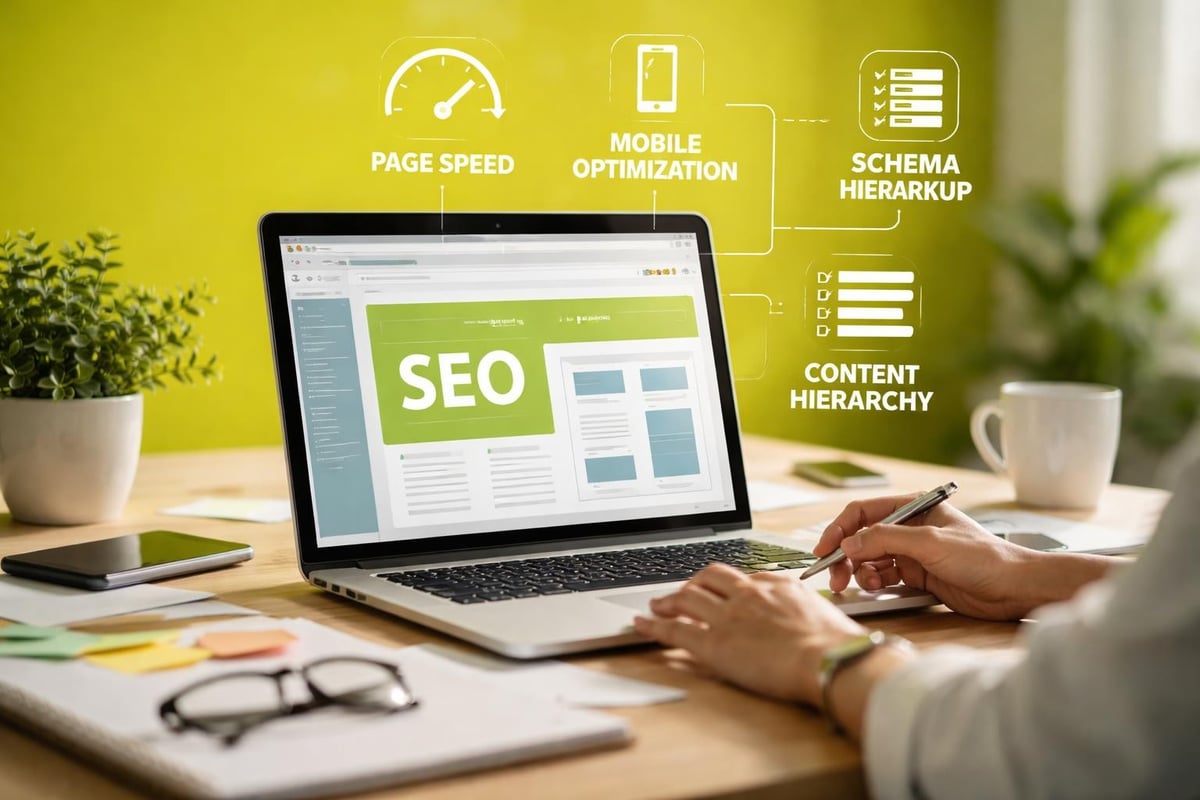
Search engine optimisation and website design share fundamental technical requirements that must be addressed during the build phase. Page speed, mobile responsiveness, structured markup, and content hierarchy all influence search visibility whilst simultaneously affecting user experience.
SEO FactorDesign ImplementationImpact on MarketingCore Web VitalsImage optimisation, code efficiency, hostingAffects rankings and user experience metricsMobile-First IndexingResponsive design, touch targets, viewportDetermines mobile search visibilityURL StructureNavigation hierarchy, taxonomyAffects crawlability and link equity distributionSchema MarkupTemplate integration, product dataEnhances search appearance and click-through ratesInternal LinkingNavigation design, related contentDistributes authority and guides user journeys
Understanding best practices for web design in 2026 means recognising that search engines evaluate websites much as users do-rewarding fast, mobile-friendly, accessible experiences with better visibility. This creates a virtuous cycle where design improvements support both organic search performance and conversion rate optimisation.
The relationship between website design and marketing becomes particularly evident in local and mobile search. Shopify stores targeting UK customers need design elements that support location-specific queries, mobile browsing patterns, and the increasing prevalence of voice search. Schema markup for products, reviews, and business information helps search engines understand and display your content appropriately.
Content Design for Search Intent
Different search queries represent different user intentions, and your design should accommodate the various content types needed to address them. Informational queries require different layouts than transactional ones. Comparison shopping needs different design approaches than direct product searches.
Content types requiring distinct design approaches:
- Category pages for broad product browsing
- Product pages optimised for specific item searches
- Blog content addressing questions and research queries
- Landing pages supporting campaign-specific traffic
- Resource centres building authority and backlinks
Each content type serves specific marketing purposes and requires appropriate design treatment. Generic templates rarely deliver optimal results across all these contexts. Top eCommerce development companies build flexible systems that allow different page types whilst maintaining visual consistency.
Paid Advertising and Landing Page Design
The effectiveness of paid marketing channels depends heavily on the landing page experience you've designed. Whether traffic comes from Google Ads, social media campaigns, or affiliate partnerships, the destination page must deliver on the promise that prompted the click whilst guiding visitors toward conversion.
Website design and marketing alignment is critical for advertising success. Ad messaging, visual style, and offers must connect seamlessly to landing page content. Disconnect between ad creative and landing experience increases bounce rates, wastes advertising budget, and damages quality scores that affect future campaign costs.
Campaign-Specific Design Considerations
While maintaining brand consistency, landing pages for paid campaigns often benefit from simplified navigation, focused messaging, and reduced distractions compared to standard website pages. The design should eliminate friction points that prevent conversion whilst maintaining trust signals and professional presentation.
Seasonal campaigns, product launches, and promotional periods all benefit from dedicated landing page designs that can be deployed quickly without disrupting core website structure. Shopify's flexibility supports this approach, allowing ambitious brands to test different creative approaches and learn what resonates with their audience.
Essential landing page design elements:
- Clear, benefit-focused headlines matching ad messaging
- Relevant hero imagery reinforcing the offer
- Concise copy highlighting key differentiators
- Prominent, contrasted call-to-action buttons
- Trust signals including reviews, guarantees, security badges
- Mobile-optimised forms minimising input requirements
The relationship between advertising investment and website design quality is direct and measurable. Better-designed landing pages deliver lower cost per acquisition, higher return on ad spend, and improved customer lifetime value by creating positive first impressions that extend beyond the initial transaction.
Platform Selection and Marketing Capability
Choosing the right eCommerce platform fundamentally shapes both design possibilities and marketing capabilities. Shopify has emerged as the platform of choice for ambitious UK brands specifically because it balances design flexibility with robust marketing functionality out of the box.
For businesses considering Shopify migrations from other platforms, the marketing advantages extend beyond design. Built-in analytics, email marketing integration, social commerce capabilities, and extensive app ecosystem provide marketing tools that complement strong design foundations. The platform's regular updates ensure your store remains compatible with emerging marketing channels and consumer behaviours.
Marketing Tools Built Into Modern Platforms
Platform-native marketing features influence what's possible from both design and campaign perspectives. Discount code systems, abandoned cart recovery, customer segmentation, and marketing automation all require design considerations to implement effectively.
The best eCommerce platforms allow marketing functionality to be layered into design without compromising aesthetics or performance. Pop-ups, recommendation engines, personalisation, and promotional banners should enhance rather than detract from user experience. This requires thoughtful implementation during the design phase rather than bolting on features later.
Mobile-First Design for Multi-Channel Marketing
Mobile traffic now represents the majority of eCommerce visits for most UK brands, making mobile-first design essential for marketing success. This goes beyond responsive layouts to encompass thumb-friendly navigation, simplified checkout processes, and mobile-specific features like click-to-call and location services.
Mobile design priorities for marketing effectiveness:
- Touch targets sized appropriately for finger interaction
- Simplified navigation reducing menu complexity
- Fast loading times on mobile networks
- Streamlined checkout minimising form fields
- Mobile-specific payment options (Apple Pay, Google Pay)
- Scroll-friendly content layouts
Social commerce increasingly drives mobile traffic, requiring design that works seamlessly when users arrive from Instagram, TikTok, Facebook, and Pinterest. Product pages must load quickly and display attractively on small screens whilst maintaining conversion functionality. Comprehensive digital marketing strategies in 2026 account for these platform-specific user behaviours during the design phase.
Measuring Success: Analytics for Design and Marketing Alignment
Effective website design and marketing requires ongoing measurement to understand what's working and where improvements are needed. Analytics implementation should be considered during design development, ensuring proper tracking is built in rather than added later.
Metric CategoryKey IndicatorsDesign ImplicationsAcquisitionTraffic sources, campaign performanceLanding page design, campaign assetsBehaviourPages per session, bounce rate, scroll depthNavigation, content layout, engagement elementsConversionConversion rate, average order value, funnel completionCheckout design, product pages, CTAsRetentionReturn visitor rate, email engagementCustomer account experience, post-purchase design
Understanding these metrics allows you to refine design elements based on actual performance rather than assumptions. If mobile visitors have lower conversion rates, the mobile design needs attention. If organic traffic bounces quickly, search landing pages require optimisation. When email campaigns drive traffic but not conversions, the disconnect between email design and website experience needs addressing.
Continuous Improvement Through Testing
Website design and marketing effectiveness improves through systematic testing and refinement. A/B testing different layouts, colour schemes, messaging, and functionality helps identify what resonates with your specific audience. This empirical approach reduces reliance on best practice generalisations that may not apply to your particular market.
Modern testing tools make it straightforward to experiment with design variations without requiring development resources for each test. However, working with experienced agencies ensures tests are properly structured, statistically valid, and focused on meaningful business outcomes rather than vanity metrics.
Branding Consistency Across Marketing Channels
Strong brands maintain visual and messaging consistency across every customer touchpoint-from website design through social media, email campaigns, advertising creative, and packaging. This consistency reinforces recognition, builds trust, and creates cumulative marketing impact greater than the sum of individual efforts.
Your website serves as the brand hub where all marketing channels ultimately direct attention. Design systems should therefore establish visual standards, tone of voice, and stylistic conventions that extend to all marketing materials. Colour palettes, typography choices, iconography, photography style, and layout principles should inform everything from Instagram posts to Google Ads.
Branding elements requiring cross-channel consistency:
- Logo usage and placement standards
- Colour palette with defined primary and accent colours
- Typography hierarchy for headings and body text
- Photography and illustration style guidelines
- Iconography and graphic element libraries
- Voice and messaging tone principles
This level of consistency requires deliberate planning during the website design phase. Building comprehensive brand guidelines alongside website development ensures marketing teams can create channel-specific content that maintains cohesion with the core digital experience.
Future-Proofing Your Digital Presence
Website design and marketing both operate in rapidly evolving landscapes. Technologies change, consumer behaviours shift, and competitive pressures intensify. Building flexibility into your design ensures you can adapt to these changes without requiring complete rebuilds.
Modular design systems, headless commerce architectures, and API-first approaches provide the adaptability ambitious brands need. These technical foundations allow you to experiment with emerging marketing channels, integrate new tools, and respond to market changes whilst maintaining core brand and user experience standards.
Looking ahead to the remainder of 2026 and beyond, successful eCommerce brands will increasingly rely on personalisation, AI-driven recommendations, and omnichannel experiences. Your website design needs the technical capability to support these initiatives whilst maintaining the performance and usability that drive conversions today.
Emerging considerations for future-ready design:
- Personalisation engines requiring flexible content systems
- Voice commerce integration and conversational interfaces
- Augmented reality for product visualisation
- Progressive web app functionality for app-like experiences
- Sustainability messaging and transparent supply chain information
Understanding what great design agencies deliver helps ensure your website can evolve alongside marketing capabilities rather than constraining them.
Accessibility: Design That Includes Everyone
Accessible design isn't just ethically important-it expands your addressable market and often improves experiences for all users. Website design and marketing both benefit when accessibility is prioritised from the outset rather than retrofitted later.
Proper heading structure aids both screen readers and SEO. Sufficient colour contrast helps users with visual impairments whilst generally improving readability. Keyboard navigation supports users with motor impairments whilst also benefiting power users who prefer keyboard shortcuts. Alt text for images serves visually impaired users whilst providing additional context to search engines.
Core accessibility principles with marketing benefits:
- Semantic HTML structure supporting assistive technologies and search crawlers
- Descriptive link text improving usability and link equity distribution
- Sufficient colour contrast enhancing readability for everyone
- Keyboard navigation enabling efficient browsing for all users
- Captions and transcripts for video expanding content reach
Many website design best practices naturally align with accessibility requirements, creating user experiences that work better for everyone whilst supporting broader marketing reach.
Successful eCommerce in 2026 requires treating website design and marketing as integrated disciplines rather than separate functions. When visual appeal, user experience, and commercial objectives align, you create digital experiences that attract visitors, engage them effectively, and convert them into customers. Whether you're launching a new store, improving conversion rates, or expanding into new markets, Futur Media brings the Shopify expertise and strategic insight to help your brand grow through design and marketing that work together seamlessly.