
.svg)



.webp)


%201.avif)
When your entire business revolves around one exceptional product, your Shopify store needs to reflect that laser focus. A shopify single product theme strips away unnecessary complexity, placing your hero product front and centre with a conversion-optimised design built specifically for singular focus. Whether you're launching an innovative gadget, a premium subscription service, or a revolutionary beauty product, choosing the right theme architecture can dramatically impact your revenue trajectory. This guide explores the strategic considerations, technical requirements, and design principles that make single-product stores successful in 2026.
Why Single-Product Stores Require Specialised Themes
Traditional multi-product eCommerce themes scatter attention across navigation menus, category pages, and product grids. For brands selling one transformative product, this approach dilutes messaging and creates unnecessary friction in the buyer journey.
A shopify single product theme eliminates these distractions entirely. Every element on the page serves one purpose: educating visitors about your product's unique value and guiding them seamlessly towards purchase. This focused approach typically delivers higher conversion rates than adapting multi-product themes, which often require extensive customisation to achieve similar results.
The Psychology Behind Focused Product Presentation
Decision fatigue represents one of eCommerce's biggest conversion killers. When customers encounter too many choices, they often choose nothing at all. Single-product stores bypass this entirely.
Key psychological advantages include:
- Reduced cognitive load: Visitors process information faster without competing products
- Stronger brand narrative: Entire site architecture supports one cohesive story
- Trust acceleration: Depth of content signals product confidence and quality
- Clear value proposition: No confusion about what the business offers or why it matters
Research consistently shows that simplifying purchase decisions increases completion rates. When building a successful Shopify store, this principle becomes even more critical for single-product brands competing against established players.

Essential Features of Effective Single Product Themes
Not all themes marketed for single products deliver the functionality modern brands require. Understanding which features genuinely impact conversion rates helps separate marketing hype from practical utility.
Core Functionality Requirements
Feature CategoryMust-Have ElementsWhy It MattersVisual StorytellingHero sections, video backgrounds, image galleriesProducts need emotional connection beyond specificationsProduct InformationExpandable tabs, sticky add-to-cart, variant pickersReduces confusion and purchase hesitationSocial ProofReview sections, testimonial carousels, trust badgesBuilds credibility essential for unfamiliar brandsPerformanceLazy loading, optimised code, mobile responsivenessSpeed directly correlates with conversion rates
Modern shopify single product theme options should include Shopify 2.0 architecture as standard. This ensures access to drag-and-drop customisation through sections, making ongoing optimisation possible without developer involvement for every minor change.
Advanced Conversion Elements
Beyond basic functionality, high-performing single-product themes incorporate specific elements designed to maximise revenue:
- Dynamic pricing displays that highlight savings, subscription options, or bundle discounts
- Countdown timers for limited offers that create urgency without appearing manipulative
- Integrated FAQ sections that address objections before they prevent purchase
- Email capture mechanisms positioned strategically for list building
- Exit-intent overlays that recover abandoning visitors with targeted offers
The Highlight theme's "Single" preset exemplifies many of these principles, offering a creative foundation specifically designed for noteworthy products that deserve spotlight treatment.
Choosing the Right Theme for Your Product Type
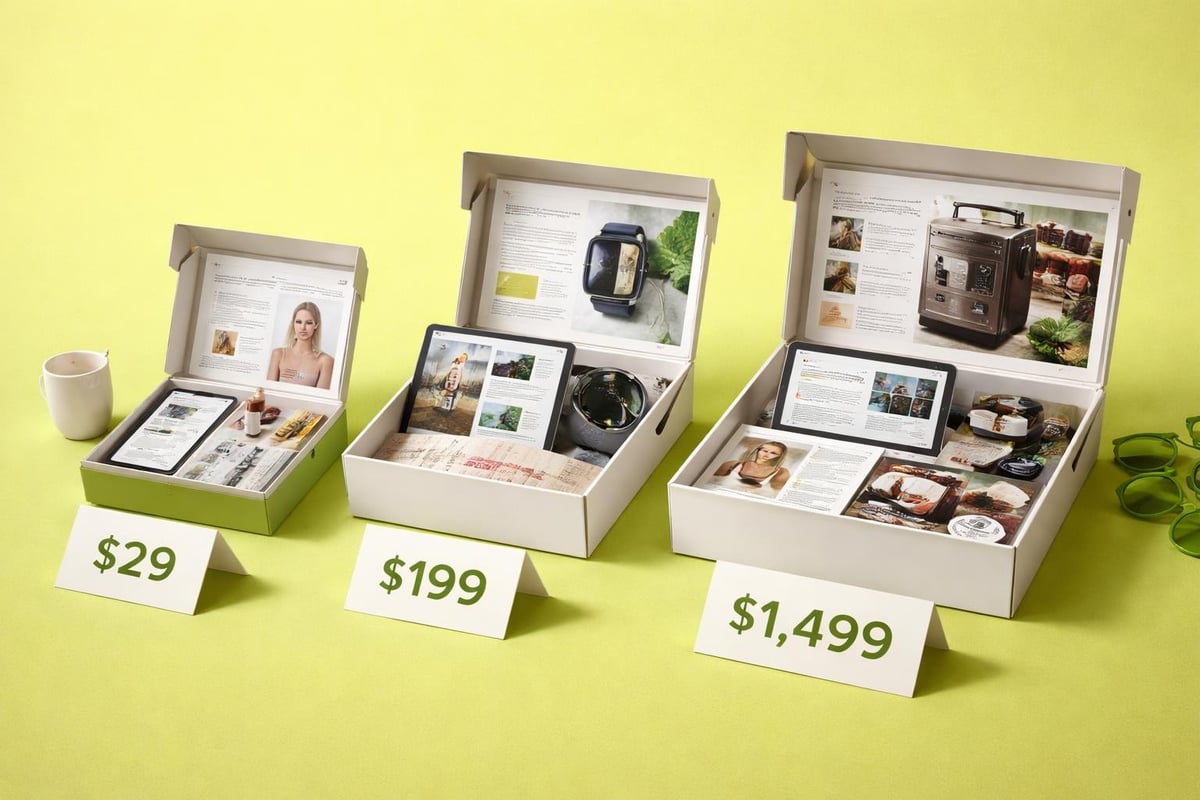
Different products require different presentation strategies. A £2,000 mattress demands different storytelling than a £30 supplement subscription, even though both benefit from single-product focus.
Physical Products vs Digital Offerings
Physical products typically require extensive photography, detailed specifications, and shipping information prominently displayed. Digital products, subscriptions, or services need different emphasis:
- Educational content explaining how the offering works
- Instant gratification messaging highlighting immediate access
- Value demonstration through comparison tables or feature breakdowns
- Security reassurances particularly for higher-priced digital products
When evaluating Shopify themes for single product stores, consider how well the demo content aligns with your specific product category. Themes optimised for fashion won't necessarily translate effectively to software or membership sales.
Price Point Considerations
Your product's price directly influences the depth of information required:
Lower price points (under £50):
- Emphasise impulse purchase triggers
- Simplify checkout with fewer form fields
- Focus on immediate benefits over detailed specifications
Medium price points (£50-£200):
- Balance emotional appeal with logical justification
- Include comparison content against alternatives
- Provide clear return policies and guarantees
Higher price points (£200+):
- Extensive educational content required
- Multiple trust signals throughout page
- Consider consultation booking options
- Detailed FAQ sections addressing common objections
Top Shopify Single Product Themes for 2026
The theme market continues evolving, with newer options leveraging Shopify's latest capabilities. Here's an analysis of leading contenders based on functionality, customisation flexibility, and real-world performance.
Premium Options for Established Brands
Theme NameStrengthsBest ForPrice RangeHighlightCreative layouts, video integrationInnovative products needing bold presentation£260-£300MotionAnimation-rich sections, storytelling focusBrands with strong visual identity£260-£300BoostConversion-optimised, fast loadingPerformance-focused brands£260-£300One14+ homepage variations, drag-drop flexibilityBrands testing different layouts£180-£220
The One single product Shopify theme deserves particular attention for brands wanting extensive design flexibility without custom development. Its multiple pre-designed homepage options let you test different approaches to conversion optimisation.
Budget-Friendly Starting Points
Not every brand has £300 available for theme investment at launch. Several quality options exist at lower price points:
- Startup: Free theme with surprisingly robust single-product capabilities
- Express: Free option featuring dedicated "Featured product" sections ideal for focused presentations
- Sense: Free theme with clean design suitable for minimalist brands
When working with budget themes, the key limitation typically involves advanced customisation options rather than core functionality. For brands planning significant growth, investing in premium themes early prevents costly migrations later. Many Shopify web development agencies recommend starting with your final theme choice rather than upgrading mid-growth.
Evaluating Theme Performance Before Purchase
Beyond aesthetic appeal, performance metrics should drive theme selection:
- Mobile responsiveness testing across multiple device sizes
- Page speed analysis using Google PageSpeed Insights with demo content
- Conversion element review checking for sticky add-to-cart, trust badges, review integration
- Customisation complexity assessing whether changes require developer help
- Support quality researching developer responsiveness to customer issues
Many top single product themes reviewed by specialists include detailed performance breakdowns helping inform purchase decisions based on data rather than marketing claims.
Customising Your Theme for Maximum Conversions
Even the best shopify single product theme requires thoughtful customisation to align with your specific product, audience, and brand positioning. Template designs provide foundations, not finished solutions.
Above-the-Fold Optimisation
The initial viewport visitors see determines whether they scroll further or bounce immediately. This critical space requires meticulous attention:
Essential elements to include:
- Clear, benefit-focused headline communicating value instantly
- High-quality hero image or video showing product in use
- Prominent call-to-action button using action-oriented copy
- Trust signals (awards, press mentions, customer count)
- Price transparency avoiding hidden costs revealed later
Avoid cluttering above-the-fold space with navigation menus, lengthy text blocks, or multiple competing calls-to-action. Single-product stores succeed through ruthless focus, not feature lists.
Creating Scroll-Driven Narratives
After capturing attention above the fold, the remaining page should unfold like a story addressing objections in sequence:
- Problem identification: Establish the pain point your product solves
- Solution introduction: Present your product as the answer
- Feature explanation: Detail how specific features deliver benefits
- Social proof insertion: Demonstrate others' positive experiences
- Objection handling: Address common purchase hesitations
- Final conversion push: Reiterate value with strong closing CTA
This narrative structure mirrors how customers naturally process purchase decisions. When implementing Shopify eCommerce website design for single products, this psychological sequencing often outperforms random feature placement.
Mobile-First Design Principles
With mobile traffic representing 60-70% of eCommerce visits in 2026, mobile experience determines success for most stores. Single-product themes must prioritise mobile layouts:
- Larger tap targets for buttons and navigation elements
- Readable typography without zooming required
- Compressed images maintaining quality while loading quickly
- Simplified forms reducing friction on smaller screens
- Thumb-friendly positioning for primary CTAs
Test your customised theme extensively on actual devices, not just browser simulators. Real-world mobile performance often differs significantly from desktop preview modes.
Technical Optimisation for Single Product Stores
Beautiful design means nothing if technical issues prevent discovery or create friction. Several technical considerations specifically impact single-product Shopify stores.
SEO Strategy for Limited Page Architecture
Traditional eCommerce SEO relies on hundreds of product and category pages building topical authority. Single-product stores require different approaches:
Content strategy priorities:
- Blog integration publishing educational content around product category
- FAQ pages targeting question-based searches
- About/story pages building brand authority and earning backlinks
- Comparison content positioning against alternatives customers research
- How-to guides demonstrating product applications and use cases
Working with specialists in Shopify SEO becomes particularly valuable for single-product brands, where technical excellence and content strategy matter more than page quantity.
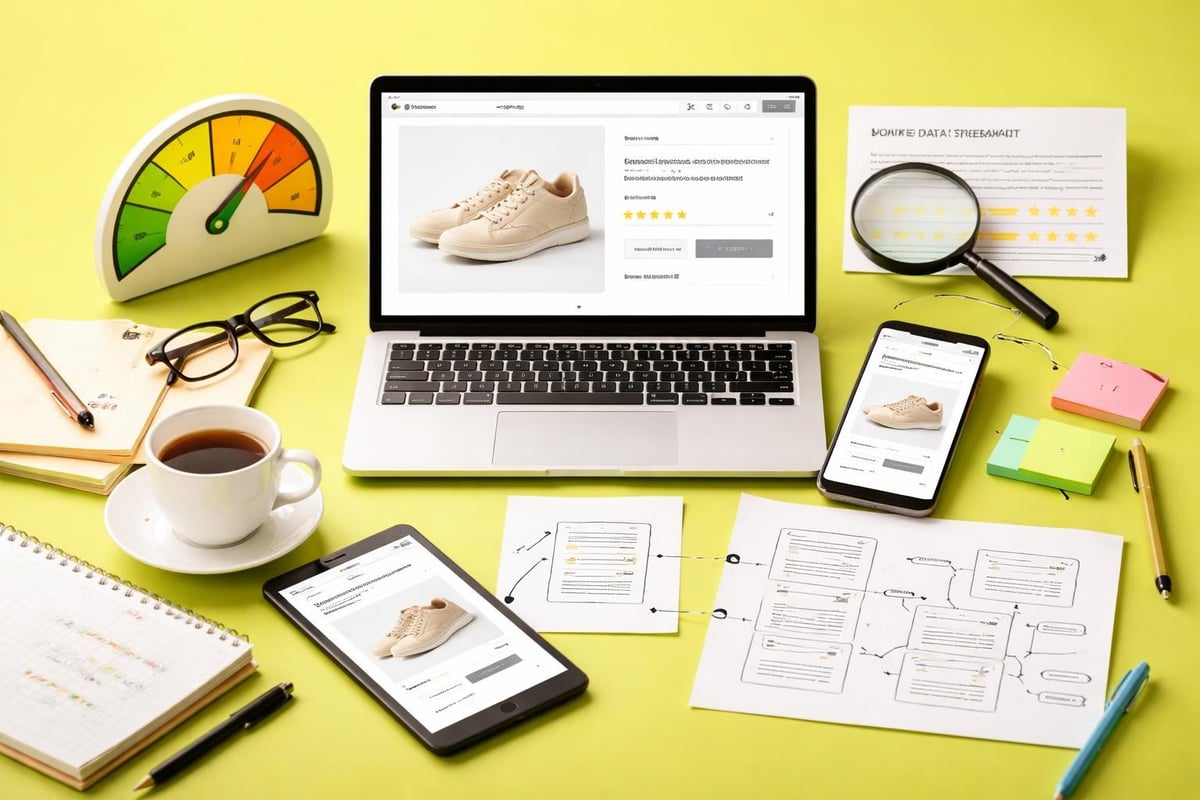
Page Speed Impact on Conversion
Research consistently shows that every additional second of load time costs conversions. For single-product stores where every visitor represents significant acquisition cost, speed optimisation directly impacts profitability:
Load TimeAverage Conversion RateRevenue Impact0-2 seconds3.5-4.2%Baseline2-3 seconds2.8-3.4%-18% revenue3-5 seconds1.9-2.5%-40% revenue5+ seconds0.8-1.4%-65% revenue
Optimisation priorities include image compression, JavaScript minimisation, font loading optimisation, and third-party script reduction. Many shopify single product theme developers now include performance-focused features as standard, but implementation quality varies significantly.
Integration Requirements for Single Product Success
Your theme provides the presentation layer, but successful single-product stores require strategic app integrations enhancing functionality without compromising performance.
Essential App Categories
- Review collection and display (Loox, Judge.me, Stamped)
- Email marketing integration (Klaviyo, Omnisend)
- Upsell and bundle creation (Bold Upsell, Bundler)
- Analytics enhancement (Google Analytics 4, Microsoft Clarity)
- Subscription management if offering recurring purchases
When selecting apps, prioritise those with native Shopify integrations rather than embedded solutions requiring custom code. This maintains theme flexibility and simplifies future updates.
Avoiding App Bloat
Every additional app potentially slows your store and creates maintenance complexity. Before installing anything, ask:
- Does this genuinely improve conversion or customer experience?
- Could this functionality be achieved through theme customisation instead?
- What performance impact will this create?
- Is ongoing cost justified by measurable return?
Many agencies specialising in Shopify web design recommend starting with minimal apps, then adding selectively based on performance data rather than assumed necessity.
Testing and Iteration for Continuous Improvement
Launching your shopify single product theme represents the beginning of optimisation, not the conclusion. Systematic testing reveals improvement opportunities invisible during initial development.
A/B Testing Priority Areas
Not everything deserves testing resources. Focus experimentation on elements with highest conversion impact:
High-impact test candidates:
- Headline variations emphasising different benefits
- Call-to-action button copy and colour
- Hero image/video alternatives
- Pricing presentation formats
- Guarantee and return policy prominence
Lower-impact areas:
- Font choices within same readability category
- Minor colour adjustments
- Icon styles
- Footer content organisation
Run tests until reaching statistical significance before making changes permanent. Premature decisions based on insufficient data often decrease performance rather than improving it.
Heatmap and Session Recording Insights
Quantitative analytics show what happens; qualitative tools show why. Heatmapping and session recording reveal how visitors actually interact with your single-product page:
- Where do they click when attempting navigation?
- At what point do they abandon the page?
- Do they scroll past important conversion content?
- Which sections receive most attention time?
Tools like Microsoft Clarity provide this functionality free, making sophisticated analysis accessible to brands at any budget level. Combine these insights with conversion data to prioritise meaningful improvements.
Common Mistakes to Avoid
Even well-designed shopify single product theme implementations suffer when certain strategic errors occur. Learning from others' mistakes saves time and revenue.
Overcomplicating Simple Products
Some products genuinely need extensive education. Others require minimal explanation. The mistake involves applying complex presentation strategies to inherently simple products:
A phone case doesn't need five sections explaining materials science. A specialised medical device probably does. Match content depth to genuine customer information needs rather than filling space.
Neglecting Post-Purchase Experience
Single-product stores often obsess over acquisition while ignoring retention. Since customer acquisition costs continue rising, repeat purchases and referrals matter increasingly for sustainable profitability.
Post-purchase optimisation includes:
- Thoughtful order confirmation page design with content beyond transaction details
- Strategic email sequences educating customers on product use
- Referral programme implementation encouraging word-of-mouth growth
- Replenishment reminders for consumable products
- Cross-sell opportunities for complementary items
The most successful single-product brands view each customer as a long-term relationship beginning with first purchase, not ending there.
Ignoring Competitive Positioning
Your product exists within a competitive landscape. Failing to acknowledge alternatives or position against them leaves customers conducting their own research, often on competitor sites.
Strategic comparison content works when executed thoughtfully:
- Acknowledge alternatives showing awareness of market
- Present objective differences avoiding exaggerated claims
- Emphasise unique value rather than attacking competitors
- Provide decision frameworks helping customers choose correctly
This approach builds trust while steering customers toward your solution. Pretending competitors don't exist simply appears naive.
Real-World Examples and Case Studies
Examining successful single-product Shopify stores reveals patterns worth emulating. These one-product Shopify store examples demonstrate various approaches to focused product presentation.
Premium Product Positioning
Brands like Purple (mattresses) and Casper (sleep products, though originally single-product) succeeded by treating commodity products as premium innovations. Their theme implementations emphasised:
- Extensive educational content explaining product science
- Visual storytelling through professional photography and video
- Social proof integration throughout customer journey
- Risk-reversal through generous trial periods
These elements transformed sceptical visitors into confident buyers despite premium pricing significantly above market averages.
Subscription Product Models
Single-product subscription businesses require different theme considerations than one-time purchase products. Successful examples showcase:
Subscription-specific elements:
- Clear pricing breakdowns comparing subscription vs one-time costs
- Flexibility messaging addressing cancellation and pause options
- Shipment scheduling information
- Community or member benefits beyond just product delivery
The recurring revenue model allows higher acquisition spending, but only when themes effectively communicate ongoing value justifying subscription commitment.
Platform Migration Considerations
Many successful single-product brands begin on simpler platforms before recognising Shopify's advantages. Understanding migration implications prevents costly mistakes during platform transitions.
Moving From WooCommerce or Custom Solutions
Brands outgrowing WordPress or custom platforms often choose Shopify for reliability, security, and ecosystem advantages. When migrating to a shopify single product theme:
- Preserve URL structure where possible to maintain SEO equity
- Redirect all old URLs properly to prevent broken links
- Maintain content depth ensuring comprehensive information transfers
- Test checkout thoroughly as payment processing changes impact conversion
- Monitor performance metrics closely for first 30-60 days post-migration
Professional Shopify migrations manage these complexities systematically, protecting search rankings and customer experience throughout transitions.
Data Protection During Theme Changes
Even changing themes within Shopify requires careful planning to prevent data loss or functionality disruption:
- Duplicate your store to development environment for testing
- Document all customisations in current theme requiring replication
- Export customer and product data as backup before major changes
- Test checkout completely including payment processing and email notifications
- Prepare rollback plan if issues emerge post-launch
Rushing theme changes without proper testing frequently creates conversion-killing issues discovered only after customer complaints arrive.
Future-Proofing Your Single Product Store
eCommerce technology evolves rapidly. Building your shopify single product theme with future adaptability ensures longevity without constant rebuilds.
Headless Commerce Considerations
Headless Shopify architectures separate frontend presentation from backend commerce functionality. For single-product stores, this offers:
Potential advantages:
- Unlimited design flexibility beyond theme constraints
- Faster page load speeds through modern frameworks
- Omnichannel content distribution to multiple touchpoints
- Enhanced personalisation capabilities
Realistic drawbacks:
- Significantly higher development costs
- Ongoing maintenance complexity
- Overkill for many single-product scenarios
- Slower iteration cycles for non-technical teams
Most single-product brands succeed perfectly well with quality themes and strategic customisation. Headless approaches make sense primarily when unique requirements justify additional investment.
AI and Personalisation Integration
Artificial intelligence increasingly enables personalisation at scale previously requiring massive product catalogues. Single-product stores can leverage:
- Dynamic content adjusting based on visitor behaviour
- Chatbot product education and objection handling
- Predictive analytics identifying high-intent visitors
- Automated A/B testing across multiple variables simultaneously
These capabilities continue becoming more accessible, but implementation quality matters enormously. Poorly executed personalisation decreases conversion more often than helping it.
Choosing and optimising a shopify single product theme requires balancing aesthetic appeal with conversion functionality, technical performance, and strategic positioning. The most successful implementations combine quality theme foundations with thoughtful customisation addressing specific product requirements and audience expectations. If you're launching a focused product brand or looking to improve an existing single-product store's performance, Futur Media brings specialised Shopify expertise to ambitious UK brands. Our Cardiff-based team builds conversion-optimised stores that turn visitors into customers through strategic design, technical excellence, and data-led optimisation.



.svg)