
.svg)






%201.avif)
Choosing the right payment gateway can make or break your Shopify store's success in the UK market. With transaction fees, customer preferences, and compliance requirements all playing crucial roles in your bottom line, understanding the landscape of shopify payment gateways uk merchants can access in 2026 has never been more important. This comprehensive guide explores your options, compares costs, and helps you make an informed decision that balances functionality with profitability.
Understanding Payment Gateways for UK Shopify Stores
A payment gateway acts as the bridge between your customer's payment method and your merchant account, securely processing transactions in real-time. For UK-based Shopify merchants, the choice of gateway affects everything from checkout conversion rates to monthly operating costs.
Shopify Payments serves as the platform's native solution, powered by Stripe infrastructure but with a crucial difference: it's fully integrated into your Shopify admin. This integration eliminates the need for third-party accounts and provides a streamlined experience for both merchants and customers.
When evaluating shopify payment gateways uk stores can implement, consider these critical factors:
- Transaction fees and pricing structure
- Supported payment methods (cards, wallets, buy now pay later)
- Settlement times and cash flow implications
- Customer authentication requirements (3D Secure 2)
- Multi-currency capabilities for international sales
- Integration complexity and technical requirements

Shopify Payments: The Default Choice
For most UK merchants, Shopify Payments represents the most straightforward option. Built directly into the platform, it eliminates additional transaction fees that apply when using third-party gateways.
The pricing structure for Shopify Payments in the UK is transparent and scales with your plan:
| Shopify Plan | Online Card Rate | In-Person Rate | Transaction Fee |
|---|---|---|---|
| Basic | 1.9% + 20p | 1.7% + 0p | 0% |
| Shopify | 1.8% + 20p | 1.6% + 0p | 0% |
| Advanced | 1.6% + 20p | 1.5% + 0p | 0% |
| Plus | 1.5% + 20p | 1.4% + 0p | 0% |
Key advantages include unified reporting within your Shopify admin, faster access to funds (typically two working days), and automatic updates to support new payment methods like Apple Pay, Google Pay, and Shop Pay. The gateway also handles Strong Customer Authentication (SCA) requirements mandated by UK and EU regulations without additional configuration.
One limitation worth noting: Shopify Payments availability depends on your business type and location. Some industries face restrictions, and the service isn't available for all business models. When setting up your store, Shopify automatically determines eligibility based on your business details.
Alternative Payment Gateways Available in the UK
Beyond Shopify Payments, UK merchants can integrate numerous third-party gateways. Each brings unique features, pricing models, and technical requirements. Understanding these options helps you align payment processing with your specific business needs.
Popular Third-Party Options
PayPal remains one of the most recognized payment methods globally. Integration with Shopify is straightforward, and many customers trust the brand. However, PayPal charges 2.9% + 30p for domestic transactions, plus Shopify adds a 2% transaction fee on Basic plans (1% on Shopify, 0.5% on Advanced) when not using Shopify Payments.
Stripe can be integrated as a standalone gateway, though this differs from Shopify Payments' Stripe-powered backend. Direct Stripe integration gives you access to advanced features like Stripe Radar for fraud prevention and more granular control over payment flows. The trade-off is technical complexity and those additional Shopify transaction fees.
Worldpay offers enterprise-grade payment processing with robust fraud tools and support for numerous payment methods. Pricing varies based on transaction volume and is typically negotiated directly. This gateway suits high-volume merchants who need dedicated support and custom pricing structures.
When evaluating these alternatives, recent research into payment gateway technologies suggests that smart routing and AI-powered fraud detection are becoming increasingly important for optimizing approval rates and reducing chargebacks.
Comparing Costs: Total Cost of Ownership
Looking solely at transaction fees misses the complete picture. Calculate your total monthly cost using this framework:
- Gateway transaction fees (percentage + fixed amount per transaction)
- Shopify transaction fees (if not using Shopify Payments)
- Monthly gateway fees (if applicable)
- Chargeback fees (varies by provider)
- Currency conversion fees (for international sales)
For a store processing £50,000 monthly with an average order value of £75:
| Gateway | Per-Transaction | Shopify Fee | Monthly Total* |
|---|---|---|---|
| Shopify Payments (Shopify Plan) | 1.8% + 20p | 0% | £1,033 |
| PayPal (Shopify Plan) | 2.9% + 30p | 1% | £2,150 |
| Stripe Direct (Shopify Plan) | 1.4% + 20p | 1% | £1,333 |
*Based on 667 transactions (£50,000 ÷ £75)
This comparison demonstrates why most UK Shopify merchants default to Shopify Payments. The elimination of additional transaction fees creates significant savings that compound as your store scales.

Payment Methods and Customer Expectations
Modern UK consumers expect choice at checkout. The shopify payment gateways uk merchants implement must support diverse payment preferences whilst maintaining a frictionless experience.
Essential Payment Methods for 2026
Card payments still dominate UK ecommerce, accounting for approximately 60% of online transactions. Both credit and debit cards require support, with Visa and Mastercard being essential. American Express acceptance varies but is increasingly expected by premium brands.
Digital wallets have seen explosive growth. Apple Pay, Google Pay, and Shop Pay reduce checkout friction by auto-filling payment and shipping information. These methods typically convert 10-15% higher than manual card entry because they eliminate form-filling friction.
Buy Now, Pay Later (BNPL) services like Klarna and Clearpay have become table stakes for fashion, homeware, and lifestyle brands. These options particularly appeal to younger demographics and can increase average order values by 20-30%. Most BNPL providers integrate directly with Shopify, though some require manual setup beyond Shopify Payments.
Bank transfers and direct debits suit subscription businesses and high-ticket purchases. GoCardless integrates with Shopify for recurring payments, offering lower fees than card processing for regular billing cycles.
Supporting multiple payment methods requires careful implementation. When building or optimising your Shopify store, ensure your checkout design accommodates various payment buttons without creating visual clutter or decision paralysis.
Security, Compliance, and Technical Considerations
Payment processing in the UK operates under strict regulatory frameworks. Your chosen gateway must support compliance whilst protecting your business from fraud and chargebacks.
Regulatory Requirements
Strong Customer Authentication (SCA) became mandatory across the UK and EU in 2021. This regulation requires two-factor authentication for most card transactions. All major shopify payment gateways uk merchants use support SCA through 3D Secure 2, which provides a smoother customer experience than older verification methods.
PCI DSS compliance is mandatory for all merchants processing card payments. Shopify's platform is Level 1 PCI DSS compliant, the highest security standard. When using Shopify Payments or approved third-party gateways, card data never touches your servers, simplifying compliance significantly.
Your responsibilities include:
- Using secure, updated Shopify themes and apps
- Implementing HTTPS across your entire site
- Regularly reviewing access permissions
- Training staff on data protection practices
- Maintaining documentation of security policies
Fraud Prevention Strategies
Payment fraud cost UK businesses over £700 million in 2025. Protecting your store requires layered defences:
Gateway-level fraud tools: Shopify Payments includes basic fraud analysis that flags high-risk orders. Advanced gateways offer machine learning-powered risk scoring.
Address Verification System (AVS): Compares billing address with card issuer records. Mismatches indicate potential fraud.
Card Verification Value (CVV): Requires the three-digit security code, proving physical card possession.
Velocity checks: Limit transaction frequency from single IP addresses or cards to prevent card testing attacks.
Manual review processes: For high-value orders, human oversight catches sophisticated fraud attempts automated systems miss.
Recent academic research into AI-powered payment routing demonstrates how intelligent systems can simultaneously improve approval rates and reduce fraud. These technologies are increasingly accessible to Shopify merchants through apps and advanced gateway features.
Optimizing Checkout Performance and Conversion
Your payment gateway choice directly impacts conversion rates. Even small improvements in checkout experience translate to meaningful revenue increases when compounded across thousands of transactions.
Technical Performance Factors
Page load speed at checkout is critical. Research consistently shows that each additional second of load time reduces conversion by 7-10%. Shopify Payments loads fastest because it's native to the platform, whilst third-party gateways add external API calls that introduce latency.
Test your checkout performance regularly:
- Use tools like Google PageSpeed Insights on checkout pages
- Monitor Time to Interactive (TTI) specifically
- Test on mobile devices and slower connections
- Compare performance across different payment gateways
Mobile optimization cannot be overlooked when 70% of UK ecommerce traffic originates from smartphones and tablets. Your chosen gateway must provide mobile-native experiences, including biometric authentication for digital wallets and simplified input for card details.
Conversion Rate Optimization Techniques
Beyond gateway selection, strategic checkout design maximizes completed purchases. When implementing conversion rate optimization strategies for your Shopify store, consider these payment-specific improvements:
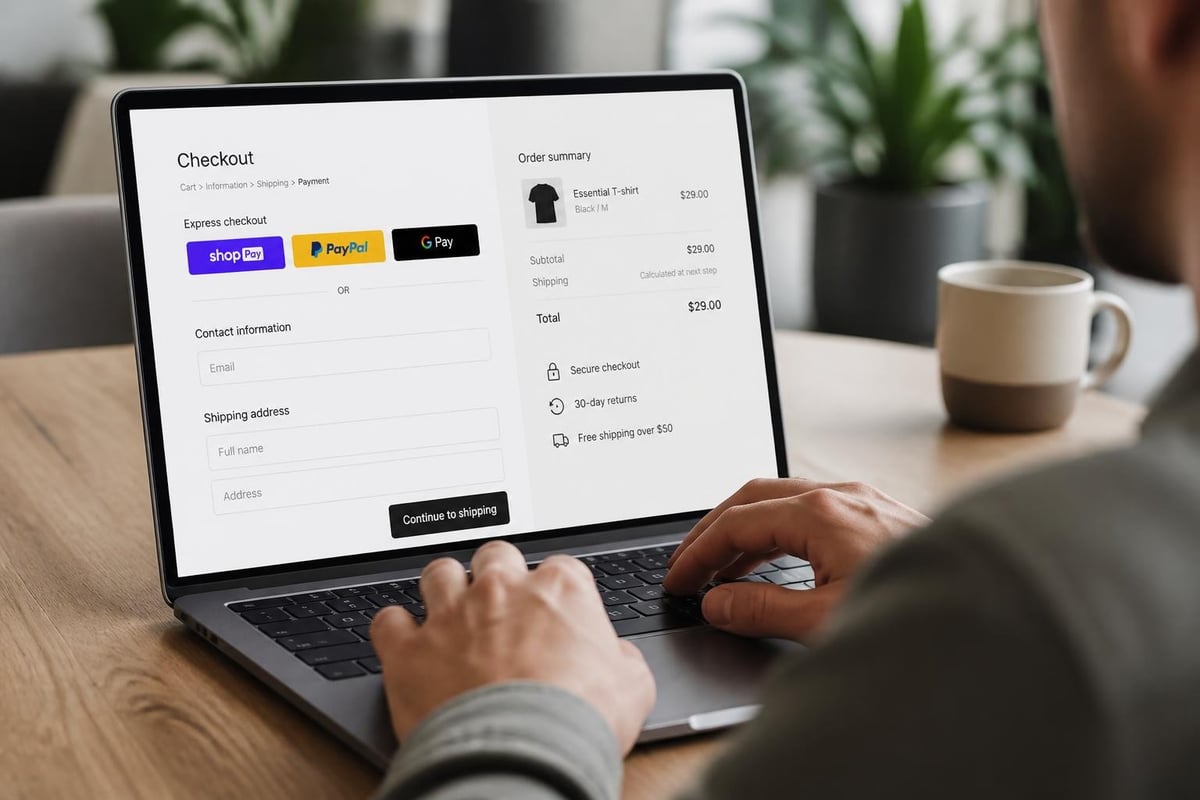
- Express checkout buttons above traditional payment forms reduce steps for wallet users
- Payment icons display supported methods, building confidence before form completion
- Error messaging that's helpful rather than punitive when payment issues occur
- Guest checkout options that don't force account creation before purchase
- Progressive disclosure that reveals payment fields only after shipping information is complete
One often-overlooked aspect: payment method ordering. Testing reveals that displaying your most popular payment option first can lift conversion by 2-3%. Use Shopify analytics to identify which methods your customers prefer, then prioritize accordingly.
Multi-Currency and International Considerations
UK brands increasingly sell internationally. Your payment gateway strategy must accommodate customers beyond domestic borders whilst managing currency complexity efficiently.
Currency Handling Options
Shopify Payments supports multi-currency selling through Shopify Markets. Customers see prices in their local currency, whilst you receive settlement in GBP. The system handles conversion automatically, though conversion rates include a markup that varies by currency pair.
Third-party currency converters display prices in local currencies but charge in GBP. This approach seems customer-friendly but often creates confusion at checkout when the final charge differs from displayed prices. Card issuer conversion fees also apply, frustrating customers who expected transparent pricing.
Multi-currency merchant accounts through gateways like Worldpay allow settlement in multiple currencies. This suits businesses with substantial international operations who can manage foreign currency accounts. The complexity increases significantly but provides maximum control over conversion rates and fees.
Consider these international payment preferences by region:
| Region | Popular Payment Methods | Key Considerations |
|---|---|---|
| Europe | Cards, PayPal, SEPA transfers | GDPR compliance, SCA requirements |
| North America | Cards, PayPal, Apple/Google Pay | Higher card usage, lower wallet adoption |
| Asia Pacific | Cards, digital wallets, bank transfers | Region-specific wallets (Alipay, WeChat) |
| Australia | Cards, Afterpay, PayPal | Strong BNPL adoption, similar to UK |
When expanding internationally, Shopify's development capabilities allow for sophisticated customization of payment options based on customer location, ensuring each market sees relevant, familiar payment methods.
Making the Right Choice for Your Business
Selecting from available shopify payment gateways uk merchants can use requires aligning features with your specific business model, customer base, and growth trajectory.
Decision Framework
Start by answering these fundamental questions:
What's your monthly transaction volume? Higher volumes justify negotiating custom rates with premium gateways. Lower volumes typically benefit from Shopify Payments' simple, transparent pricing.
Who are your customers? B2C fashion brands need BNPL options. B2B wholesale operations might prioritize invoice payments and bank transfers. Understanding customer preferences drives gateway selection.
What's your average order value? High-ticket items justify percentage-based fees less than low-value transactions where fixed fees dominate. Calculate total costs across your actual transaction distribution, not just averages.
Do you sell subscriptions? Recurring billing requires gateway support for saved payment methods and automated charging. Shopify Payments handles this natively, whilst some third-party options require additional apps.
What's your risk tolerance? Conservative fraud settings reduce chargebacks but decline legitimate orders. Aggressive settings improve approval rates but increase fraud exposure. Different gateways offer varying sophistication in managing this balance.
Testing and Implementation
Never switch payment gateways without thorough testing. The process should include:
- Sandbox testing to verify integration functionality
- Small-scale live testing with limited traffic before full rollout
- Mobile device testing across iOS and Android platforms
- International testing if serving customers beyond the UK
- Performance monitoring comparing load times against your previous setup
When migrating between platforms or implementing new payment systems, maintain your existing gateway until the new solution proves stable. This redundancy prevents revenue loss if technical issues arise during transition.
Advanced Payment Strategies for Growing Brands
As your Shopify store scales, payment processing becomes increasingly strategic. Advanced merchants optimize beyond basic gateway selection to extract maximum value from payment operations.
Dynamic Payment Method Display
Intelligent stores show different payment options based on customer context. Implementation possibilities include:
- Geographic targeting (showing Klarna to German customers, Clearpay to UK customers)
- Order value thresholds (offering BNPL only above £50)
- Customer history (prioritizing previously used methods for returning customers)
- Device type (emphasizing digital wallets on mobile)
These optimizations require custom development or specialized apps but can meaningfully improve conversion rates by reducing decision fatigue and presenting relevant choices.
Payment Data for Business Intelligence
Transaction data provides valuable insights beyond simple revenue tracking. Analyse:
- Approval rates by payment method to identify underperforming gateways
- Chargeback patterns to spot fraudulent products or customer segments
- Payment method preferences by customer lifetime value to understand high-value customer behaviors
- Seasonal variations in payment method usage that inform promotional strategies
Shopify's native reporting covers basics, whilst more sophisticated analysis requires data warehouse integration. For brands processing hundreds of thousands of pounds monthly, these insights justify investment in advanced analytics infrastructure.
Subscription and Recurring Revenue Optimization
Subscription businesses face unique payment challenges. Failed payment recovery becomes critical when customer lifetime value depends on continuous billing. Strategies include:
- Dunning management that automatically retries failed payments with optimized timing
- Payment method expiration monitoring that proactively requests updated card details
- Smart retry logic that adjusts based on decline reasons
- Alternative payment method fallback when primary methods fail
Apps like Recharge and Bold Subscriptions extend Shopify's native subscription capabilities, offering sophisticated payment retry logic that can recover 15-20% of failed transactions that would otherwise result in customer churn.
Future Trends in UK Payment Processing
The payment landscape continues evolving rapidly. Understanding emerging trends helps future-proof your gateway strategy and maintain competitive advantage.
Open Banking and Account-to-Account Payments
Open Banking regulations enable direct bank account payments without card networks. These transactions cost significantly less (typically under 0.3%) and settle faster than card payments. Adoption in UK ecommerce remains limited but is accelerating, particularly for high-value purchases where fee savings become substantial.
Services like TrueLayer and Plaid provide Shopify integrations, though customer familiarity remains lower than established payment methods. Expect continued growth throughout 2026 as consumers become more comfortable with bank-authenticated payments.
Cryptocurrency and Digital Currency
Whilst cryptocurrency payment adoption remains niche, certain customer segments expect this option. Shopify merchants can integrate crypto payments through providers like Coinbase Commerce or BitPay. Transaction fees are competitive, but volatility risk and accounting complexity limit appeal for most traditional retailers.
Central Bank Digital Currencies (CBDCs) represent a longer-term development. The Bank of England's digital pound remains in consultation phase, but government-backed digital currencies could eventually transform payment processing with instant settlement and minimal fees.
Artificial Intelligence in Fraud Detection
Modern AI systems analyze payment flows to detect sophisticated fraud patterns humans miss. Machine learning models improve continuously, adapting to emerging fraud techniques whilst reducing false declines that frustrate legitimate customers. Premium payment gateways increasingly incorporate these technologies, though they're becoming accessible to smaller merchants through Shopify apps and gateway-provided tools.
Embedded Finance and Payment Flexibility
The line between payment processing and broader financial services blurs. BNPL evolved from a payment method to a marketing tool that increases conversion. Expect continued innovation in:
- Deposit and installment structures for custom products
- Financing options embedded directly in product pages
- Loyalty programs integrated with payment selection
- Carbon offset options bundled with payment processing
These features transform payments from transactional necessity to strategic differentiation, particularly for brands targeting conscious consumers willing to pay premium prices for aligned values.
Selecting the right payment gateway shapes your Shopify store's profitability, customer experience, and operational complexity. For most UK merchants, Shopify Payments offers the optimal balance of cost, functionality, and ease of use, whilst specific business models benefit from specialized alternatives. Whether you're launching a new store, optimizing an existing operation, or expanding internationally, payment strategy deserves careful consideration alongside design and marketing. Futur Media helps ambitious UK brands build high-performing Shopify stores with payment processing configured for conversion and growth, combining technical expertise with commercial understanding to deliver measurable results.



.svg)