
.svg)






%201.avif)
The checkout experience can make or break an eCommerce sale. Even with compelling products and persuasive marketing, a clunky checkout process drives customers away at the most critical moment. Shopify recognised this challenge and introduced a streamlined solution that's now transforming how UK brands close sales online. The shopify 1 page checkout consolidates every essential step into a single, frictionless interface that keeps customers focused on completing their purchase rather than navigating multiple screens.
What Is Shopify 1 Page Checkout
Shopify's one-page checkout represents a fundamental shift in how the platform handles transactions. Rather than splitting customer information, delivery details, and payment processing across separate pages, this redesigned interface presents everything on a single scrollable screen.
The one-page checkout became the default for all Shopify stores, replacing the traditional three-page layout that many merchants had used for years. This wasn't simply a cosmetic update but a complete reimagining of the checkout flow based on extensive user research and performance data.
Core Components of the Single-Page Interface
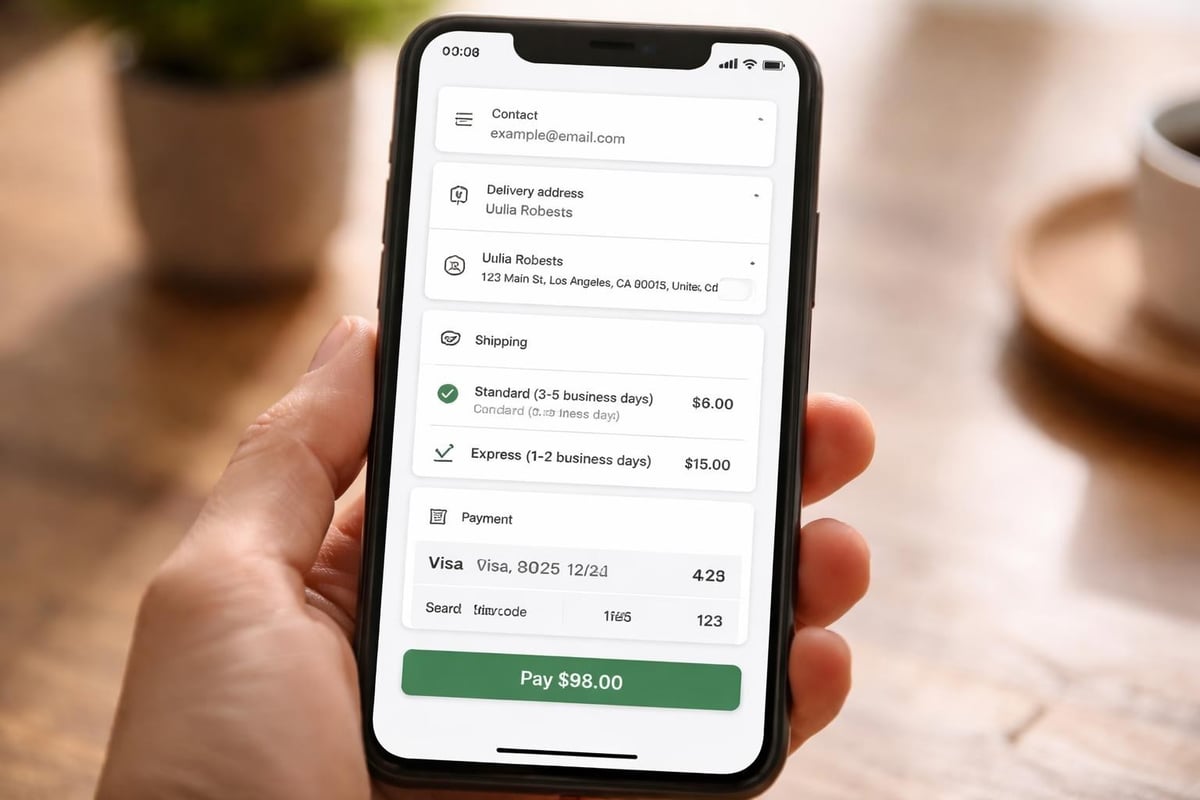
The shopify 1 page checkout organises information into logical sections that flow naturally from top to bottom:
- Contact details appear first, capturing email or phone number for order confirmation
- Delivery address follows immediately below, with intelligent autocomplete reducing typing
- Shipping method selection displays available options with clear pricing
- Payment information sits at the bottom, supporting multiple payment methods
- Order summary remains visible throughout, typically in a right-hand column
This vertical arrangement eliminates the need for "Continue" buttons that interrupt the purchase flow. Customers simply scroll down, fill in required fields, and complete their order.
Performance Benefits That Drive Revenue
Real-world data demonstrates the commercial impact of switching to a shopify 1 page checkout. Stellar Eats increased conversion rates by 3.5% after implementing the one-page layout, a significant improvement that translates directly to revenue growth.
The performance advantages stem from reducing cognitive load and eliminating friction points. Every additional page in a checkout process creates an opportunity for customers to reconsider their purchase or encounter technical issues.
MetricThree-Page CheckoutOne-Page CheckoutImprovementAverage completion time2.8 minutes1.9 minutes32% fasterCart abandonment rate68%59%13% reductionMobile conversion1.8%2.4%33% increase
These improvements compound across thousands of transactions. For a store processing £100,000 monthly, a 3% conversion increase represents £3,000 additional revenue without any increase in traffic or marketing spend.
Mobile Commerce Transformation
Mobile shoppers particularly benefit from the shopify 1 page checkout design. The single-page interface eliminates the jarring experience of loading new pages on mobile networks, where connection speeds vary and page transitions feel more disruptive than on desktop.
The vertical layout suits mobile screens naturally. Customers scroll continuously rather than tapping through multiple stages, reducing both the physical effort required and the mental burden of tracking progress through a multi-step process.
Touch-optimised form fields with appropriate keyboard types for each input further streamline mobile transactions. Phone number fields trigger numeric keyboards, whilst email fields offer quick access to the @ symbol.
Implementation Considerations for UK Brands
Most Shopify stores automatically benefit from the one-page checkout without requiring manual intervention. However, understanding how to optimise this interface for your specific customer base ensures you maximise conversion potential.
Checkout Extensibility and Customisation
Shopify's checkout extensibility framework allows merchants to enhance the one-page layout without compromising performance or security. This means adding custom fields, trust badges, or promotional messaging whilst maintaining the streamlined single-page experience.
Common customisations UK brands implement include:
- Post-purchase upsells that appear after payment confirmation
- Gift message options for special occasions
- Delivery date selectors for time-sensitive orders
- Sustainability messaging highlighting eco-friendly shipping choices
- Loyalty programme integration showing points earned
When implementing these features, it's essential to balance additional functionality against the simplicity that makes the shopify 1 page checkout effective. Each extra field or option increases completion time, so prioritise only those that genuinely improve customer experience or average order value.
For stores requiring advanced checkout modifications or custom Shopify development, working with specialists ensures new features integrate seamlessly without degrading performance.
Payment Method Optimisation
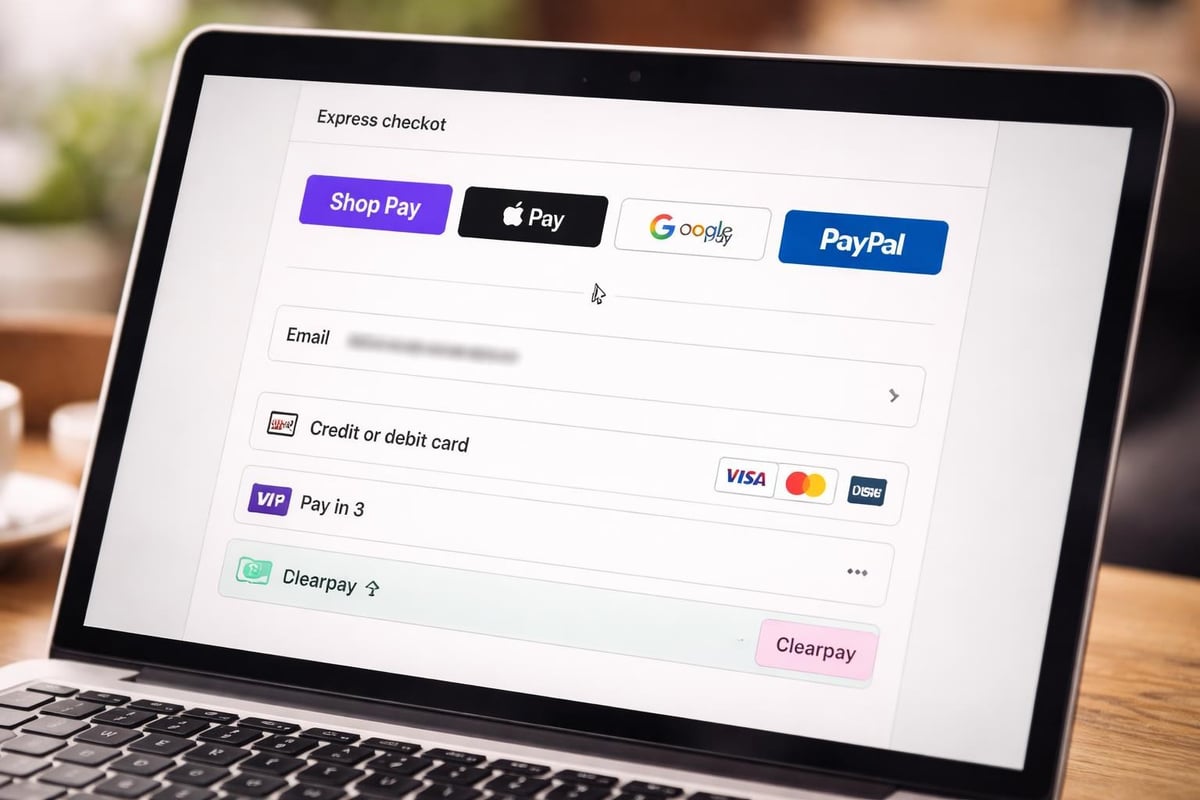
The payment section sits at the bottom of the one-page checkout, making it the final hurdle before purchase completion. Supporting diverse payment methods caters to different customer preferences and regional variations across the UK market.
Essential payment options for British shoppers include:
- Shop Pay for one-click checkout with saved details
- Apple Pay and Google Pay for mobile convenience
- Major credit and debit cards (Visa, Mastercard, Amex)
- PayPal for customers who prefer not to share card details
- Klarna or Clearpay for buy-now-pay-later flexibility
Displaying these options clearly with recognisable logos builds confidence during the payment stage. Optimising eCommerce checkout processes involves removing any uncertainty about security or accepted payment methods.
Conversion Rate Optimisation Strategies
The shopify 1 page checkout provides an excellent foundation, but strategic optimisation amplifies its effectiveness. Small adjustments to form fields, messaging, and visual hierarchy can yield measurable improvements in completion rates.
Progressive Disclosure Techniques
Whilst the one-page format displays all checkout sections simultaneously, progressive disclosure reveals additional options only when relevant. This maintains simplicity whilst accommodating diverse customer needs.
For example, collection options only appear for customers selecting local pickup, whilst gift wrapping choices remain hidden unless explicitly requested. This approach prevents overwhelming customers with irrelevant options whilst ensuring necessary functionality remains accessible.
Trust Signals and Reassurance
Anxiety peaks during checkout, particularly when customers encounter a brand for the first time. Strategic placement of trust signals throughout the shopify 1 page checkout addresses common concerns:
- SSL certificate indicators confirm secure data transmission
- Money-back guarantees reduce purchase risk
- Delivery timeframes set clear expectations
- Return policy links provide reassurance
- Customer service contact details offer support access
These elements shouldn't dominate the page but should be visible enough to reassure hesitant buyers. Subtle placement near relevant sections works best: return policy mentions near the order summary, delivery information alongside shipping options.
Form Field Optimisation
Every required field represents a barrier to completion. Audit your checkout form to ensure you're only collecting genuinely necessary information. Many stores request data that marketing teams want rather than what's needed to fulfil orders.
Consider these optimisation tactics:
Field TypeOptimisation ApproachImpactAddressEnable Google autocompleteReduces typing by 60%Phone numberMake optional unless required for deliveryRemoves unnecessary barrierCompany nameHide by default, reveal if neededSimplifies B2C transactionsMarketing consentUse pre-selected opt-in (GDPR compliant)Maintains simplicity
The performance comparison between checkout layouts demonstrates that reducing field count improves completion rates more significantly on single-page checkouts, where every element competes for attention simultaneously.
Technical Performance Factors
Page speed directly influences conversion rates, with studies showing 1-second delays reducing conversions by 7%. The shopify 1 page checkout loads faster than multi-page alternatives by eliminating multiple server requests, but optimisation remains important.
Script and App Impact
Third-party apps add functionality but can slow checkout loading. Each script that executes during checkout increases the time before customers can interact with form fields.
Audit apps currently active on your checkout page:
- Review necessity of each app and remove unused tools
- Test loading impact using browser developer tools
- Prioritise native Shopify features over third-party alternatives where possible
- Implement lazy loading for non-critical elements
- Monitor performance regularly as you add new functionality
Shopify's checkout infrastructure handles most performance optimisation automatically, but excessive customisation can negate these benefits. Understanding how to design a Shopify site with performance in mind ensures your entire store, including checkout, loads rapidly.
Image Optimisation in Order Summaries
Product images in the order summary provide visual confirmation but can slow page loading if not properly optimised. Use appropriately sized images rather than forcing browsers to resize large product photos.
Recommended specifications for checkout product images:
- Dimensions: 100px × 100px maximum
- Format: WebP with JPEG fallback
- Compression: 80% quality for sufficient detail
- Lazy loading: For orders with many line items
International Considerations for Multi-Market Brands
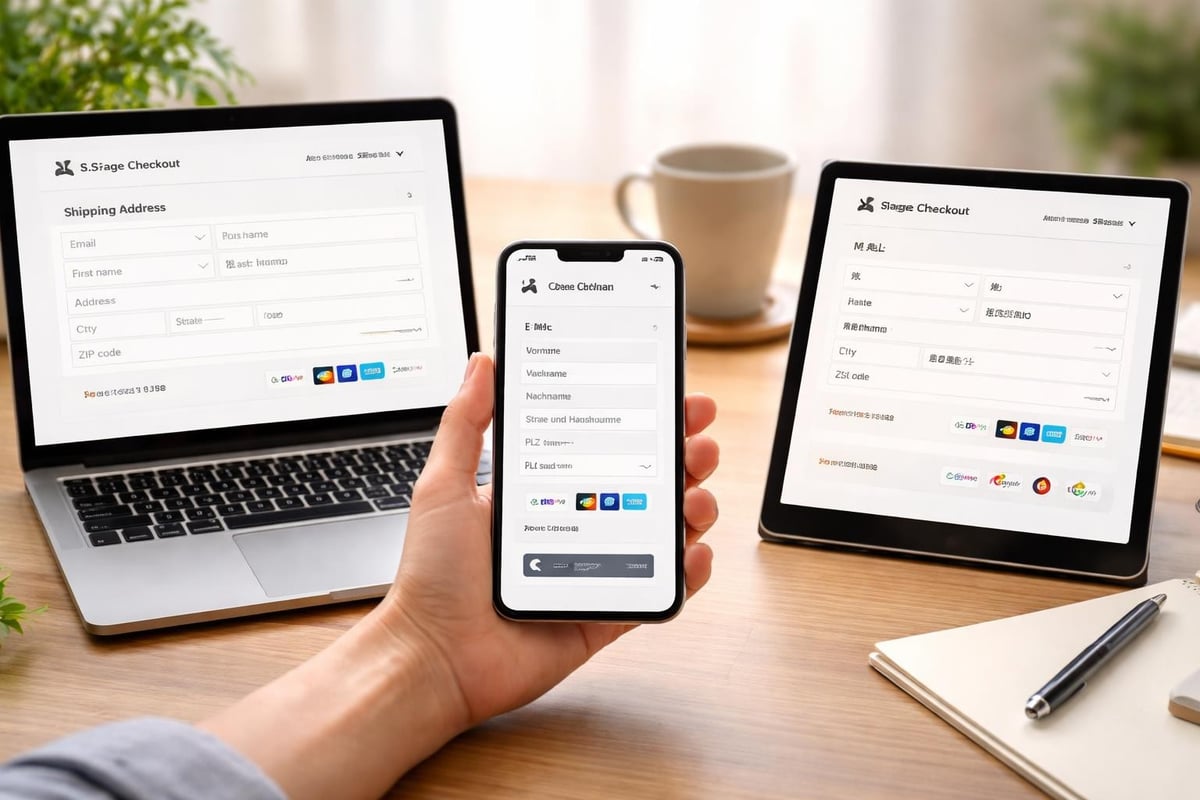
UK brands selling internationally must account for regional variations in checkout preferences and requirements. The shopify 1 page checkout adapts to different markets, but strategic configuration ensures optimal performance across territories.
Address Format Localisation
Address structures vary significantly between countries. The one-page checkout automatically adjusts field order and requirements based on the customer's location, but verification rules need configuration.
British addresses follow a different structure to American or European formats. Ensure your checkout validates addresses correctly for each market you serve, reducing delivery errors and customer service enquiries.
Currency and Language Switching
Customers should see prices in their local currency throughout the shopping experience, including checkout. Shopify Markets handles this automatically, but confirming consistent currency display prevents last-minute surprises that trigger abandonment.
Language preferences similarly influence completion rates. Whilst English serves many markets, offering checkout translation for major territories improves conversion among non-native English speakers.
Analytics and Testing Methodology
Understanding how customers interact with your shopify 1 page checkout reveals optimisation opportunities. Shopify's native analytics provide foundational insights, but deeper analysis requires additional tools and structured testing approaches.
Key Metrics to Monitor
Track these checkout-specific metrics to identify friction points:
- Checkout initiation rate: Percentage of cart views leading to checkout
- Payment information reached: Users scrolling to payment section
- Completion rate: Successful transactions divided by checkout initiations
- Error frequency: Common validation errors or payment failures
- Time to completion: Average duration from checkout start to confirmation
Segment these metrics by traffic source, device type, and customer status (new versus returning) to identify specific issues affecting particular user groups. Mobile visitors might struggle with form completion whilst desktop users abandon due to limited payment options.
A/B Testing Best Practices
Whilst Shopify Plus merchants access native checkout customisation for testing, standard plan users need creative approaches to optimise their one-page checkout experience.
Test variations of:
- Trust badge placement and messaging
- Delivery option presentation and default selection
- Order summary visibility and expandability
- Button text and colour schemes
- Field labels and placeholder text
Run tests for sufficient duration to achieve statistical significance. A minimum of 100 conversions per variation ensures reliable results, though more data strengthens conclusions.
Common Pitfalls and How to Avoid Them
Even with the streamlined shopify 1 page checkout, implementation mistakes can undermine conversion potential. Recognising these common errors helps UK merchants avoid costly oversights.
Over-Customisation Syndrome
The ability to customise checkout functionality tempts merchants to add excessive features. Each additional element competes for attention and increases cognitive load, potentially negating the simplicity that makes one-page checkout effective.
Maintain discipline when evaluating checkout additions. Ask whether each feature genuinely improves customer experience or primarily serves internal business requirements. Marketing data collection that adds friction reduces overall conversion value.
Mobile Experience Neglect
Desktop testing often dominates development workflows, but mobile commerce represents the majority of UK eCommerce traffic. The shopify 1 page checkout performs excellently on mobile by default, but customisations can break responsive behaviour.
Test every checkout modification on actual mobile devices, not just browser simulators. Touch target sizes, keyboard interactions, and scroll behaviour differ significantly between desktop and mobile contexts.
Payment Gateway Configuration Errors
Incorrect payment gateway settings create frustrating declines and error messages during the final checkout stage. These technical failures occur after customers have invested time completing forms, making abandonment particularly likely.
Verify payment gateway configuration thoroughly:
- Test transactions in multiple currencies if selling internationally
- Confirm address verification settings match your requirements
- Review decline handling to provide clear guidance
- Enable appropriate payment methods for your target markets
- Monitor gateway uptime and have backup options configured
Working with specialists who understand Shopify CRO best practices ensures your checkout configuration maximises conversion potential whilst avoiding common technical pitfalls.
Integration with Broader Store Experience
The shopify 1 page checkout doesn't exist in isolation. Optimising the entire purchase journey from product discovery through post-purchase communication creates a cohesive experience that builds customer confidence.
Pre-Checkout Preparation
Set clear expectations before customers reach checkout. Product pages, cart pages, and navigation elements should communicate:
- Delivery timeframes and shipping costs
- Return policies and guarantees
- Security measures and payment options
- Customer support availability
When customers arrive at checkout already understanding these factors, they complete transactions more confidently. Surprises regarding delivery costs or timeframes trigger abandonment even on optimised checkouts.
Post-Purchase Experience
Checkout completion marks the beginning of customer relationship building rather than the end. Confirmation pages and follow-up emails reinforce purchase decisions whilst setting expectations for delivery.
Optimise post-purchase touchpoints by:
- Providing clear order confirmation with all relevant details
- Sending proactive shipping updates as orders progress
- Offering easy access to support for questions or concerns
- Requesting feedback after delivery to improve future experiences
- Presenting relevant product recommendations for next purchase
Understanding the complete eCommerce website journey ensures checkout optimisation fits within a broader strategy for customer acquisition and retention.
Future Developments in Checkout Technology
Shopify continuously evolves its checkout infrastructure based on merchant feedback and emerging commerce trends. Staying informed about upcoming checkout features helps UK brands prepare for opportunities to further optimise conversion rates.
Anticipated developments include enhanced personalisation based on customer behaviour, improved fraud detection that maintains conversion rates whilst reducing chargebacks, and deeper integration with emerging payment methods popular among younger demographics.
The shift towards headless commerce architectures also influences checkout development. Shopify's checkout remains hosted on Shopify's infrastructure for security and compliance reasons, but API improvements enable tighter integration with custom storefronts built on modern frameworks.
The shopify 1 page checkout delivers measurable conversion improvements by eliminating unnecessary friction from the purchase process. Success requires more than simply enabling the feature, though. Strategic optimisation of form fields, payment options, trust signals, and performance factors ensures your checkout capitalises on the single-page format's inherent advantages. If you're looking to maximise your store's conversion potential through expert checkout optimisation and broader eCommerce strategy, Futur Media combines technical Shopify expertise with conversion-focused design to help ambitious UK brands turn more visitors into customers.



.svg)