
.svg)






%201.avif)
Product bundling has become one of the most effective strategies for increasing average order value and improving customer experience in eCommerce. The ability to bundle products in Shopify gives merchants a powerful tool to encourage larger purchases, move inventory faster, and create compelling offers that drive conversions. Whether you're selling skincare products, tech accessories, or fashion items, understanding how to implement bundles strategically can transform your store's performance and revenue potential.
Understanding Product Bundles and Their Commercial Impact
Product bundling involves offering multiple items together as a single purchase, typically at a perceived value that exceeds buying items individually. This merchandising technique taps into customer psychology by simplifying decision-making and creating urgency through special pricing.
Key benefits of implementing bundles include:
- Increased average order value through multi-item purchases
- Improved inventory turnover for slower-moving products
- Enhanced customer perception of value and savings
- Reduced decision fatigue during the shopping journey
- Higher conversion rates compared to individual product pages
The commercial logic behind bundle products in Shopify centres on margin optimisation. By combining high-margin items with complementary products, merchants can maintain healthy profit levels whilst offering customers genuine value. This balance between profitability and customer satisfaction makes bundling particularly attractive for growing brands.
Types of Product Bundles That Drive Results
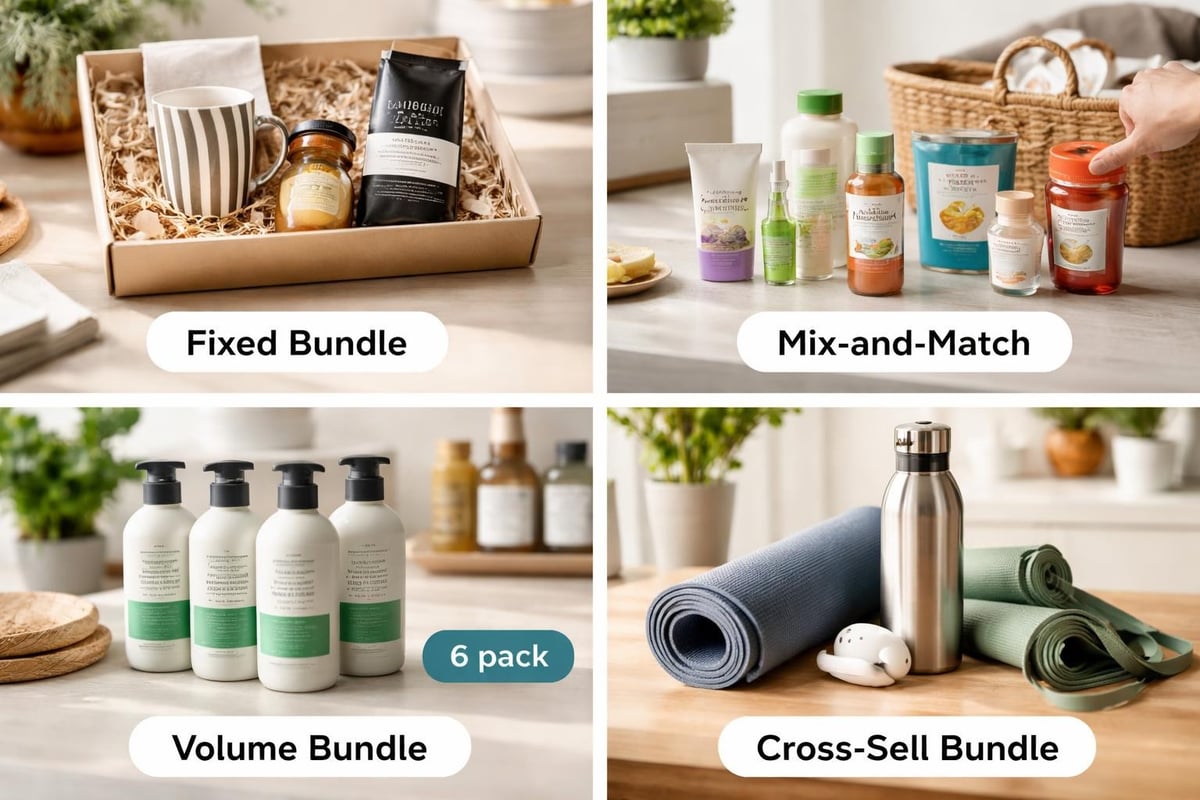
Different bundle structures serve distinct commercial purposes. Fixed bundles contain predetermined products sold as a single unit, ideal for curated experiences like starter kits or gift sets. Mix-and-match bundles allow customers to select items from defined categories, creating personalisation whilst maintaining structure.
Understanding effective product bundling strategies requires matching bundle types to your inventory and customer behaviour. Volume bundles offer quantity discounts on identical products, perfect for consumables or wholesale contexts. Cross-sell bundles combine complementary products from different categories, such as cameras with memory cards and cases.
Bundle TypeBest ForComplexityInventory ImpactFixed BundlesCurated sets, giftsLowSimple trackingMix-and-MatchPersonalisation, varietyMediumModerate trackingVolume BundlesConsumables, bulk salesLowHigh volume movementCross-Sell BundlesComplementary productsMediumStrategic pairing
Native Shopify Bundles Functionality
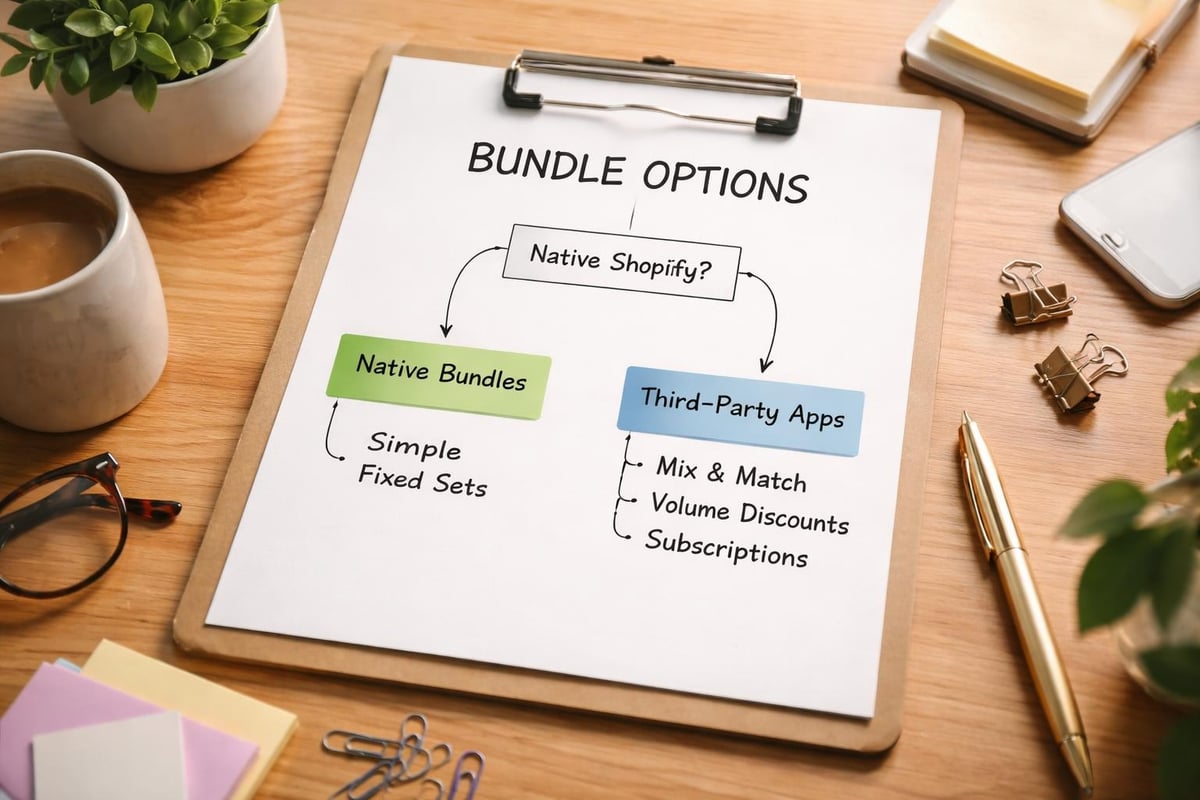
Shopify introduced native bundling functionality in 2023, providing merchants with a built-in solution for creating bundle products in Shopify without third-party apps. This native approach integrates directly with Shopify's inventory system, checkout process, and analytics.
The Shopify Bundles app allows merchants to create fixed bundles and variants while maintaining accurate inventory tracking. When a bundle sells, Shopify automatically deducts the correct quantities from individual product inventory levels. This seamless integration prevents overselling and maintains inventory accuracy across your catalogue.
Setting up native bundles involves:
- Installing the Shopify Bundles app from the Shopify App Store
- Selecting products to include in your bundle
- Configuring bundle variants if offering multiple options
- Setting bundle pricing and compare-at pricing
- Creating compelling product descriptions and imagery
- Publishing the bundle to your online store
Native bundles work particularly well for straightforward fixed-bundle scenarios. However, they currently lack some advanced features like complex variant combinations or sophisticated discount rules. Technical implementation details reveal the API structure behind bundle creation for developers requiring custom solutions.
Inventory Management Considerations
Accurate inventory tracking becomes critical when you bundle products in Shopify. Native bundles track component inventory automatically, but merchants must understand how stock levels interact across individual products and bundles.
When a product appears in multiple bundles and as a standalone item, Shopify draws from the same inventory pool. A product with 10 units in stock can fulfil ten individual orders, five bundles containing two units each, or any combination totalling ten units. This shared inventory model requires careful planning for popular items.
Inventory best practices include:
- Monitoring stock levels for high-demand bundle components
- Setting inventory alerts before items reach zero
- Creating safety stock buffers for critical products
- Planning bundle launches around inventory availability
- Reviewing bundle performance against inventory costs
Third-Party Bundle Apps and Advanced Solutions
While native functionality suits many merchants, third-party apps offer expanded capabilities for complex bundling strategies. These apps provide features like infinite variant combinations, quantity selectors, subscription bundles, and advanced discount logic.
Popular bundle apps include Bundler, Shopify Bundles Plus, and Wide Bundle. Each offers distinct features targeting different merchant needs and technical requirements. Evaluating bundle app options helps merchants select solutions matching their specific bundling strategy and technical capabilities.
The decision between native and third-party solutions depends on bundle complexity, feature requirements, and budget considerations. Native bundles cost nothing beyond your Shopify subscription, whilst premium apps range from £10 to £80 monthly depending on features and order volume.
FeatureNative BundlesThird-Party AppsCostIncluded£10-£80/monthFixed BundlesYesYesMix-and-MatchNoYes (most apps)Volume DiscountsLimitedAdvancedSubscription BundlesNoYes (some apps)Inventory SyncAutomaticAutomaticVariant ComplexityBasicAdvanced
Mix-and-Match Bundle Implementation
Mix-and-match bundles represent one of the most requested features amongst Shopify merchants. This bundle type allows customers to build personalised packages by selecting specific quantities from predefined product groups. Creating mix-and-match experiences requires third-party apps as native Shopify bundles don't currently support this functionality.
The customer experience typically involves selecting a bundle size (e.g., "Build Your 5-Pack") then choosing products from available options until reaching the required quantity. This approach works exceptionally well for food and beverage brands, beauty products, or any category where taste and preference vary significantly.
Implementation requires careful UX consideration. The interface must clearly communicate bundle rules, remaining selections, and any restrictions on product combinations. Effective eCommerce homepage design principles apply equally to bundle product pages, prioritising clarity and reducing friction throughout the selection process.
Pricing Strategies for Bundled Products
Bundle pricing represents a delicate balance between perceived value and maintained margins. The most common approaches include percentage discounts (e.g., "Save 20% when bundled"), fixed-price bundles regardless of selections, and tiered pricing based on bundle size.
Psychological pricing principles that enhance bundle appeal:
- Anchoring bundle prices against combined individual prices
- Using compare-at pricing to highlight savings
- Setting price thresholds that encourage upsells
- Creating urgency through limited-time bundle offers
- Positioning bundles as premium curated experiences
Effective bundle pricing considers both customer perception and unit economics. A 15% discount might feel substantial to customers whilst maintaining healthy margins if the bundle includes both high and moderate-margin products. Strategic margin mixing allows compelling discounts without eroding overall profitability.
Testing different pricing structures reveals optimal approaches for specific audiences and product categories. Some customers respond strongly to percentage discounts, whilst others prefer transparent fixed pricing. A/B testing bundle prices, discount messaging, and presentation styles generates data-driven insights for continuous optimisation.
Margin Analysis and Profitability
Before launching bundle products in Shopify, conducting thorough margin analysis ensures commercial viability. Calculate the blended margin across all bundle components, factor in any discounts offered, and compare against individual product margins.
Consider operational costs beyond product margins. Bundled products may require special packaging, additional labour for assembly, or modified fulfilment processes. Efficient bundle fulfilment practices help maintain profitability whilst delivering excellent customer experiences.
Smart bundling pairs high-margin products with items that need inventory movement or lower-margin essentials that increase bundle appeal. This strategic combination maintains overall profitability whilst creating customer value and accelerating inventory turnover.
Bundle Product Page Optimisation
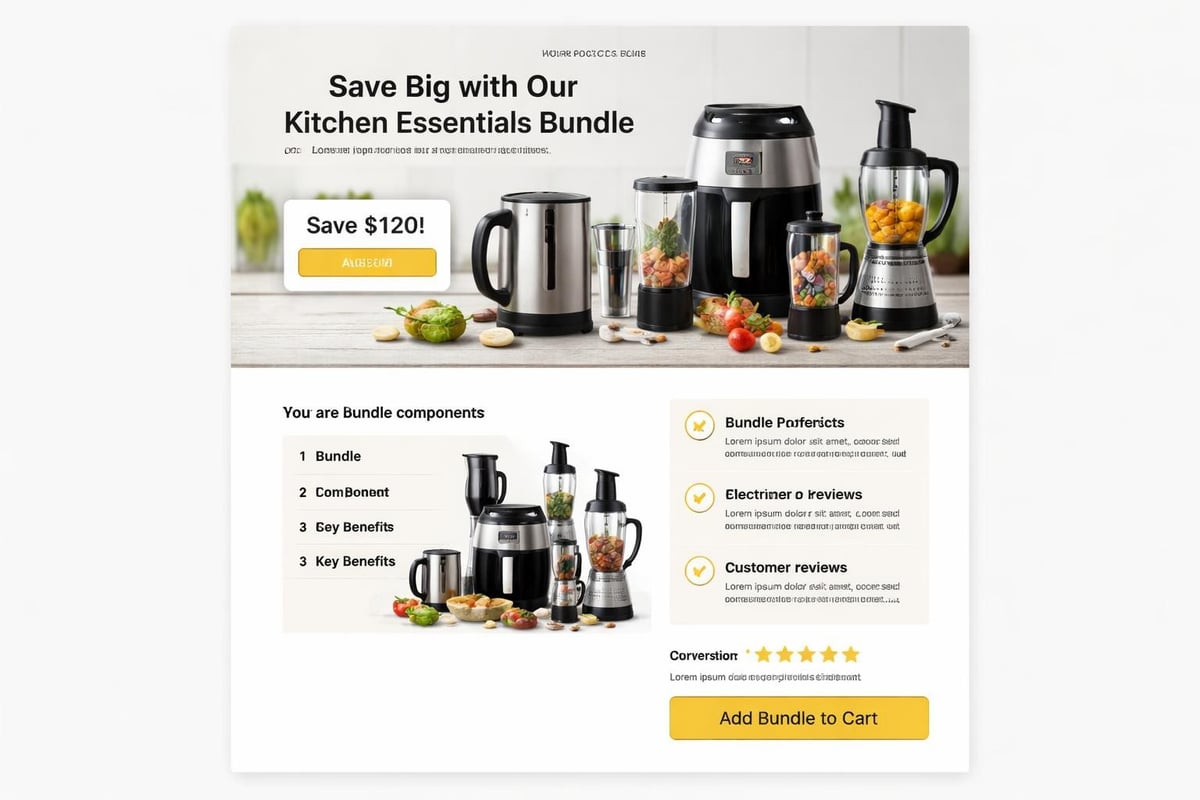
Bundle product pages require specialised optimisation to communicate value effectively and drive conversions. Unlike standard product pages, bundles must clearly articulate what's included, savings offered, and why the combination makes sense for customers.
High-quality imagery showing all bundle components together creates visual impact and sets expectations. Lifestyle photography demonstrating products in use reinforces the bundle's purpose and helps customers visualise ownership. For complex bundles, consider including component breakdowns with individual product images.
Essential bundle page elements include:
- Clear headline communicating the bundle concept
- Prominent savings or value messaging
- Detailed component list with quantities
- Individual product descriptions for transparency
- Social proof through reviews or testimonials
- Strong call-to-action emphasising value
Product descriptions should explain why these specific products work together, addressing the problem the bundle solves or the experience it creates. This narrative approach transforms bundles from simple discounts into curated solutions that resonate with customer needs.
Technical Implementation and Development Considerations
Implementing bundle products in Shopify involves technical decisions affecting performance, maintainability, and scalability. Merchants with custom development requirements may need bespoke solutions beyond standard app functionality.
Theme compatibility represents a critical consideration when selecting bundle apps. Some apps require specific theme structures or may conflict with heavily customised themes. Testing bundle functionality across devices and browsers ensures consistent experiences for all customers.
Page speed impact deserves attention, particularly when bundle apps add JavaScript or external resources. Optimising bundle pages for performance maintains user experience whilst supporting conversion goals. Regular performance monitoring identifies degradation as bundle catalogues expand.
Integration with Marketing and Analytics
Bundle performance tracking requires integration with analytics platforms and marketing tools. Shopify's native analytics track bundle sales as individual products, but deeper insights require segmentation and custom reporting.
Google Analytics 4 enhanced eCommerce tracking can capture bundle-specific metrics including bundle view rates, add-to-cart rates, and conversion patterns. Tagging bundle products appropriately enables cohort analysis comparing bundle purchasers against individual product buyers.
Email marketing integration allows automated bundle recommendations based on browsing history or previous purchases. Klaviyo, Omnisend, and similar platforms can trigger bundle-specific campaigns promoting relevant combinations to segmented audiences.
Merchandising and Bundle Promotion Strategies
Creating bundles represents only half the equation; effective merchandising ensures customers discover and purchase them. Strategic placement throughout your store maximises bundle visibility and conversion potential.
High-impact bundle placement locations include:
- Homepage featuring seasonal or bestselling bundles
- Product pages suggesting relevant bundles
- Cart page offering bundle upgrades
- Collection pages highlighting category bundles
- Dedicated bundle landing pages
Cross-promotion between individual products and bundles creates discovery opportunities. When customers view standalone items, displaying bundles containing that product encourages larger purchases. This merchandising approach increases average order value whilst maintaining customer choice.
Limited-time bundle offers create urgency and encourage immediate purchase decisions. Seasonal bundles, holiday gift sets, or flash bundle promotions generate excitement whilst moving inventory strategically. Email campaigns, social media promotion, and on-site banners amplify bundle awareness during promotional periods.
Bundle Content Marketing and SEO
Bundle products deserve dedicated content marketing support to build awareness and drive organic traffic. Blog posts exploring bundle benefits, gift guides featuring bundles, or how-to content demonstrating bundle usage create multiple touchpoints for customer engagement.
Search engine optimisation for bundle pages follows standard Shopify SEO best practices whilst addressing bundle-specific keywords. Target searches like "skincare starter kit," "complete home office bundle," or category-specific bundle terms matching customer search intent.
Creating comprehensive guides like "getting started with product bundles" positions your brand as a helpful resource whilst driving qualified traffic. Educational content reduces purchase hesitation by answering common bundle questions before they become objections.
Customer Experience and Bundle Usability
The usability of bundle selection interfaces directly impacts conversion rates and customer satisfaction. Complex or confusing bundle builders frustrate customers and increase abandonment, whilst intuitive interfaces encourage completion and repeat purchases.
Clear visual feedback during bundle building helps customers track their progress. Real-time price updates, remaining selections indicators, and validation messages create confidence throughout the selection process. Error prevention through smart defaults and helpful constraints improves completion rates.
Mobile experience deserves particular attention as mobile commerce continues growing. Bundle interfaces must function flawlessly on smaller screens, with touch-friendly controls and streamlined selection processes. Testing bundle builders across devices identifies usability issues before they impact conversions.
User experience best practices include:
- Progressive disclosure for complex bundles
- Clear labelling of mandatory versus optional selections
- Visual product previews during selection
- Persistent shopping cart visibility
- One-click bundle additions when possible
- Helpful tooltips explaining bundle rules
Operational Considerations and Fulfilment
Backend operations for bundle products in Shopify require planning to ensure smooth fulfilment and positive customer experiences. Assembly requirements, packaging needs, and quality control processes all demand consideration before launching bundles.
Pre-assembled bundles simplify fulfilment but require warehouse space and upfront labour investment. Assembly-on-demand reduces storage needs but increases pick-and-pack time per order. The optimal approach depends on bundle volume, warehouse capacity, and operational resources.
Packaging decisions affect both costs and customer perception. Premium bundles may warrant custom packaging that reinforces value, whilst everyday bundles might use standard boxes with bundle identifiers. Detailed bundle fulfilment guidance helps merchants establish efficient processes.
Quality control becomes increasingly important for bundles containing multiple components. Systematic checks ensuring all items are included, undamaged, and properly packaged prevent customer service issues and return requests that erode bundle profitability.
Testing and Optimisation for Bundle Success
Continuous testing and optimisation maximise bundle performance over time. A/B testing different bundle compositions, pricing strategies, and presentation approaches generates actionable insights for improvement.
Key metrics for bundle evaluation include bundle conversion rate, average order value impact, attachment rate (percentage of orders including bundles), and bundle-specific customer acquisition cost. Comparing these metrics against individual product performance reveals bundle effectiveness.
Testing priorities should focus on:
- Bundle pricing and discount levels
- Product combinations and offerings
- Page layout and imagery
- Value messaging and copywriting
- Placement and visibility strategies
Customer feedback provides qualitative insights complementing quantitative data. Post-purchase surveys, reviews, and customer service interactions reveal bundle perceptions, packaging satisfaction, and improvement opportunities that pure analytics might miss.
Seasonal performance patterns inform bundle planning and promotion calendars. Analysing which bundles perform best during specific periods enables strategic inventory planning and marketing resource allocation for maximum impact.
Bundle products in Shopify offer ambitious eCommerce brands a proven strategy for increasing revenue whilst delivering genuine customer value. Success requires thoughtful implementation, ongoing optimisation, and alignment with broader store strategy. If you're ready to implement high-converting bundle strategies or need expert guidance optimising your Shopify store for maximum performance, Futur Media specialises in building conversion-focused eCommerce experiences that drive measurable results for growing UK brands.



.svg)