
.svg)





%201.avif)
Product bundling is one of the most effective strategies available to Shopify store owners looking to increase average order value without increasing ad spend. By grouping complementary products together, you give customers more value whilst simultaneously driving higher revenue per transaction. This guide covers everything you need to know about Shopify bundles in 2026 — from the different bundle types and the psychology behind them, through to setup and best practice. Want expert help building a Shopify store that's set up to convert from day one? Take a look at our Shopify development service.
What Are Shopify Bundles and Why They Matter
Shopify bundles are curated collections of products sold together as a single offering, typically at a discounted price compared to purchasing items individually. These bundles can be fixed (pre-determined combinations) or flexible (allowing customers to mix and match), depending on your business model and customer preferences.
The psychology behind successful bundling is straightforward. Customers perceive greater value when products are packaged together, reducing decision fatigue whilst increasing the perceived savings. For merchants, bundles increase average order value, move inventory more efficiently, and create opportunities to introduce customers to products they might not have discovered otherwise.
Types of Shopify Bundles That Drive Results
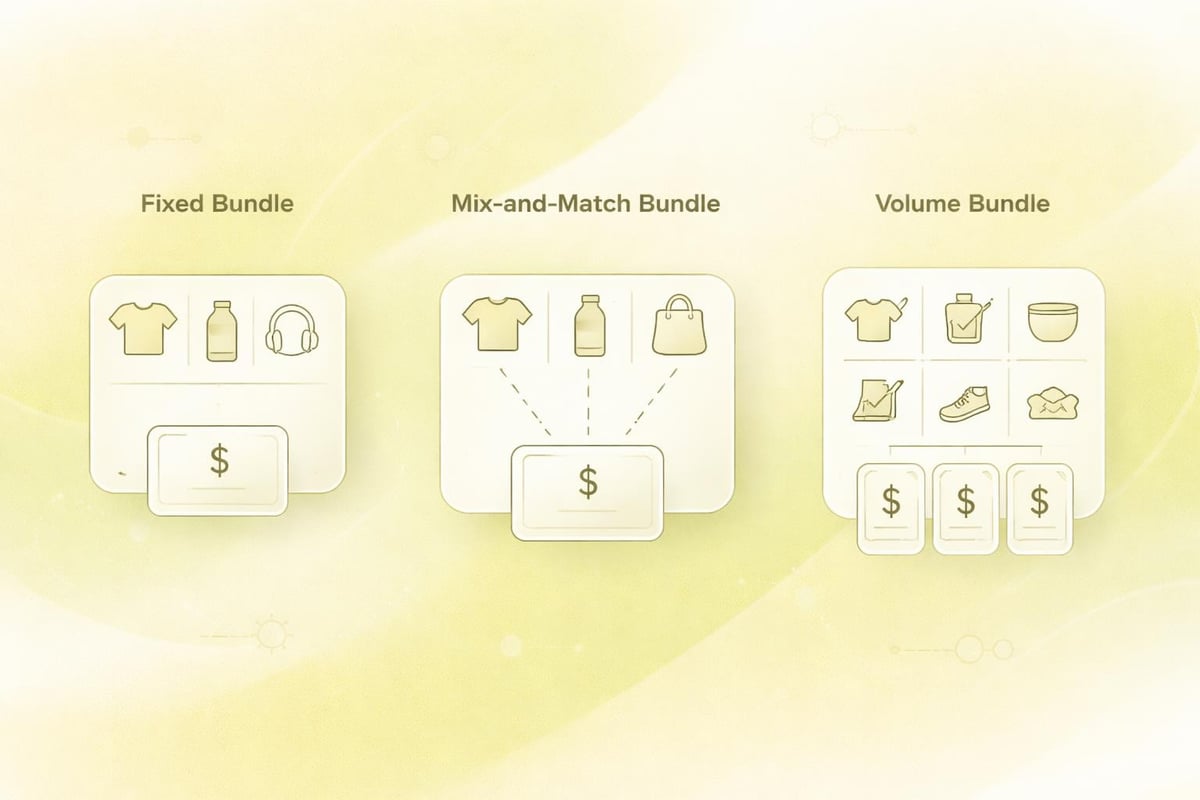
Fixed bundles combine specific products into a non-negotiable package, ideal for:
- Starter kits or beginner sets
- Seasonal gift packages
- Complete solutions (e.g., skincare routines)
- Curated collections based on use case
Mix-and-match bundles offer flexibility, allowing customers to select items within defined parameters. According to insights on mix-and-match strategies, this approach works particularly well for brands with extensive product catalogues where customer preferences vary significantly.
Volume bundles encourage bulk purchases through tiered pricing (buy 2, save 10%; buy 3, save 15%), which works exceptionally well for consumables, supplements, or products with predictable replenishment cycles.
Strategic Implementation of Product Bundles
Successful bundling requires more than simply grouping products together. Strategic implementation considers customer behaviour, product relationships, and margin protection whilst creating genuinely valuable offers.
Start by analysing your purchase data to identify products frequently bought together. These natural pairings form the foundation for compelling bundles that align with existing customer behaviour rather than forcing artificial combinations.
Data-Driven Bundle Creation
Analysis TypeWhat to Look ForBundle OpportunityPurchase patternsProducts bought in same sessionFixed complementary bundlesCart analysisItems frequently added togetherSuggested bundle promotionsCustomer segmentsDifferent buying behaviours by demographicTargeted bundle offeringsInventory velocitySlow-moving paired with bestsellersClearance bundle strategies
Product relationships matter significantly. Complementary items (shampoo and conditioner) create obvious value, whilst supplementary products (camera and memory card) solve complete use cases. Avoid bundling competing products or items that don't logically belong together, as this creates confusion rather than value.
Pricing strategy separates successful bundles from underperforming ones. The discount should be meaningful enough to incentivise purchase (typically 10-25%) whilst protecting your margins. Calculate bundle profitability carefully, considering not just product costs but fulfilment expenses and the opportunity cost of selling items separately at full price.
Technical Setup and Integration
Shopify's native bundling capabilities have evolved considerably, though many merchants benefit from specialised apps that offer advanced functionality. The right approach depends on your bundle complexity, inventory management requirements, and technical capabilities.
For stores requiring sophisticated bundle logic, custom development ensures seamless integration with your existing systems. When building advanced Shopify functionality, consider how bundles interact with inventory tracking, variant management, and fulfilment processes to avoid overselling or operational complications.
Bundle App Considerations
When evaluating bundle solutions, consider these critical factors:
- Inventory management: Does the app track component inventory accurately?
- Variant support: Can customers select sizes, colours within bundles?
- Discount flexibility: Does it support fixed amounts, percentages, tiered pricing?
- Analytics integration: Can you track bundle performance separately?
- Page speed impact: Does the app slow your store significantly?
Selecting the right bundle app requires balancing functionality against performance, as poorly optimised apps can negatively impact loading speeds and conversion rates.

Optimising Bundle Performance Through Design
Visual presentation significantly impacts bundle conversion rates. Customers need to immediately understand what's included, the value proposition, and how purchasing the bundle benefits them compared to individual items.
Clear product imagery showing all bundle components helps customers visualise exactly what they're purchasing. Individual product shots combined with a hero image of the complete bundle creates transparency whilst maintaining visual appeal.
Design Elements That Convert
Value communication should be immediately obvious:
- Display the individual item prices crossed out
- Show the bundle price prominently
- Calculate and highlight the total savings
- Use percentage savings for larger discounts
- Include "You Save £X" messaging clearly
Product descriptions for bundles require a different approach than standard product pages. Focus on the complete solution or experience the bundle provides rather than listing features of individual items. Explain why these products work well together and what problem the combination solves.
Trust signals become even more important with bundles, as customers are making a larger commitment. Include reviews, testimonials specific to the bundle where possible, and clear information about what happens if they need to return only part of the bundle.
Real-World Bundle Success Stories
Examining how successful brands implement bundling strategies provides valuable insights into what works across different product categories and customer segments.
A baby product brand case study demonstrated how thoughtfully constructed bundles addressing specific parent needs (newborn essentials, travel kits, bath time bundles) significantly increased average order value whilst simplifying the overwhelming choice new parents face.
The supplement industry has seen particularly strong results with structured bundling approaches. One U.S. supplement brand increased AOV by 27% through volume pricing and complementary product bundles, showing how bundling works exceptionally well for consumable products with clear replenishment cycles.
Perhaps most impressive, DockATot achieved a 55% AOV increase through their bundle builder implementation, demonstrating the revenue impact of giving customers flexibility whilst guiding them towards higher-value purchases.
Marketing Your Bundles Effectively
Creating excellent bundles means nothing if customers don't discover them. Strategic promotion across multiple touchpoints ensures your bundled offerings reach the right audiences at optimal moments in their purchasing journey.
Homepage placement for your strongest bundles captures attention immediately. Featured bundles work particularly well for seasonal offerings, new customer acquisition bundles, or your highest-converting combinations.
Product page recommendations suggesting relevant bundles when customers view individual items capitalise on existing purchase intent. If someone's viewing a camera, showing them a "Complete Photography Kit" bundle with memory cards, bag, and cleaning supplies addresses their broader needs.
Multi-Channel Bundle Promotion
ChannelBundle StrategyBest PracticesEmail marketingSegment-specific bundlesPersonalise based on purchase historySocial mediaVisual bundle showcasesHighlight savings and conveniencePPC advertisingBundle-specific campaignsTarget higher-intent keywordsAbandoned cartBundle alternativesSuggest better-value bundle options
Cart abandonment sequences offer excellent opportunities to suggest bundles. If someone abandons a single item, following up with a bundle containing that product plus complementary items at a discount can rescue the sale whilst increasing order value.
Measuring and Improving Bundle Performance
Tracking the right metrics separates guesswork from strategic optimisation. Bundle performance analysis should go beyond simple revenue tracking to understand customer behaviour and profitability.
Average order value for orders containing bundles compared to standard orders quantifies the direct revenue impact. However, this metric alone doesn't tell the complete story.
Bundle take rate (percentage of customers who purchase bundles versus individual items) indicates whether your bundles resonate with your audience and if they're sufficiently promoted throughout the customer journey.
Key Performance Indicators
- Conversion rate for bundle pages versus standard product pages
- Revenue per visitor for bundle traffic
- Return rate for bundled orders
- Individual item attachment rate within bundles
- Customer acquisition cost for bundle purchasers
- Repeat purchase rate for bundle customers
Margin analysis ensures your bundles drive profitability, not just revenue. Calculate the true cost of each bundle including fulfilment, packaging, and any additional handling requirements to verify that discounted pricing still delivers acceptable margins.
When optimising underperforming bundles, consider whether the issue lies in product selection, pricing, presentation, or promotion. A/B testing different bundle combinations, discount levels, and page layouts helps identify what resonates with your specific audience.
Advanced Bundling Strategies for Growth
Beyond basic bundling, sophisticated approaches can drive even stronger results for established stores with sufficient traffic and customer data.
Personalised bundles leverage browsing behaviour, purchase history, and customer segments to suggest tailored combinations. Whilst technically complex, personalised bundle recommendations can significantly outperform generic offerings by addressing individual customer needs.
Subscription bundles combine the recurring revenue benefits of subscriptions with the higher order values of bundling. Monthly curated bundles work particularly well for consumables, hobbyist products, or discovery-focused categories.
Seasonal and Limited-Time Bundles
Scarcity and urgency drive action. Limited-time bundles create compelling reasons to purchase now rather than later:
- Holiday gift bundles capitalising on seasonal shopping
- Flash bundle sales creating urgency
- New product launch bundles introducing items alongside established products
- Clearance bundles moving end-of-season inventory
Cross-brand collaborations offer opportunities to reach new audiences whilst providing unique value. Partnering with complementary brands to create exclusive bundles expands your reach whilst offering customers something they can't get elsewhere.
Common Bundle Mistakes to Avoid
Even well-intentioned bundling strategies can underperform if they fall into common traps that frustrate customers or erode profitability.
Insufficient discount is perhaps the most common mistake. If the bundle saves customers only 5%, it's rarely compelling enough to change behaviour. Aim for savings of at least 10-15% to make the value proposition clear and meaningful.
Overly complex bundles with too many choices create decision paralysis rather than convenience. Mix-and-match options work best with clear guidelines (choose 3 from category A, 2 from category B) rather than unlimited combinations that overwhelm customers.
Operational Pitfalls
Inventory management failures occur when bundle apps don't properly track component inventory, leading to overselling and customer disappointment. Ensure your technical implementation correctly decrements inventory for all bundle components when orders are placed.
Ignoring mobile experience proves costly as mobile commerce dominates. Bundle pages must display clearly on smaller screens, with pricing, savings, and included items immediately visible without excessive scrolling.
Poor returns handling damages customer trust. Establish clear policies about whether customers can return individual items from bundles or must return the complete set, and communicate these policies transparently before purchase.
Future-Proofing Your Bundle Strategy
The bundling landscape continues evolving as customer expectations shift and technology enables more sophisticated approaches. Staying ahead requires balancing current best practices with emerging opportunities.
Artificial intelligence and machine learning increasingly power bundle recommendations, analysing vast amounts of customer data to suggest combinations human merchandisers might miss. Whilst AI-powered bundling remains primarily accessible to enterprise retailers, these capabilities will become more widely available throughout 2026.
Augmented reality presents interesting opportunities for visualising bundles, particularly for furniture, home décor, or fashion where seeing items together helps customers understand the value proposition. As AR adoption grows, forward-thinking brands will explore how this technology enhances bundle presentation.
Sustainability considerations increasingly influence purchasing decisions. Bundles that reduce packaging waste or clearly communicate environmental benefits appeal to eco-conscious consumers whilst supporting broader sustainability goals.
The bundle success stories from innovative merchants demonstrate that bundling remains one of the most effective strategies for increasing ecommerce revenue, with new approaches and technologies continuing to expand what's possible.
When building your bundle strategy, consider how customising your Shopify store supports unique bundling requirements whilst maintaining performance and user experience across all devices and customer touchpoints.
For brands building ecommerce websites from scratch, integrating bundle strategy from the beginning ensures technical architecture supports your bundling ambitions rather than constraining them.
Shopify bundles represent one of the most powerful levers for increasing average order value and creating compelling value propositions that differentiate your brand in competitive markets. Success requires strategic thinking about product relationships, thoughtful pricing that balances customer value with profitability, and continuous optimisation based on performance data. Whether you're launching your first bundles or refining an established strategy, Futur Media helps ambitious UK brands build high-performing Shopify stores with bundling strategies that drive measurable revenue growth and deliver exceptional customer experiences.



.svg)