
.svg)





%201.png)
The digital landscape in 2026 demands more than template-based solutions. Off-the-shelf platforms serve a purpose, but ambitious brands require bespoke digital experiences that reflect their unique value proposition, streamline complex business processes, and deliver measurable competitive advantages. Custom web development provides the foundation for digital experiences that grow with your business, adapt to changing market demands, and create genuine differentiation in crowded markets.
Understanding Custom Web Development in 2026
Custom web development refers to the process of building digital solutions from the ground up, tailored specifically to your business requirements, brand identity, and strategic objectives. Unlike template-based approaches, custom development creates unique functionality, design systems, and user experiences that cannot be replicated by competitors.
The approach encompasses everything from initial strategic planning through to architecture design, front-end development, back-end systems integration, and ongoing optimisation. For eCommerce brands, this means creating shopping experiences that reflect your customer journey, inventory complexity, and growth ambitions rather than forcing your business into pre-defined constraints.
The Strategic Value of Bespoke Solutions
Businesses invest in custom web development for several compelling reasons:
- Complete control over user experience and customer journey design
- Bespoke functionality that supports unique business processes
- Scalable architecture that grows with your business demands
- Brand differentiation through proprietary features and interactions
- Integration capabilities with existing business systems and tools
- Performance optimisation tailored to your specific traffic patterns
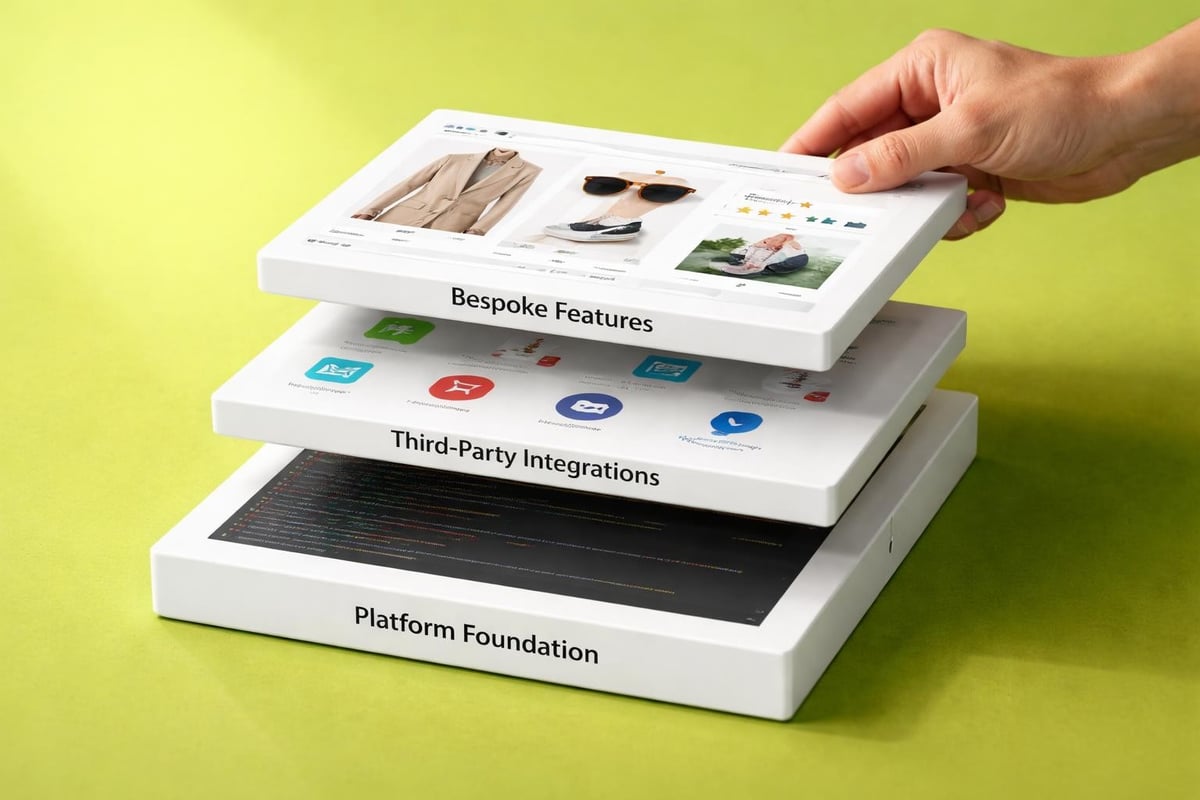
Modern custom development often combines established platforms with bespoke extensions. For eCommerce brands, this might mean building on Shopify's robust infrastructure whilst adding custom checkout flows, advanced product configurators, or integration with legacy inventory systems. This hybrid approach delivers the reliability of proven platforms with the flexibility of custom solutions.
Planning Your Custom Development Project
Successful custom web development begins with thorough discovery and strategic planning. Defining clear objectives and conducting market research ensures your investment delivers measurable returns rather than creating technically impressive solutions that fail to serve business goals.
Discovery Phase Essentials
Phase ComponentPurposeKey DeliverablesBusiness AnalysisUnderstand goals, constraints, and success metricsRequirements document, KPI frameworkUser ResearchMap customer needs, pain points, and behavioursUser personas, journey maps, use casesTechnical AuditAssess existing systems and integration requirementsSystem architecture, API documentationCompetitive AnalysisIdentify market gaps and differentiation opportunitiesFeature matrix, positioning strategy
The discovery phase prevents costly mistakes later in the development process. Understanding your target audience, their device preferences, browsing behaviours, and purchase patterns informs every subsequent decision from information architecture through to interaction design.
For UK eCommerce brands, this research might reveal opportunities around mobile-first checkout experiences, progressive web app capabilities, or advanced product filtering that reflects how British consumers actually shop online. Custom eCommerce web development requires this level of insight to deliver genuinely useful functionality rather than generic features.
Technology Stack Selection
Choosing the right technologies forms the foundation of successful custom web development. Your technology stack must balance current requirements with future scalability, team capabilities, and maintenance considerations.
Front-End Technologies
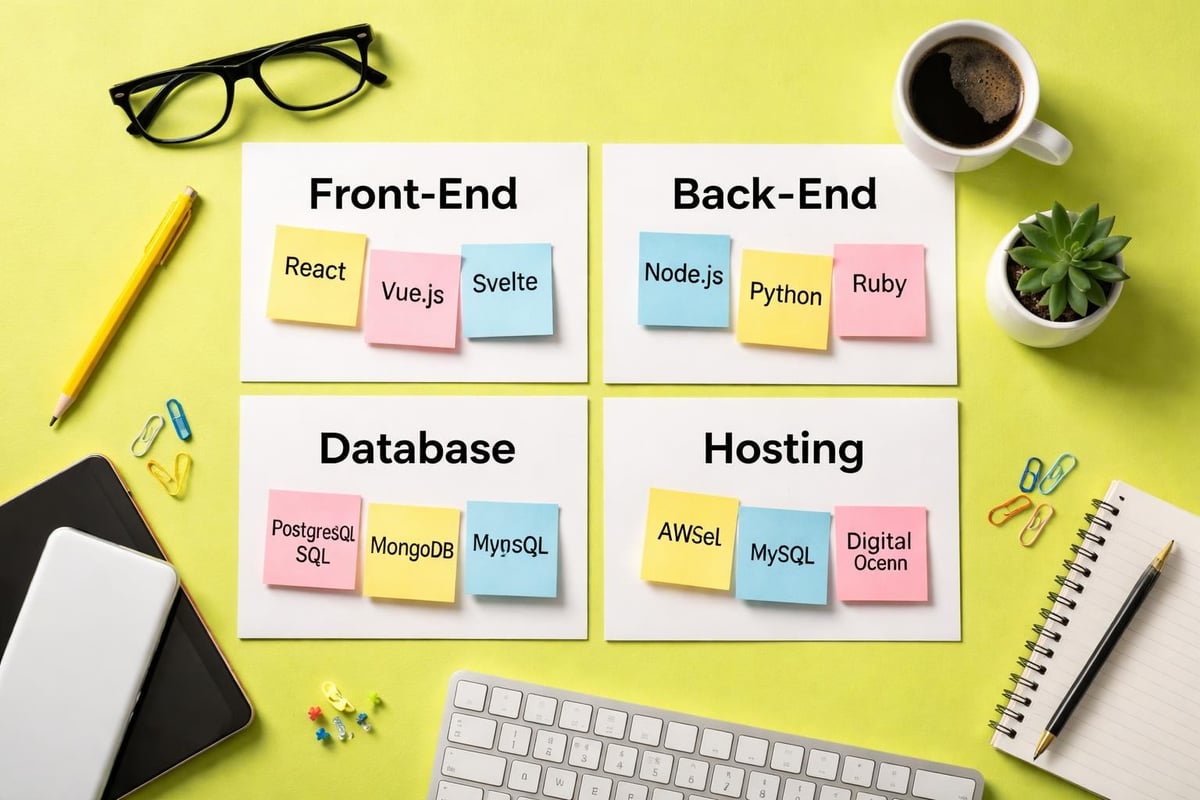
Modern front-end development leverages frameworks and libraries that enable sophisticated user interfaces whilst maintaining performance. React, Vue, and Svelte dominate the landscape in 2026, each offering different advantages for custom eCommerce builds.
Performance-driven development prioritises loading speed, interactivity, and resource efficiency. This means selecting technologies that support code splitting, lazy loading, and optimised asset delivery. For eCommerce, where every second of load time impacts conversion rates, these considerations directly affect revenue.
Progressive enhancement ensures your custom solution functions across all devices and connection speeds. Building a robust baseline experience before adding advanced features protects accessibility and broadens your potential market reach.
Back-End and Database Considerations
Back-end architecture determines how your custom solution handles data, processes transactions, and scales under load. Node.js, Python, and PHP remain popular choices, with serverless architectures gaining traction for specific use cases.
Database selection depends on your data structure and query patterns. Relational databases like PostgreSQL excel at complex relationships and transactional integrity, whilst NoSQL solutions like MongoDB offer flexibility for rapidly evolving data models. Many custom eCommerce builds combine both approaches, using the optimal database type for each specific requirement.
Cloud infrastructure choices affect performance, reliability, and operational costs. AWS, Google Cloud, and Azure provide robust platforms for custom development, offering managed services that reduce maintenance burden whilst maintaining control over critical business logic.
Design Systems and Component Libraries
Custom web development benefits enormously from design systems that ensure consistency, accelerate development, and simplify long-term maintenance. Rather than designing each page in isolation, design systems create reusable components with defined behaviours, states, and variations.
Building Scalable Design Systems
A robust design system includes foundational elements like typography scales, colour palettes, spacing systems, and grid structures. These foundations support component creation, ensuring every button, form field, card, and navigation element follows consistent patterns.
Component libraries built on HTML5 customised built-in elements enable sophisticated functionality whilst maintaining semantic HTML structure. This approach supports accessibility, SEO performance, and long-term maintainability.
For eCommerce brands, design systems accelerate the creation of product cards, checkout flows, and marketing templates. When launching new collections or seasonal campaigns, teams can assemble pages from proven components rather than rebuilding functionality from scratch.
Development Best Practices for 2026
Professional custom web development follows established best practices that protect code quality, team productivity, and project timelines. These practices have evolved significantly, with modern approaches emphasising automation, testing, and collaboration.
Version control and deployment pipelines:
- Git-based workflows with feature branching
- Automated testing at multiple levels (unit, integration, end-to-end)
- Continuous integration and deployment pipelines
- Staging environments that mirror production
- Automated rollback capabilities for failed deployments
Security and data protection require particular attention in custom development projects. Unlike platform-based solutions where security patches deploy automatically, custom builds demand proactive security reviews, dependency updates, and vulnerability monitoring.
Code Quality and Maintainability
Clean, well-documented code reduces long-term maintenance costs and enables team members to contribute effectively. Establishing coding standards, conducting regular code reviews, and implementing automated linting ensures consistency across your custom codebase.
Documentation serves multiple audiences. Technical documentation helps developers understand system architecture and implementation details, whilst user documentation guides content editors and store managers in using custom features effectively.
Performance monitoring should begin during development rather than after launch. Establishing performance budgets, monitoring core web vitals, and testing under realistic load conditions prevents performance issues from reaching production.
Integration and API Development
Modern custom web development rarely exists in isolation. Most projects require integration with existing business systems, third-party services, or platform APIs. For eCommerce brands, this might include connections to inventory management systems, accounting software, email marketing platforms, or logistics providers.
API Strategy and Implementation
Integration TypeCommon Use CasesKey ConsiderationsREST APIsGeneral data exchange, CRUD operationsWell-established, widely supportedGraphQLComplex data queries, mobile appsEfficient data fetching, learning curveWebhooksReal-time event notificationsReliability, retry logic, securityServerless FunctionsOn-demand processing, microservicesCost efficiency, cold start times
Creating robust API integrations requires error handling, rate limiting, and fallback strategies. When third-party services experience downtime, your custom solution should degrade gracefully rather than breaking entirely.
For Shopify-based projects, Shopify Development often involves extending platform capabilities through custom apps, headless commerce architectures, or bespoke storefront features built on Shopify's APIs. This approach combines platform reliability with custom functionality tailored to specific business requirements.
User-Centric Design Principles
Technical excellence means little without user-centric design that prioritises customer needs, removes friction, and creates delightful interactions. Current trends in custom web design emphasise accessibility-first approaches, performance-driven development, and inclusive design practices.
Accessibility and Inclusive Design
Building accessible custom solutions from the outset costs significantly less than retrofitting accessibility later. Semantic HTML, ARIA labels, keyboard navigation, and screen reader compatibility should inform every development decision rather than being added as afterthoughts.
Testing with diverse users reveals usability issues that developers might miss. This includes users with disabilities, older demographics less familiar with modern web conventions, and international audiences navigating language barriers.
Inclusive design considers diverse contexts including slower internet connections, older devices, and varying levels of digital literacy. For UK eCommerce brands, this might mean optimising for mobile networks in rural areas or ensuring checkout flows work seamlessly on older Android devices still common among certain demographics.
Testing and Quality Assurance
Comprehensive testing distinguishes professional custom web development from amateur efforts. Quality assurance encompasses multiple testing types, each serving specific purposes in ensuring your custom solution functions reliably.
Multi-layered testing approach:
- Unit tests verify individual functions and components
- Integration tests confirm different system parts work together
- End-to-end tests simulate real user journeys
- Performance tests validate speed and resource usage
- Security tests identify vulnerabilities and attack vectors
- Accessibility audits ensure WCAG compliance
Automated testing enables rapid iteration without sacrificing quality. Well-designed test suites run automatically on every code commit, catching regressions before they reach production environments.
User acceptance testing involves real customers or stakeholders validating functionality meets requirements. For eCommerce custom development, this might include testing checkout flows with actual payment processing, confirming email notifications trigger correctly, and verifying inventory updates propagate as expected.

Performance Optimisation Strategies
Custom web development provides opportunities for performance optimisation unavailable in template-based solutions. By controlling every aspect of your codebase, you can implement sophisticated optimisation strategies tailored to your specific usage patterns.
Front-End Performance Techniques
Modern performance optimisation focuses on core web vitals: Largest Contentful Paint (LCP), First Input Delay (FID), and Cumulative Layout Shift (CLS). These metrics directly impact both user experience and search engine rankings, making them critical for eCommerce success.
Image optimisation remains one of the highest-impact performance improvements. Custom development enables advanced techniques like responsive images with art direction, lazy loading with intersection observers, and next-generation formats like WebP or AVIF with fallbacks for older browsers.
Code splitting ensures users only download JavaScript required for their current page rather than your entire application bundle. Dynamic imports, route-based splitting, and component-level code splitting reduce initial load times significantly.
Launch and Post-Launch Considerations
Successful custom web development extends beyond initial launch. Developing a successful custom website requires planning for ongoing maintenance, performance monitoring, and iterative improvements based on real user behaviour.
Deployment Strategy
Phased rollouts reduce risk when launching custom solutions. Rather than switching all traffic to a new system simultaneously, gradual rollouts enable monitoring for issues whilst limiting potential impact.
Feature flags allow deploying code to production whilst controlling which users access new functionality. This enables A/B testing custom features, validating performance under real traffic, and rolling back problematic features without full deployments.
Post-launch monitoring watches for performance regressions, error rates, and user behaviour changes. Tools like real user monitoring (RUM) provide insights into actual user experiences across diverse devices, browsers, and connection speeds.
Long-Term Maintenance and Evolution
Custom solutions require ongoing investment in maintenance, security updates, and feature evolution. Unlike platform-based solutions where updates happen automatically, custom development demands proactive maintenance planning.
Maintenance considerations include:
- Security patches for dependencies and frameworks
- Performance optimisation based on real usage data
- Feature enhancements driven by user feedback
- Browser compatibility updates as standards evolve
- Infrastructure scaling as traffic grows
Budget allocation for ongoing maintenance prevents technical debt accumulation. Many successful eCommerce brands allocate 15-20% of initial development costs annually for maintenance and iterative improvements.
Documentation evolution ensures knowledge persists as team members change. Regularly updating technical documentation, runbooks, and deployment procedures protects institutional knowledge and simplifies onboarding.
Measuring Success and ROI
Custom web development represents significant investment, making clear success metrics essential. Beyond technical metrics like page load times or error rates, business metrics demonstrate genuine ROI.
For eCommerce implementations, relevant metrics include conversion rate improvements, average order value changes, customer lifetime value trends, and operational efficiency gains. Comparing these metrics before and after custom development quantifies genuine business impact.
Custom analytics implementations track behaviours specific to your business. Rather than relying solely on standard analytics events, custom tracking reveals insights about how customers interact with bespoke features, where they encounter friction, and which customisations deliver the strongest engagement.
Metric CategoryExample MetricsMeasurement FrequencyPerformanceCore Web Vitals, TTFB, load timeContinuous monitoringConversionCart abandonment, checkout completion, micro-conversionsWeekly analysisEngagementSession duration, pages per session, feature usageDaily dashboardsTechnical HealthError rates, uptime, deployment frequencyReal-time alerts
Understanding how to do SEO on Shopify or other platforms becomes particularly important when custom development impacts site structure, URL patterns, or content delivery. Ensuring custom implementations support rather than hinder SEO requires technical expertise across both development and search optimisation.
Choosing Between Custom and Platform-Based Solutions
Not every project requires fully custom development. Understanding when custom solutions deliver value versus when platform-based approaches suffice requires honest assessment of your specific requirements, resources, and timeline.
Custom development makes sense when:
- Your business processes require functionality unavailable in platforms
- Brand differentiation demands truly unique user experiences
- Integration with legacy systems requires bespoke architecture
- Scale demands performance optimisation beyond platform capabilities
- Long-term total cost of ownership favours custom over platform licensing
Platform-based solutions with custom extensions often provide optimal balance. For eCommerce, building on Shopify whilst adding custom functionality through apps, themes, or headless architectures combines platform reliability with tailored capabilities. Choosing the right web design agency often means finding partners who understand when to leverage platforms versus when custom development delivers superior outcomes.
The Future of Custom Web Development
Emerging technologies continue reshaping custom web development. Artificial intelligence assists with code generation, testing, and optimisation. Edge computing moves processing closer to users, reducing latency for dynamic personalisation. Progressive web apps blur distinctions between websites and native applications.
WebAssembly enables languages beyond JavaScript to run in browsers, opening new possibilities for performance-critical applications. Component-driven development continues evolving, with design systems becoming increasingly sophisticated and automated.
For eCommerce specifically, technologies like augmented reality product visualisation, voice commerce interfaces, and predictive personalisation create opportunities for custom development that genuinely differentiates brands. The question becomes not whether to invest in custom development, but rather which custom capabilities deliver competitive advantage for your specific market position.
Best practices for custom web development continue evolving as technologies mature and user expectations shift. Staying current requires ongoing learning, experimentation, and willingness to refactor approaches as better patterns emerge.
Custom web development empowers ambitious brands to create digital experiences that reflect their unique value proposition whilst supporting complex business requirements that template solutions cannot address. Whether you need bespoke functionality, advanced integrations, or performance optimisation that sets you apart from competitors, strategic custom development delivers measurable competitive advantages. At Futur Media, we specialise in Shopify development that combines platform reliability with custom capabilities tailored to your specific eCommerce ambitions, helping UK brands build high-performing stores that drive genuine business growth.