
.svg)






%201.avif)
Choosing the right ecommerce platform can define the trajectory of your online business. For many UK merchants considering Shopify vs Wix, the decision hinges on whether you need a dedicated commerce solution or a flexible website builder that happens to sell products. Both platforms have evolved significantly, yet they serve fundamentally different purposes and audiences. This comprehensive comparison examines pricing, features, scalability, and performance to help you make an informed decision for your business in 2026.
Understanding the Core Differences
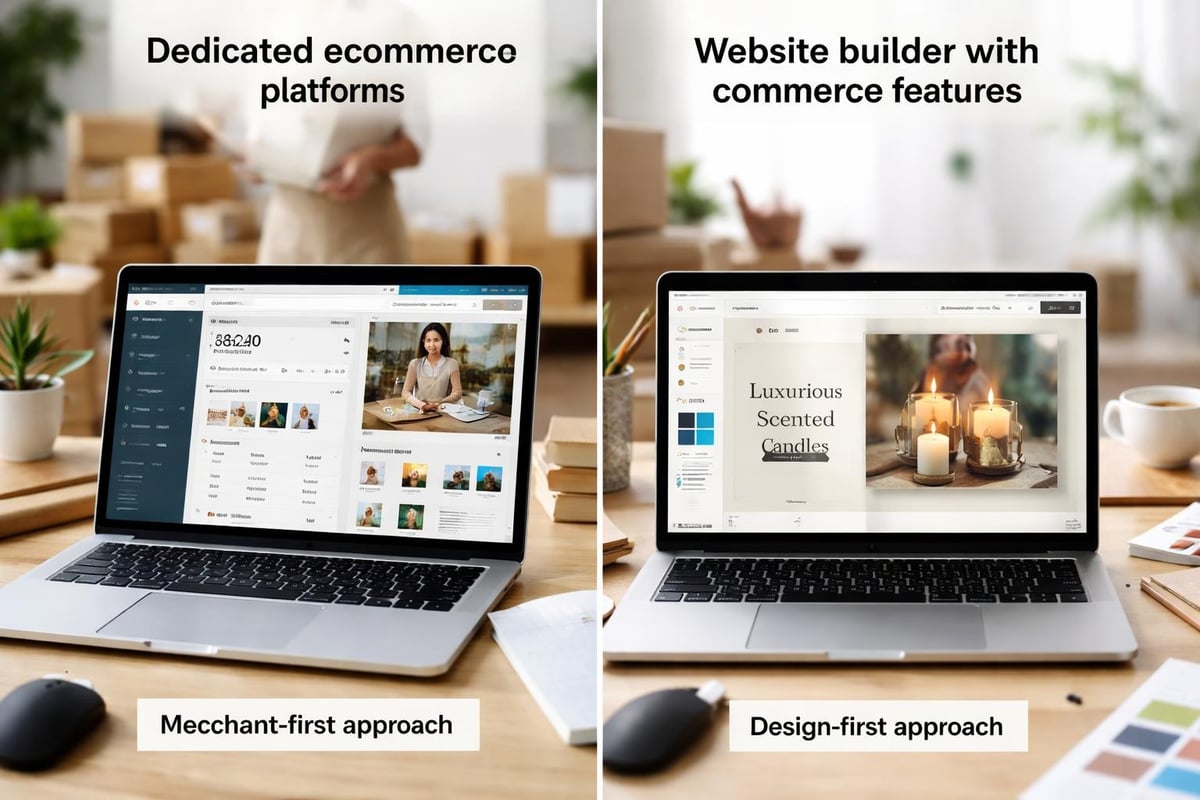
When evaluating Shopify vs Wix, the most fundamental distinction lies in their primary purpose. Shopify was built exclusively for ecommerce from day one. Every feature, integration, and design consideration centres on helping merchants sell products online efficiently.
Wix, conversely, began as a website builder with ecommerce capabilities added later. This origin story matters because it influences everything from the user interface to the depth of commerce features available.
Platform Philosophy and Target Users
Shopify targets:
- Serious ecommerce businesses planning for growth
- Merchants selling physical products, digital goods, or subscriptions
- Brands requiring advanced inventory management
- Businesses needing multichannel selling capabilities
Wix targets:
- Small businesses wanting an attractive website that also sells
- Creative professionals showcasing portfolios with occasional sales
- Local businesses with limited product catalogues
- Users prioritising design flexibility over commerce depth
The distinction becomes clearer when you examine feature sets. TechRadar's comprehensive review of Shopify highlights how the platform's architecture supports high-volume merchants with sophisticated needs.
Pricing Structure and Total Cost
Price comparisons between Shopify vs Wix require looking beyond the basic subscription fees. Both platforms use tiered pricing, but the value proposition differs significantly at each level.
Shopify Pricing Breakdown
PlanMonthly CostTransaction FeesBest ForBasic£192% + card feesNew stores testing the marketShopify£691% + card feesGrowing businessesAdvanced£2590.5% + card feesHigh-volume merchantsPlusFrom £1,6000.15% + card feesEnterprise operations
Shopify's pricing reflects its commerce-first approach. The basic plan includes unlimited products, abandoned cart recovery, and discount codes. As your business grows, higher tiers unlock professional reports, advanced shipping calculations, and third-party calculated shipping rates.
Wix Pricing Breakdown
PlanMonthly CostTransaction FeeseCommerce FeaturesBusiness Basic£170%Basic online paymentsBusiness Unlimited£250%Customer accountsBusiness VIP£350%Priority supportEnterpriseCustom0%Tailored solutions
Wix's ecommerce plans appear cheaper initially, but the platform's limitations become apparent as you scale. Understanding Wix's pricing structure reveals that many advanced features require additional apps or workarounds.
Hidden costs to consider:
- Shopify Apps: Popular apps often cost £5-£50 monthly
- Wix Market: Extensions can add £10-£100 monthly
- Transaction fees: Only Shopify Payments eliminates extra charges on Shopify
- Payment processing: Both platforms charge standard card processing fees
- Custom development: Wix modifications may require more specialist help
Ecommerce Features and Functionality
The depth of native ecommerce features separates these platforms most clearly. When comparing Shopify vs Wix for serious online retail, Shopify's purpose-built tools provide measurable advantages.
Product Management
Shopify excels at product organisation with unlimited SKUs across all plans. You can manage variants (size, colour, material) with dedicated inventory tracking per variant. The platform supports digital products, subscriptions through apps, and complex product types like bundles and customisable items.
Wix limits product variants to 15 options per product on lower tiers, expanding to 300 on Business VIP plans. For merchants with extensive catalogues or numerous variations, this constraint creates operational challenges.
Inventory and Order Management
Shopify's inventory system tracks stock levels across multiple locations, sends low-stock alerts, and updates automatically when orders process. The admin interface displays incoming, committed, and available inventory at a glance.
Shopify's order management includes:
- Automated fulfilment workflows
- Draft orders for phone sales
- Order editing after purchase
- Partial refunds and returns processing
- Integration with major fulfilment services
Wix provides basic inventory tracking but lacks the sophistication needed for multichannel selling or complex fulfilment scenarios. The platform works adequately for straightforward retail operations but struggles with businesses operating across marketplaces, physical retail, and online channels simultaneously.

Payment Options and Checkout
Shopify offers over 100 payment gateways globally, including Shopify Payments (powered by Stripe), which eliminates transaction fees. The checkout process is optimised through years of conversion research, featuring express payment options like Shop Pay, Apple Pay, and Google Pay by default.
Wix supports major payment processors but offers fewer options overall. The checkout experience is customisable to match your site design, though this flexibility sometimes compromises conversion optimisation.
Checkout conversion factors:
FeatureShopifyWixMobile optimisationAutomaticManual tweaking neededExpress paymentsNativeRequires setupGuest checkoutStandardStandardAddress validationBuilt-inThird-party appsAbandoned cart recoveryAll paid plansBusiness plans only
Design Flexibility and Customisation
The Shopify vs Wix debate often centres on design capabilities. Wix built its reputation on visual design freedom, whilst Shopify prioritises performance and conversion-focused templates.
Theme and Template Options
Wix provides over 500 templates across categories, with extensive drag-and-drop customisation. You can position elements precisely, create unique layouts, and achieve virtually any design vision without coding knowledge. However, once you select a template, switching requires rebuilding your entire site.
Shopify offers roughly 180 themes (12 free, 168 paid ranging from £90-£270). Themes follow structured layouts optimised for ecommerce conversion. Customisation occurs through the theme editor, which allows significant modifications without breaking mobile responsiveness or site speed.
For brands requiring bespoke design, Shopify web design services provide custom theme development that balances aesthetic ambition with commercial performance.
Customisation Depth
- Wix: Complete design freedom through drag-and-drop, limited technical customisation
- Shopify: Structured customisation via theme settings, advanced options through Liquid templating and custom development
The trade-off is between creative control and commercial optimisation. Wix lets you design exactly what you envision. Shopify guides you towards designs proven to convert visitors into customers.
Performance and Speed
Page speed directly impacts conversion rates and search rankings. Google's research shows that bounce probability increases 32% when page load time goes from one to three seconds. The Shopify vs Wix comparison reveals significant performance differences under load.
Loading Speed Benchmarks
Shopify's infrastructure is optimised for ecommerce specifically. The platform uses global CDN distribution, automated image optimisation, and server-side rendering to maintain fast load times even during traffic spikes. Stores on Shopify consistently achieve good Core Web Vitals scores with minimal optimisation effort.
Wix has improved substantially but still faces challenges with heavy sites. The platform's visual builder can generate bloated code, and design freedom sometimes leads to performance-degrading choices. Sites with extensive animations, large image galleries, or numerous apps frequently suffer from slower load times.
Performance factors to consider:
- Server infrastructure: Shopify's dedicated commerce servers vs Wix's general website hosting
- Image handling: Shopify auto-optimises vs Wix requires manual compression
- Code efficiency: Shopify's streamlined templates vs Wix's flexible but sometimes inefficient output
- Scaling under load: Shopify handles traffic spikes automatically vs Wix may slow during high traffic
Scalability and Growth Potential
As your business expands, platform limitations become increasingly costly. The Shopify vs Wix decision should account for where you'll be in three years, not just today's needs.
Handling Growth
Shopify scales seamlessly from startup to enterprise. The platform powers stores processing hundreds of orders daily without performance degradation. As transaction volume increases, you simply upgrade to higher-tier plans that unlock advanced features whilst maintaining the same core system.
Shopify's scalability advantages:
- Infrastructure automatically scales with traffic
- Shopify Plus handles enterprise-level customisation
- API access enables unlimited integration possibilities
- App ecosystem grows with your needs
Wix functions well for small catalogues and moderate traffic but shows strain as businesses grow. Merchants report challenges when product counts exceed 1,000 items or monthly orders surpass several hundred. The platform lacks enterprise-tier options for businesses outgrowing standard plans.
Multichannel Selling
Shopify excels at omnichannel commerce, integrating directly with:
- Facebook Shops and Instagram Shopping
- Amazon, eBay, and major marketplaces
- Point-of-sale systems for physical retail
- B2B wholesale portals
- International markets with multi-currency support
Wix offers marketplace integrations but with fewer native connections and less sophisticated synchronisation. Managing inventory across channels requires more manual intervention.

SEO and Marketing Tools
Organic search drives sustainable ecommerce growth. Both platforms support SEO fundamentals, but implementation depth varies considerably when comparing Shopify vs Wix.
Technical SEO Capabilities
Shopify provides clean URL structures, automatic sitemap generation, and customisable meta tags across products and pages. The platform generates semantic HTML and supports structured data for rich search results. However, some SEO practitioners note limitations with URL customisation and redirect management on lower-tier plans.
Wix has overcome its historical SEO challenges from the Flash era. The platform now supports Google indexing, custom meta tags, and structured data markup. The Wix Blog's comparison emphasises their SEO improvements, though technical implementation still requires more manual configuration than Shopify.
SEO feature comparison:
CapabilityShopifyWixURL customisationGoodGoodPage speedExcellentVariableMobile optimisationAutomaticRequires attentionSchema markupBuilt-in for productsManual implementationBlog functionalityIntegratedIntegratedSSL certificatesFree on all plansFree on paid plans
For businesses prioritising organic growth, Shopify SEO services can maximise visibility by optimising technical foundations, content strategy, and site architecture specifically for commerce search intent.
Marketing Automation
Shopify includes email marketing tools, automated abandoned cart sequences, and customer segmentation in higher-tier plans. The platform integrates seamlessly with major marketing tools like Klaviyo, Mailchimp, and Omnisend.
Wix provides built-in email marketing through Wix Email Marketing, social media integrations, and basic automation. The marketing features suit small businesses but lack the sophistication required for advanced segmentation and personalisation.
Apps, Extensions, and Integrations
The app ecosystems surrounding Shopify vs Wix demonstrate different philosophies about extending platform functionality.
Shopify App Store
With over 8,000 apps, Shopify's marketplace addresses virtually every ecommerce need imaginable. Categories span reviews, upselling, subscriptions, shipping, accounting, inventory management, and customer service. Popular apps benefit from extensive documentation, active developer communities, and regular updates.
Essential app categories:
- Reviews: Yotpo, Judge.me, Loox
- Email marketing: Klaviyo, Omnisend, Privy
- Subscriptions: Recharge, Bold, Appstle
- Bundling: Understanding Shopify bundles helps maximise average order value
- Analytics: Lucky Orange, Glew, Littledata
The depth of Shopify apps available means almost any commercial requirement can be met through the ecosystem, though app costs accumulate quickly.
Wix App Market
Wix offers approximately 300 apps across categories. The selection covers basic needs like booking systems, forms, and social feeds but provides fewer commerce-specific solutions. Integration quality varies, and some apps feel less polished than Shopify equivalents.
Integration considerations:
- Accounting software: Both platforms connect with Xero, QuickBooks, and major tools
- Shipping: Shopify offers deeper carrier integrations
- CRM: Shopify's customer data is more structured for marketing tools
- Analytics: Both support Google Analytics; Shopify provides better ecommerce tracking
Customer Support and Resources
When technical issues arise or questions emerge, support quality matters enormously. The Shopify vs Wix comparison shows different approaches to merchant assistance.
Shopify Support Structure
Shopify provides 24/7 support via phone, email, and live chat across all plans. Response times are generally quick, and support staff understand ecommerce context. The Shopify Help Centre contains extensive documentation, video tutorials, and community forums.
Additional Shopify resources:
- Shopify Academy: Free courses on store setup, marketing, and growth
- Shopify Community: Active forums with merchant and expert participation
- Partner ecosystem: Access to verified Shopify agencies and developers
- Developer documentation: Comprehensive API and theme development guides
Wix Support Options
Wix offers 24/7 callback service rather than direct phone support. Email and chat support are available, though response times can be slower during peak periods. Priority support comes with higher-tier plans.
Wix provides extensive help articles, video tutorials, and an AI chatbot for common queries. The Wix community forums are active, though less commerce-focused than Shopify's merchant-centric discussions.
Migration and Platform Switching
Businesses outgrowing their current platform need to understand migration complexity. When comparing Shopify vs Wix for the long term, consider both directions of potential movement.
Moving to Shopify
Migrating from Wix to Shopify is a common path for growing ecommerce businesses. Shopify migration services handle data transfer, design recreation, and SEO preservation to minimise disruption during the switch.
Migration considerations:
- Product data exports from Wix in CSV format
- Customer records transfer with hashed passwords
- Order history migration possible but limited
- Blog content requires manual or app-assisted transfer
- 301 redirects essential for SEO preservation
- Design must be recreated or adapted to Shopify themes
The process typically takes 4-8 weeks depending on catalogue size and customisation requirements. Understanding the Shopify migration process helps set realistic expectations and ensures smooth transitions.
Moving to Wix
Migrating from Shopify to Wix is less common but occurs when businesses pivot away from pure ecommerce or prefer Wix's design flexibility. The process involves similar data export challenges, though Wix's import tools are less sophisticated than Shopify's migration apps.
Real-World Use Cases
Different business models favour different platforms. These scenarios illustrate when each platform makes commercial sense in the Shopify vs Wix decision.
When Shopify Makes Sense
Growing product brands: Companies planning serious ecommerce growth benefit from Shopify's scalability. If you're projecting 100+ orders monthly within 12 months, start with proper infrastructure.
Multichannel merchants: Businesses selling across website, social media, marketplaces, and physical retail need Shopify's unified inventory management.
Subscription businesses: Recurring revenue models require robust subscription management that Shopify apps provide comprehensively.
International sellers: Multi-currency, multi-language capabilities and international shipping complexity favour Shopify.
When Wix Makes Sense
Service businesses with occasional sales: Consultants, freelancers, or agencies selling a few products alongside services may prefer Wix's content flexibility.
Portfolio sites with shop features: Photographers or artists showcasing work with print sales can leverage Wix's visual design strength.
Very small catalogues: Businesses selling fewer than 20 products with simple variants work adequately on Wix.
Local retailers with basic online presence: Brick-and-mortar businesses adding simple online ordering without complex fulfilment needs.
Technical Considerations for Developers
For businesses working with developers or agencies, technical architecture matters. The Shopify vs Wix comparison reveals different approaches to customisation and extensibility.
Shopify's Development Environment
Shopify uses Liquid templating language, enabling powerful customisation whilst maintaining structure. The platform provides robust APIs for headless commerce implementations, custom apps, and advanced integrations. Shopify development unlocks capabilities beyond theme customisation for brands needing bespoke functionality.
Developer advantages:
- Well-documented APIs
- Active developer community
- CLI tools for local development
- Version control compatibility
- Headless commerce support via Hydrogen
Wix's Development Approach
Wix offers Velo (formerly Corvid) for custom JavaScript development. The platform supports database collections, API integrations, and custom interactions. However, the development environment feels more constrained than Shopify's open architecture.
Wix's visual editor generates code automatically, which can create conflicts when developers attempt custom modifications. The platform suits designers comfortable with visual tools more than developers preferring code-first approaches.
Security and Compliance
Ecommerce security is non-negotiable. Both platforms maintain PCI DSS compliance and provide SSL certificates, but implementation details differ.
Shopify Security
Shopify handles security at the platform level, maintaining Level 1 PCI DSS compliance automatically. The platform updates security patches without merchant intervention, monitors for threats continuously, and provides fraud analysis tools for order verification.
Security features:
- Automatic SSL certificates
- PCI compliance included
- Fraud detection scoring
- Two-factor authentication
- GDPR compliance tools
Wix Security
Wix similarly provides SSL certificates and PCI compliance when using Wix Payments. The platform maintains security standards but places more responsibility on merchants for app security and custom code vulnerabilities.
Both platforms handle sensitive payment data securely through tokenisation, ensuring card details never touch your server.
Making Your Decision
The Shopify vs Wix choice ultimately depends on your business model, growth ambitions, and priorities. Neither platform is objectively "better" - they serve different needs.
Choose Shopify if you:
- Plan to build a serious ecommerce business
- Need sophisticated inventory and order management
- Intend to sell across multiple channels
- Require scalability for growth
- Value conversion-optimised templates over design freedom
- Want access to extensive commerce-specific apps
Choose Wix if you:
- Need a beautiful website that occasionally sells products
- Prioritise design flexibility above all else
- Have a very small, simple product catalogue
- Operate primarily as a service business with some products
- Want lower initial costs
- Value visual editing over technical depth
Consider not just where your business is today but where it aims to be in three years. Platform migration is disruptive and expensive, making the right initial choice valuable.
The platforms have different philosophies. Tooltester's detailed comparison reinforces that Shopify optimises for commerce success whilst Wix optimises for design freedom. Understanding which matters more to your specific situation guides the decision.
For UK merchants building ambitious ecommerce brands, Shopify's purpose-built infrastructure typically provides better long-term value despite potentially higher initial costs. The platform's ecosystem, scalability, and commerce-first approach support growth more effectively than adapting a website builder for retail operations. When evaluating the ongoing alternatives to Wix for commerce, Shopify consistently emerges as the preferred choice for merchants prioritising sales over site design.
Both Shopify and Wix serve valid purposes, but serious ecommerce demands a platform built for commerce from the ground up. If you're ready to build a high-performing Shopify store that converts visitors into customers, Futur Media specialises in designing, developing, and optimising ecommerce experiences for ambitious UK brands. Our Cardiff-based team brings deep Shopify expertise to every project, whether you're launching fresh, migrating from another platform, or optimising your existing store for better performance. Get in touch to discuss how we can help your ecommerce business thrive.



.svg)