
.svg)



.webp)


%201.avif)
Cart abandonment is one of the biggest challenges facing UK ecommerce stores — and your checkout experience is often the reason customers drop off. Shopify one page checkout consolidates the entire purchase journey into a single, streamlined interface, removing the friction that costs stores sales every day. This guide covers everything you need to know about how it works, why it matters and how to make the most of it in 2026. If you'd like expert help optimising your store's checkout and conversion rate, take a look at our Shopify development service.
The checkout experience remains one of the most critical touchpoints in eCommerce. A complicated, multi-step checkout process can derail even the most enthusiastic shoppers, leading to cart abandonment and lost revenue. Shopify one page checkout has emerged as a powerful solution to this problem, consolidating every step of the purchase journey into a single, streamlined interface. For UK brands looking to maximise conversions, understanding how this checkout format works and how to optimise it has become essential. This comprehensive guide explores everything you need to know about implementing and perfecting the shopify one page checkout for your store.
What Is Shopify One Page Checkout
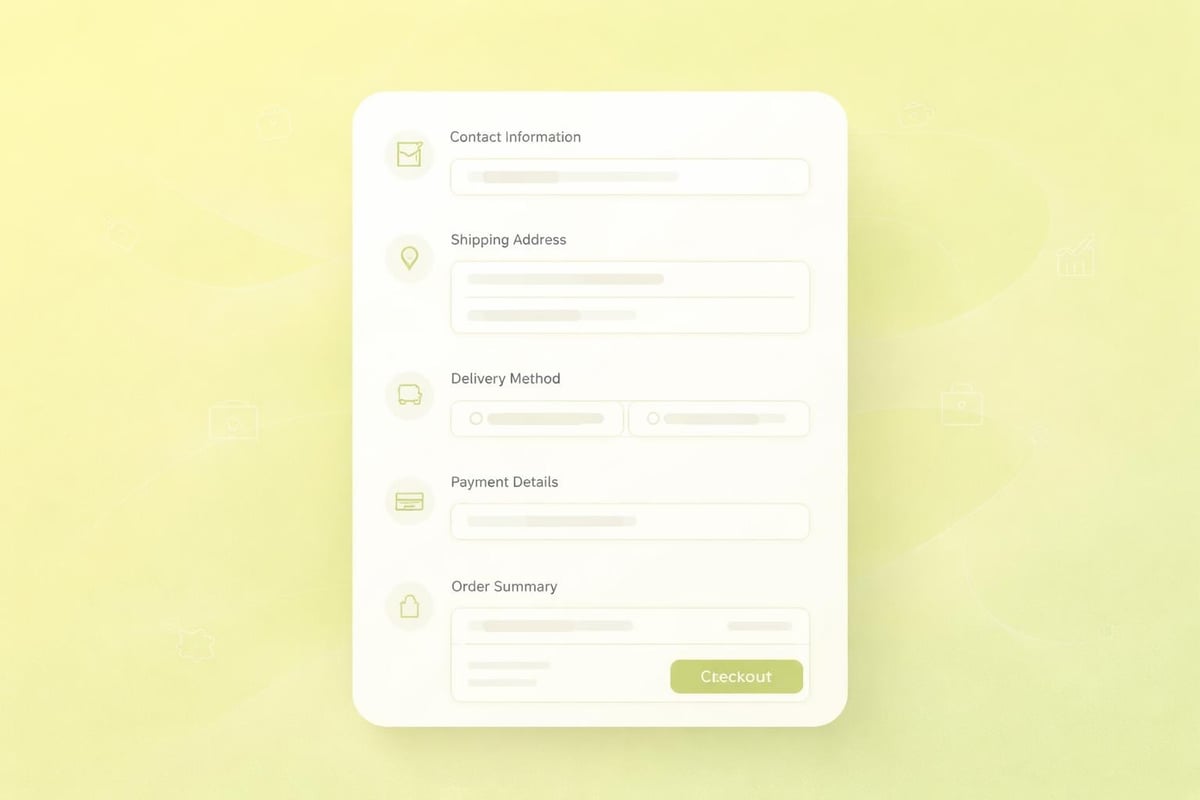
Shopify one page checkout represents a fundamental shift in how customers complete their purchases. Rather than navigating through multiple separate pages for shipping information, payment details, and order review, customers experience a unified interface where all elements appear together.
This approach condenses the traditional multi-step process into a cohesive experience. Customers can view their cart summary, enter delivery addresses, select shipping methods, and provide payment information without page refreshes or transitions. The psychological impact is significant-shoppers perceive the process as faster and less demanding, even when the actual information required remains identical.
The Technology Behind Single-Page Checkouts
Modern shopify one page checkout builds on progressive web technologies that enable dynamic content updates without full page reloads. This creates a responsive environment where form validation occurs instantly, errors appear immediately, and customers maintain context throughout their purchase journey.
The architecture supports:
- Real-time validation that catches errors before submission
- Dynamic shipping calculations based on address input
- Instant payment method switching without disrupting the flow
- Contextual upsells and trust signals positioned strategically within the single interface
Behind the scenes, AJAX requests communicate with Shopify's servers to fetch shipping rates, validate discount codes, and process payment information while keeping customers on the same page. This technical foundation makes the seamless experience possible.
Benefits of Implementing One Page Checkout
The advantages of shopify one page checkout extend far beyond simple aesthetics. Conversion rate improvements represent the most compelling benefit, with Shopify's one-page checkout design demonstrating measurable impact on completion rates.
Reduced Cart Abandonment
Cart abandonment plagues every eCommerce store, with industry averages hovering around 70%. Each additional step in the checkout process introduces another opportunity for customers to reconsider or become frustrated. By eliminating page transitions, one page checkout removes several potential friction points.
Customers who can see the entire process at a glance feel more confident proceeding. There's transparency about what information will be required, how long completion will take, and when they'll finalise their purchase. This visibility reduces anxiety and keeps momentum strong.
Improved Mobile Experience
Mobile commerce continues to dominate UK eCommerce, making mobile optimisation non-negotiable. Traditional multi-page checkouts suffer particularly on mobile devices, where navigation between pages feels cumbersome and connection issues can disrupt progress.
A well-designed shopify one page checkout addresses these challenges:
Mobile BenefitImpactFewer page loadsReduced bandwidth requirements and faster perceived speedContinuous scrollingNatural mobile interaction patternReduced navigationFewer taps required to complete purchaseBetter form handlingMobile keyboards can remain active across sections
The result is a mobile checkout experience that feels native and intuitive rather than adapted from desktop conventions.
Faster Processing Times
Speed matters enormously in checkout. Research consistently shows that customers expect checkout completion in under five minutes, with tolerance declining each year. Shopify one page checkout naturally accelerates the process by eliminating transition delays and maintaining customer focus.
When properly optimised, customers can complete purchases in under two minutes. This speed advantage becomes particularly valuable during high-traffic periods like Black Friday or product launches, when server response times may slow and every second counts.
Optimising Your Shopify One Page Checkout
Implementation represents only the first step. Maximising the effectiveness of your shopify one page checkout requires strategic optimisation across multiple dimensions. Experts recommend incorporating trust signals and streamlining form fields for optimal results.
Streamlining Form Fields
Every field you request represents a small burden on the customer. Audit your checkout carefully to eliminate unnecessary information requests. Core essentials include contact details, shipping address, and payment information-everything else should face rigorous justification.
Address autocompletion transforms the user experience by reducing typing requirements. As optimisation guides suggest, implementing tools like Google Places API or Shopify's native address validation allows customers to select their full address after typing just a postcode or street name.
Additional optimisation tactics include:
- Pre-filling known information for returning customers
- Using intelligent defaults for country and region selection
- Combining first and last name into a single field where culturally appropriate
- Making optional fields clearly distinguishable from required ones
Strategic Trust Signal Placement
Trust remains paramount during checkout. Customers contemplating final commitment need reassurance that their payment information is secure and your business is legitimate. Strategic placement of trust signals throughout your shopify one page checkout can significantly boost completion rates.
Position these elements where they'll have maximum impact:
- Security badges near payment fields (SSL certificates, payment processor logos)
- Money-back guarantees visible above the purchase button
- Customer reviews or testimonials in the order summary sidebar
- Clear return policies accessible via discrete links
- Contact information demonstrating you're a real business with real support
The goal is reassurance without clutter. Each trust element should serve a purpose and appear at the moment customers need that specific reassurance. Working with experienced Shopify development partners ensures these elements integrate seamlessly without compromising your checkout's clean design.

Mobile-First Checkout Design Considerations
With mobile traffic dominating eCommerce, designing your shopify one page checkout with mobile-first principles has become essential. The single-page format offers inherent mobile advantages, but implementation details determine whether you capitalise on these benefits.
Touch-Optimised Interface Elements
Mobile shoppers interact through touch, not mouse cursors. This fundamental difference demands thoughtful design adjustments. Buttons and form fields need adequate size-minimum 44x44 pixels-to ensure accurate tapping without frustration.
Spacing between interactive elements prevents accidental selections. Nothing irritates mobile shoppers more than repeatedly tapping the wrong button because elements sit too close together. Generous padding and clear visual separation between sections help customers navigate confidently.
Simplified Payment Options
Mobile checkout works best when payment methods align with mobile capabilities. Best practices for checkout customisation emphasise offering multiple payment options optimised for mobile devices.
Priority options include:
- Digital wallets (Apple Pay, Google Pay) enabling one-tap checkout
- Shop Pay for Shopify's accelerated checkout experience
- Card autofill leveraging browser-saved payment methods
- Alternative payment methods popular with your specific audience
Each additional payment option serves different customer preferences while maintaining the streamlined experience that makes shopify one page checkout effective.
Performance Optimisation for Faster Checkouts
Technical performance directly impacts conversion rates. Even beautifully designed shopify one page checkout flows fail if loading slowly or responding sluggishly to customer input. Performance optimisation must be a continuous focus.
Script and Resource Management
Checkout pages accumulate scripts-analytics trackers, marketing pixels, payment processors, fraud prevention tools. Each script adds weight and processing overhead. Audit ruthlessly to ensure every script serves a critical purpose.
Defer non-essential scripts until after the initial page render. Payment processing scripts must load immediately, but chat widgets or review collection tools can wait. This prioritisation ensures customers see and can interact with your checkout quickly.
Consider these optimisation approaches:
- Lazy load images in the order summary section
- Inline critical CSS to eliminate render-blocking requests
- Minimise third-party dependencies where possible
- Use Shopify's Content Delivery Network for all static assets
- Implement browser caching strategically
Performance monitoring should track real user metrics, not just synthetic tests. Tools like Google PageSpeed Insights provide starting points, but actual customer experience data reveals the true impact of your optimisation efforts.
Database Query Efficiency
Behind every checkout interaction, database queries fetch product information, calculate shipping rates, and validate inventory. Inefficient queries create noticeable delays, particularly during high-traffic periods.
Performance IssueSolutionSlow shipping calculationsCache common destinations, use fallback ratesInventory validation delaysImplement inventory reservation systemDiscount code processingPre-calculate eligible discounts where possibleAddress validation lagUse client-side validation before server confirmation
These technical optimisations happen behind the scenes but directly influence whether customers perceive your shopify one page checkout as fast or frustrating. For complex customisations, partnering with specialists in Shopify eCommerce website design ensures performance remains prioritised alongside aesthetics.
Advanced Customisation Strategies
Standard shopify one page checkout provides excellent foundation, but customisation enables differentiation and brand consistency. Shopify Plus merchants enjoy extensive customisation capabilities through checkout.liquid access, while all merchants can implement strategic enhancements.
Brand Consistency Throughout Checkout
Visual disconnection between your store and checkout creates uncertainty. Customers question whether they've left your site or encountered a payment processor's generic page. Maintaining brand consistency reassures customers while reinforcing brand identity.
Customisation opportunities include:
- Custom fonts matching your store typography
- Brand colour schemes applied to buttons, links, and accents
- Logo placement maintaining visual continuity
- Custom background elements that don't distract from completion
- Consistent imagery in order summary areas
Examples from leading Shopify brands demonstrate how subtle design elements create cohesive experiences without compromising checkout simplicity. The key lies in enhancing rather than overwhelming-every design element should support the primary goal of purchase completion.
Dynamic Content Personalisation
Personalisation extends beyond addressing customers by name. Intelligent shopify one page checkout experiences adapt based on customer context, purchase history, and behavioural signals.
Returning customers benefit from pre-filled information and saved preferences. New customers might see additional trust signals or first-purchase incentives. High-value orders could trigger different shipping options or white-glove service offers.
This contextual adaptation requires thoughtful implementation. The wrong personalisation can feel invasive rather than helpful. Focus on elements that genuinely streamline the process or provide relevant value.

Measuring and Improving Checkout Performance
Implementation and optimisation never truly finish. Successful eCommerce brands continuously measure checkout performance and iterate based on data. Your shopify one page checkout requires ongoing attention to maintain and improve conversion rates.
Key Metrics to Monitor
Focus on metrics that directly indicate checkout health and reveal optimisation opportunities. Vanity metrics distract from actionable insights, so prioritise measurements tied to business outcomes.
Checkout abandonment rate remains the primary indicator. Track this metric specifically-distinct from overall cart abandonment-to isolate checkout-specific issues. Rates above 20% suggest optimisation opportunities.
Completion time reveals whether customers navigate your checkout efficiently. While faster generally indicates better, unusually fast completions might signal incomplete information capture or skipped validation steps.
Additional valuable metrics include:
- Error rate by field (which form fields cause most problems)
- Payment method distribution (are customers using your optimised options)
- Mobile versus desktop completion rates (platform-specific issues)
- Checkout entry versus completion correlation (does traffic source impact success)
A/B Testing Checkout Variations
Systematic testing separates assumptions from reality. Even small changes to your shopify one page checkout can significantly impact conversion rates, but only testing reveals which modifications actually improve results.
Test these high-impact elements:
- Trust signal placement and messaging
- Button copy and colour variations
- Field ordering and grouping
- Payment method presentation sequence
- Shipping option display format
Run tests for sufficient duration to achieve statistical significance. Checkout traffic varies by day of week and time of month, so week-long tests typically provide more reliable results than shorter experiments. Analysis of checkout impact demonstrates that even minor refinements compound into meaningful conversion improvements.
Integration With Broader Conversion Strategy
Shopify one page checkout doesn't exist in isolation. The checkout experience represents the culmination of your entire customer journey, and optimisation must consider this broader context. How customers arrive at checkout influences their likelihood of completing purchases.
Pre-Checkout Experience Alignment
Customers form expectations based on their experience browsing your store. Sudden shifts in design, tone, or information requirements at checkout create friction. Maintain consistency in visual design, language, and interaction patterns from product pages through checkout completion.
Product page accuracy prevents checkout surprises. Clearly communicate shipping timelines, additional costs, and product availability before customers add items to cart. Discovering unexpected charges or delays during checkout triggers abandonment.
Cart page preparation can streamline the subsequent checkout experience. Use the cart to capture preliminary information like delivery country or gift options, reducing the information required during final checkout steps.
Post-Purchase Experience Connection
The relationship between checkout optimisation and post-purchase experience often goes overlooked. Your checkout sets expectations for what happens next, and failing to meet those expectations damages customer relationships regardless of how smooth the purchase process felt.
Ensure your shopify one page checkout accurately communicates:
- Realistic delivery timelines based on current fulfilment capacity
- Order confirmation and shipping notification practices
- Customer support availability and contact methods
- Return process and timeframe expectations
This alignment between checkout promises and post-purchase delivery builds trust that encourages repeat purchases. For UK brands seeking comprehensive optimisation that extends beyond checkout, understanding how Shopify customisation influences the entire customer experience provides valuable context.
B2B Considerations for One Page Checkout
Business-to-business transactions introduce unique requirements that standard shopify one page checkout configurations may not address. B2B applications of one-page checkout require adaptations that accommodate different purchasing patterns and organisational needs.
Purchase Order Integration
Many B2B customers require purchase order functionality rather than immediate credit card payment. Your checkout must accommodate this workflow while maintaining the streamlined experience that makes one page checkout valuable.
PO number capture needs thoughtful integration. Unlike consumer checkouts where payment happens immediately, B2B checkouts often split into order placement and payment processing. Design your flow to collect necessary PO information without creating confusion about order status.
Approval workflows add complexity. When purchases require internal approval before fulfilment, your checkout and post-checkout communications must clearly explain the process and timeline. Transparency prevents frustration and support enquiries.
Volume Pricing and Bulk Orders
B2B purchases frequently involve larger quantities and volume-based pricing. Your shopify one page checkout should clearly display applicable pricing tiers and calculate totals accurately as quantities change.
Quantity discounts need real-time calculation and clear communication. Customers should see when they're approaching the next pricing tier and understand the savings available. This transparency can encourage larger orders while maintaining checkout simplicity.
Custom pricing agreements require account-specific implementation. B2B customers with negotiated pricing must see their contracted rates rather than standard retail pricing, necessitating proper customer authentication and pricing application before checkout begins.
Common Mistakes to Avoid
Even well-intentioned shopify one page checkout implementations can suffer from avoidable mistakes that undermine conversion potential. Learning from common pitfalls helps you sidestep problems and launch with stronger performance.
Information Overload
The irony of one page checkout lies in the temptation to add content because space appears available. Marketing messages, upsells, trust signals, and additional fields accumulate until the single page becomes overwhelming rather than streamlined.
Discipline in content prioritisation separates effective from cluttered checkouts. Every element must justify its presence through contribution to conversion. When uncertain, test removal rather than addition-simpler often outperforms comprehensive.
Insufficient Mobile Testing
Desktop testing cannot substitute for actual mobile device testing. Screen size, interaction methods, and network conditions differ substantially. What works perfectly on a desktop browser may frustrate mobile customers despite appearing responsive.
Real device testing across popular models reveals issues that emulators miss. Pay particular attention to:
- Form field interaction and keyboard behaviour
- Button accessibility and spacing
- Loading performance on 4G connections
- Payment method integration on iOS versus Android
- Orientation change handling
These mobile-specific considerations demand attention throughout development and optimisation, not just as a final check before launch. Resources on customising your Shopify checkout page often emphasise the importance of mobile-first design thinking.
Neglecting Error State Design
Perfect checkout experiences prevent errors, but reality includes typos, invalid inputs, and system hiccups. How your shopify one page checkout handles errors significantly impacts whether customers persist or abandon.
Clear error messaging specifies what went wrong and how to fix it. "Invalid input" frustrates; "Please enter a valid UK postcode" guides. Position error messages prominently near the problematic field, using colour and icons to draw attention without creating alarm.
Error prevention beats error handling. Validate inputs progressively as customers complete fields rather than waiting for submission. Real-time validation catches mistakes early when correction feels simple rather than after customers believe they've finished.
Future Developments in Checkout Technology
The checkout landscape continues evolving as technology advances and customer expectations shift. Understanding emerging trends helps future-proof your shopify one page checkout implementation and anticipate necessary adaptations.
Artificial Intelligence Integration
AI-powered features are beginning to enhance checkout experiences through intelligent assistance and predictive capabilities. Chatbots can answer customer questions during checkout without forcing navigation away from the purchase flow.
Fraud detection increasingly leverages machine learning to distinguish legitimate purchases from suspicious activity. These systems work invisibly, approving trusted customers instantly while flagging potentially fraudulent transactions for review-all without adding friction to the standard checkout experience.
Biometric Authentication
Mobile devices' biometric capabilities enable faster, more secure payment authentication. Face ID and fingerprint scanning eliminate password entry, reducing checkout time while enhancing security. As these technologies become universal, integrating biometric authentication into your shopify one page checkout will transition from advantage to expectation.
Implementation considerations focus on fallback options for devices lacking biometric capabilities and clear communication about how biometric data is (or isn't) collected and stored. Security concerns remain paramount, particularly among UK consumers increasingly conscious of data privacy.
Voice Commerce Integration
Voice assistants are expanding beyond information queries into transactional capabilities. While still emerging, voice-initiated purchases will eventually require checkout experiences optimised for verbal rather than visual interaction.
This doesn't mean abandoning visual checkout interfaces, but rather ensuring your checkout can accommodate voice-initiated data entry and verbal confirmation. The comprehensive guide to Shopify's checkout features discusses how flexibility in input methods improves accessibility and conversion potential.
Security and Compliance Considerations
Checkout pages handle sensitive financial and personal information, making security non-negotiable. Your shopify one page checkout must meet rigorous standards while maintaining the seamless experience that drives conversions.
PCI DSS Compliance
Payment Card Industry Data Security Standard (PCI DSS) compliance protects customer payment information and shields your business from liability. Shopify handles much of this compliance through its infrastructure, but customisation and third-party integrations can introduce vulnerabilities.
Never store payment card numbers in your own systems. Let Shopify's certified payment processors handle card data. Any customisation that touches payment information must undergo security review to ensure compliance maintenance.
GDPR and Data Protection
UK and European customers enjoy strong data protection rights under GDPR. Your checkout must respect these rights through transparent data collection practices and appropriate consent mechanisms.
Explicit consent for marketing communications should be clear and separate from purchase completion. Pre-checked boxes for newsletter signup violate GDPR principles. Make opt-in intentional and voluntary.
Data minimisation aligns with both GDPR requirements and checkout optimisation best practices. Collect only information necessary for order fulfilment and clearly communicate how you'll use customer data.
These compliance requirements aren't burdens to minimise but opportunities to build customer trust. Transparent, respectful data practices differentiate your brand in an environment where privacy concerns continue growing. For detailed implementation guidance, comprehensive resources cover both technical requirements and customer-facing best practices.
Shopify one page checkout represents a proven approach to reducing friction and improving conversion rates, but success demands more than simply enabling the feature. Strategic optimisation, continuous testing, and alignment with your broader customer experience determine whether your checkout becomes a conversion asset or abandonment point. If you're ready to design, build, or optimise a Shopify store that converts visitors into customers through smart UX and performance-led development, Futur Media brings the expertise to help ambitious UK brands maximise their eCommerce potential.



.svg)