
.svg)






%201.avif)
Dropshipping continues to reshape eCommerce in 2026, offering entrepreneurs a low-barrier entry point into online retail without the complexities of inventory management and warehousing. When combined with Shopify's robust platform capabilities, this business model becomes particularly accessible for UK brands looking to test products, scale quickly, or operate lean retail operations. The dropshipping Shopify combination has matured significantly, with sophisticated apps, vetted supplier networks, and proven frameworks that address many of the challenges that plagued earlier iterations of this model. Understanding how to leverage both elements effectively can mean the difference between a profitable venture and a frustrating learning experience.
Understanding the Dropshipping Shopify Business Model
Dropshipping represents a retail fulfilment method where store owners sell products without maintaining physical inventory. When a customer places an order, the retailer purchases the item from a third-party supplier who ships it directly to the customer. This eliminates upfront inventory costs, storage requirements, and the financial risk associated with unsold stock.
Shopify has emerged as the platform of choice for dropshipping operations due to its intuitive interface, extensive app ecosystem, and scalable infrastructure. The platform handles the storefront, payment processing, and customer management whilst dropshipping apps manage supplier relationships and order fulfilment. This separation of concerns allows entrepreneurs to focus on marketing and customer acquisition rather than operational logistics.
The financial appeal is straightforward. Traditional retail requires significant capital for inventory purchases, warehousing, and fulfilment infrastructure. Dropshipping Shopify stores can launch with minimal investment, typically covering only the Shopify subscription, domain registration, and initial marketing budget. However, this accessibility comes with trade-offs in profit margins and operational control that require strategic consideration.
Key Advantages of the Model
- Low startup costs compared to traditional eCommerce ventures
- Product flexibility allowing rapid testing of different niches and items
- Location independence requiring only an internet connection
- Scalability without proportional increases in operational complexity
- Reduced risk from unsold inventory or seasonal fluctuations
The model's viability in 2026 remains strong, though competition has intensified. Success increasingly depends on differentiation through branding, customer experience, and niche selection rather than simply listing products from suppliers. According to recent analysis of dropshipping's current landscape, businesses that treat dropshipping as a legitimate retail operation with customer-centric practices outperform those pursuing quick-win strategies.
Setting Up Your Dropshipping Shopify Store
Launching a dropshipping operation on Shopify requires methodical planning across several foundational areas. The technical setup is straightforward, but strategic decisions around niche selection, supplier partnerships, and store design significantly impact long-term viability.
Begin by selecting a niche with genuine market demand and manageable competition. Successful dropshipping Shopify stores typically focus on specific product categories rather than attempting to be general marketplaces. Consider profit margins, shipping complexity, and your ability to market effectively to the target audience. Tools like Google Trends, social media listening platforms, and Shopify's own market research can validate demand before committing resources.
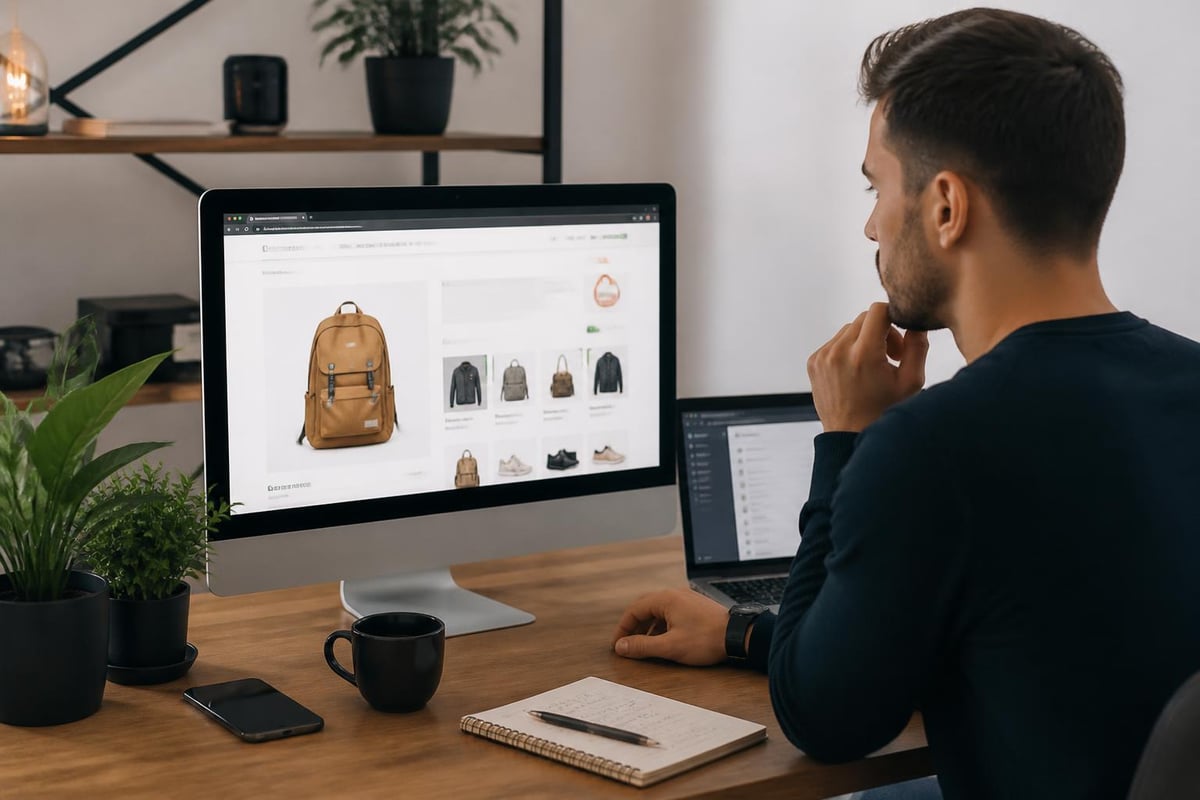
Once you've validated your niche, setting up your Shopify store follows a clear pathway. Choose a plan appropriate for your projected volume, register a memorable domain name, and select a theme that balances aesthetics with conversion optimisation. Many successful stores initially use modified versions of Shopify's free themes before investing in custom design as they prove product-market fit.
Essential Store Configuration Steps
- Register your Shopify account and select an appropriate pricing plan
- Configure payment gateways including Shopify Payments for UK customers
- Set up shipping zones and rates reflecting your suppliers' capabilities
- Install essential apps for dropshipping automation and customer service
- Create core pages including About, Contact, Shipping Policy, and Returns
- Implement legal requirements such as GDPR compliance and privacy policies
- Connect analytics tools to track performance from day one
Product listings deserve particular attention in dropshipping operations. Since you're competing with other retailers offering identical products, your descriptions, imagery, and positioning must differentiate your store. Rewriting supplier descriptions, adding lifestyle photography when possible, and highlighting specific use cases can significantly improve conversion rates.
Finding and Vetting Reliable Suppliers
Supplier relationships form the operational backbone of any dropshipping Shopify venture. The quality, reliability, and responsiveness of your suppliers directly impact customer satisfaction, return rates, and your brand reputation. Poor supplier performance can destroy an otherwise well-executed business.
Several established platforms connect Shopify stores with dropshipping suppliers. Each offers different product catalogues, pricing structures, and service levels. Zendrop, Spocket, and Modalyst represent popular choices for UK-based stores, offering varying degrees of supplier vetting, product quality assurance, and integration depth with Shopify.
When evaluating potential suppliers, prioritise those with UK or European warehouses to minimise shipping times and customs complications for British customers. International shipping from Asia can take weeks and introduces duties and VAT complexities that frustrate customers and complicate your operations. Whilst domestic suppliers typically offer lower margins, the operational advantages often justify the trade-off.
| Supplier Factor | What to Evaluate | Why It Matters |
|---|---|---|
| Product Quality | Sample orders, customer reviews | Directly impacts returns and reputation |
| Shipping Speed | Average delivery times to UK | Affects customer satisfaction and repeat purchases |
| Communication | Response times, professionalism | Essential for resolving issues quickly |
| Pricing Structure | Base costs, shipping fees, volume discounts | Determines your profit margins |
| Order Processing | Automation capabilities, error rates | Influences operational efficiency |
| Returns Policy | Who handles returns, restocking fees | Impacts customer service costs |
Testing suppliers before committing is non-negotiable. Place sample orders to yourself, evaluating product quality, packaging presentation, shipping speed, and the overall customer experience. This firsthand knowledge proves invaluable when marketing products and managing customer expectations. Many successful dropshipping Shopify operators maintain relationships with multiple suppliers for the same product category, providing redundancy and negotiating leverage.
Optimising Store Performance and Conversions
Launching a dropshipping Shopify store represents only the beginning. Converting visitors into customers requires deliberate optimisation across design, user experience, and trust signals. Dropshipping stores face inherent trust barriers, as customers often cannot find reviews or brand recognition, making conversion rate optimisation particularly crucial.
Site speed significantly impacts both conversion rates and search rankings. Whilst Shopify provides excellent hosting infrastructure, bloated themes, unoptimised images, and excessive apps can undermine performance. Regularly audit your store using tools like Google PageSpeed Insights, compressing images, minimising app usage, and selecting performance-optimised themes.
Trust elements deserve prominent placement throughout the customer journey. Clear shipping information, transparent return policies, secure payment badges, and customer testimonials reduce purchase anxiety. Many successful stores include live chat functionality, even if automated through chatbots initially, to address questions immediately. Professional product photography, even if sourced from suppliers, should maintain consistency in style and presentation across your catalogue.
Conversion-Focused Design Elements
- Clear value propositions on the homepage explaining why customers should choose your store
- High-quality product imagery from multiple angles with zoom functionality
- Detailed sizing guides and specifications to reduce uncertainty
- Social proof including reviews, testimonials, and user-generated content
- Streamlined checkout process minimising friction between cart and purchase
- Mobile optimisation ensuring seamless experiences across devices
For stores seeking to maximise revenue from existing traffic, conversion rate optimisation services can identify specific friction points and implement data-led improvements that compound over time. Small percentage improvements in conversion rates translate directly to revenue increases without requiring additional marketing spend.
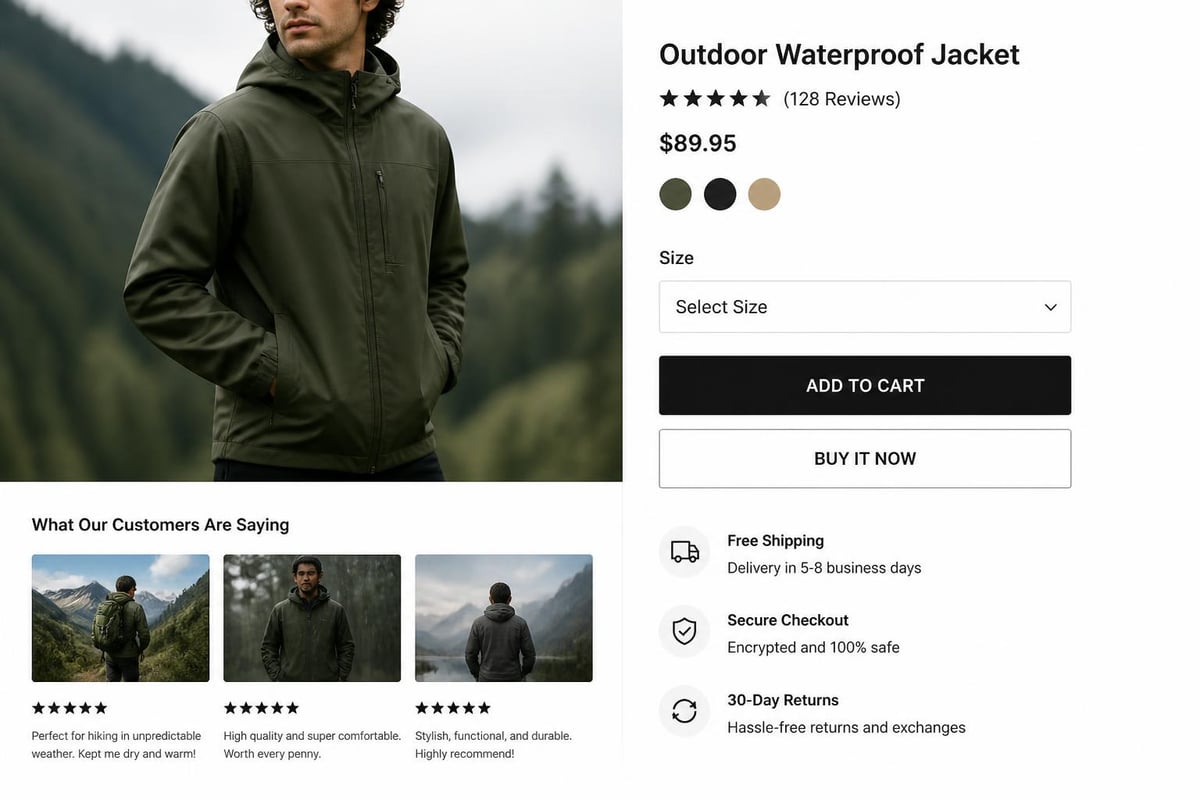
Product descriptions should address common questions and objections preemptively. Rather than simply listing features, explain benefits in context of customer problems. Include sizing information, care instructions, and realistic use cases. Video content, where available, dramatically improves conversion rates by providing richer product understanding than static images alone.
Marketing Your Dropshipping Shopify Store
Building a store represents only half the equation. Driving qualified traffic requires a multi-channel marketing approach tailored to your niche, audience, and competitive landscape. The most successful dropshipping Shopify operations treat marketing as an ongoing strategic function rather than an afterthought.
Paid advertising on platforms like Facebook, Instagram, and Google Shopping provides immediate traffic and rapid testing capabilities. Start with modest budgets, testing different product offerings, audience segments, and creative approaches. The data gathered during these initial campaigns informs both product selection and organic marketing strategies. Successful campaigns typically achieve customer acquisition costs well below lifetime customer value, requiring careful tracking and optimisation.
Organic search presents a longer-term but more sustainable traffic channel. Whilst competitive keywords face significant competition, long-tail searches and niche-specific terms offer opportunities for ranking. Content marketing through blog posts, buying guides, and comparison articles can attract customers earlier in their purchase journey. Building this foundation takes time but compounds as your domain authority grows.
Social media marketing extends beyond paid advertising when approached strategically. Platforms like Instagram, TikTok, and Pinterest allow you to build engaged audiences around lifestyle content related to your products. User-generated content, influencer partnerships, and authentic storytelling resonate more effectively than direct product promotion. Many successful stores cultivate communities around their niche rather than simply broadcasting sales messages.
Effective Marketing Channel Mix
| Channel | Timeline to Results | Best For | Investment Level |
|---|---|---|---|
| Paid Social | Immediate | Product testing, quick sales | Medium-High |
| Google Shopping | Days-Weeks | High-intent shoppers | Medium-High |
| SEO & Content | Months | Sustainable organic traffic | Low-Medium |
| Email Marketing | Ongoing | Customer retention, repeat purchases | Low |
| Influencer Partnerships | Weeks | Brand awareness, social proof | Variable |
Email marketing remains one of the highest-ROI channels for eCommerce. Building an email list from day one through lead magnets, exit-intent popups, and post-purchase sequences creates an owned audience you can market to repeatedly. Automated sequences for cart abandonment, post-purchase follow-up, and win-back campaigns generate revenue whilst you focus on other areas.
Shopify's official dropshipping resources provide additional guidance on marketing strategies specific to the platform's ecosystem, including app integrations and automation capabilities that streamline multichannel campaigns.
Managing Operations and Customer Service
Operational excellence separates sustainable dropshipping businesses from those that flame out after initial success. Despite outsourcing fulfilment to suppliers, you remain responsible for the entire customer experience. Managing this relationship triangle between you, suppliers, and customers requires systems, communication protocols, and realistic expectations.
Order management automation reduces manual workload and error rates. Apps like Oberlo, Zendrop, and DSers automatically route orders to appropriate suppliers, update tracking information, and sync inventory levels. However, automation shouldn't eliminate human oversight. Regular audits of order processing, tracking accuracy, and delivery times help identify supplier issues before they escalate into customer problems.
Customer service in dropshipping operations faces unique challenges. You're troubleshooting issues with products you haven't physically handled and shipping processes you don't directly control. Maintain detailed documentation of supplier capabilities, common issues, and resolution processes. Respond to enquiries promptly and honestly, setting realistic expectations rather than making promises you cannot keep.
Returns and refunds represent inevitable aspects of eCommerce that require clear policies and efficient processes. Define who handles returns, whether customers ship back to you or directly to suppliers, and how refunds are processed. Many successful stores absorb return shipping costs to reduce friction, building customer lifetime value through superior service rather than squeezing margins on individual transactions.
Quality control becomes more challenging when you never handle products directly. Ordering samples periodically, monitoring customer feedback closely, and maintaining open communication with suppliers helps catch quality drift early. Some operators switch suppliers at the first sign of declining quality rather than investing energy in remediation.

Legal and Tax Considerations for UK Dropshippers
Operating a dropshipping Shopify business in the UK requires compliance with several legal and tax obligations. Ignorance provides no protection, and proper setup from the beginning prevents costly complications later. Whilst this shouldn't deter you from starting, understanding these requirements ensures you're building on solid foundations.
Register your business appropriately, whether as a sole trader, limited company, or other structure. Most dropshippers begin as sole traders for simplicity, transitioning to limited companies as revenue grows and liability protection becomes valuable. HMRC requires registration once you exceed the trading allowance, though registering earlier simplifies accounting and separates business finances from personal.
VAT obligations depend on your turnover and where your suppliers are located. The UK VAT threshold stands at £85,000 annual turnover in 2026. Dropshipping from non-EU suppliers to UK customers typically means you're importing goods, with VAT and duty implications. Using UK or EU-based suppliers simplifies this considerably. Consult with an accountant familiar with eCommerce to ensure proper compliance from the start.
Consumer rights legislation, including the Consumer Rights Act and Distance Selling Regulations, applies fully to dropshipping operations. Customers retain the right to return items within 14 days for any reason, and products must match their descriptions. Your terms and conditions should clearly explain shipping times, return processes, and dispute resolution whilst complying with UK law.
Data protection under GDPR requires careful handling of customer information. Shopify provides tools for compliance, but you're responsible for proper implementation. Maintain clear privacy policies, obtain appropriate consents, and ensure any third-party apps or suppliers also comply with data protection requirements.
Scaling Your Dropshipping Shopify Business
Growth from initial validation to sustainable business requires strategic decisions about reinvestment, diversification, and operational infrastructure. Many dropshippers plateau after initial success because they continue operating with launch-phase mindset rather than evolving their approach.
Product expansion should follow data-driven insights rather than intuition. Analyse which products generate the highest margins, repeat purchases, and customer satisfaction. Double down on winners before expanding into untested categories. Some stores succeed by going deeper into a single niche rather than broader across multiple categories, building genuine expertise and brand recognition.
Consider transitioning from pure dropshipping to hybrid models as you scale. Purchasing popular items in bulk from suppliers improves margins and shipping speed whilst maintaining dropshipping for less predictable products. This approach requires more capital and operational complexity but significantly improves unit economics on high-volume items.
Branding becomes increasingly important as you scale. Generic dropshipping stores compete purely on price and advertising efficiency, creating a race to the bottom. Investing in custom packaging, branded inserts, and distinctive visual identity transforms transactional relationships into brand loyalty. This differentiation justifies premium pricing and reduces customer acquisition costs over time.
Technical infrastructure may require upgrading beyond basic Shopify themes and apps. For stores processing significant volume or requiring sophisticated functionality, custom Shopify development can optimise user experiences, automate complex workflows, and integrate with enterprise systems that basic apps cannot support.
Growth Indicators to Monitor
- Customer acquisition cost versus lifetime value ratios improving over time
- Repeat purchase rates indicating brand loyalty rather than one-time transactions
- Average order value trending upward through bundling and upsells
- Operational efficiency measured in orders processed per hour of work
- Brand equity reflected in direct traffic, branded searches, and social engagement
Common Pitfalls and How to Avoid Them
Despite the accessible nature of dropshipping Shopify businesses, numerous operators fail due to predictable mistakes. Learning from others' missteps accelerates your path to profitability whilst avoiding costly detours.
Choosing oversaturated niches with undifferentiated products represents perhaps the most common error. Competing on identical products against hundreds of other dropshippers forces race-to-the-bottom pricing that eliminates profitability. Research thoroughly, seeking niches with genuine demand but manageable competition. Better to be a significant player in a smaller niche than invisible in a massive market.
Unrealistic shipping promises erode customer trust and generate negative reviews. If your supplier requires 7-10 days for shipping, communicate this clearly rather than implying Amazon-like speeds. Customers accept longer shipping when expectations are set appropriately but feel deceived when reality doesn't match promises.
Neglecting customer service in favour of chasing new sales creates a leaky bucket that prevents sustainable growth. Negative reviews, chargebacks, and poor word-of-mouth compound over time, increasing customer acquisition costs and reducing conversion rates. Invest in responsive, helpful customer service from the beginning, treating it as a marketing expense that improves lifetime value.
Treating dropshipping as passive income leads to operational neglect. Whilst more hands-off than traditional retail, successful operations require ongoing attention to supplier performance, market trends, customer feedback, and competitive dynamics. Automation handles tactical execution, but strategic oversight remains essential.
According to comprehensive analysis of the dropshipping model, stores that approach it as a legitimate business with professional standards significantly outperform those seeking quick wins or passive income with minimal effort.
Emerging Trends Shaping Dropshipping in 2026
The dropshipping landscape continues evolving as technology, consumer expectations, and competitive dynamics shift. Staying aware of emerging trends positions your business to adapt rather than being disrupted by changes.
Artificial intelligence increasingly influences product selection, pricing optimisation, and customer service. Tools that analyse market trends, predict demand, and personalise shopping experiences are becoming accessible to smaller operators rather than exclusively enterprise retailers. Integrating these capabilities early provides competitive advantages as they become industry standard.
Sustainability concerns influence purchasing decisions, particularly among younger demographics. Dropshipping traditionally struggles with sustainability due to individual shipments and overseas sourcing. Stores emphasising local suppliers, eco-friendly packaging, and carbon offset programmes differentiate themselves and align with shifting consumer values.
Platform reviews from authoritative technology sources highlight Shopify's continued investment in features supporting dropshipping operations, including improved supplier integration capabilities, enhanced mobile commerce functionality, and more sophisticated marketing automation tools that level the playing field between small operators and established brands.
Video commerce through platforms like TikTok Shop and Instagram Shopping creates new discovery and purchase pathways. Products that demonstrate well in short-form video content see disproportionate success, rewarding stores that invest in compelling visual storytelling over static product photography alone.
Subscription models layered onto traditional dropshipping create recurring revenue streams and improve customer lifetime value. Consumable products, seasonal deliveries, or membership programmes transform one-time buyers into ongoing relationships that stabilise cash flow and reduce marketing dependency.
Building a successful dropshipping Shopify business in 2026 requires combining the model's operational advantages with professional execution across design, marketing, and customer service. Whilst the barriers to entry remain low, sustainable profitability demands treating it as a legitimate retail operation rather than a side project. Whether you're launching a new venture or optimising an existing store, strategic decisions around positioning, supplier relationships, and customer experience separate thriving businesses from those that struggle. Futur Media helps ambitious UK brands build high-performing Shopify stores with conversion-focused design, technical excellence, and growth-oriented strategy that transforms dropshipping operations into scalable eCommerce businesses.



.svg)