
.svg)






%201.avif)
Product bundling is one of the most effective ways to increase average order value — but only if you've got the right app powering it. With dozens of options on the Shopify App Store, finding the best bundle app for Shopify can feel overwhelming. This guide cuts through the noise and compares the top performers for 2026, so you can make the right call for your store. Already using Shopify and want to get more from it? Take a look at our Shopify development service
Why Bundle Apps Matter for Shopify Stores
Bundle apps serve a dual purpose that makes them essential for modern eCommerce operations. They simplify the purchasing journey for customers whilst simultaneously increasing transaction values for merchants.
Key benefits of implementing bundle apps include:
- Increased average order value through strategic product groupings
- Reduced decision fatigue by presenting curated product collections
- Improved inventory management for slow-moving stock
- Enhanced perceived value through bundled discount structures
- Streamlined checkout process with fewer individual product selections
The psychology behind bundling is straightforward yet powerful. Customers perceive bundled offerings as better value, even when the actual discount is modest. This perception drives conversion rates upward whilst maintaining healthy profit margins.
Beyond revenue metrics, bundle apps contribute significantly to operational efficiency. Rather than managing individual product promotions across multiple channels, merchants can create cohesive offers that apply consistently throughout the customer journey. This consistency strengthens brand positioning whilst reducing the complexity of promotional strategies.
Essential Features in the Best Bundle App for Shopify
When evaluating bundling solutions, certain features distinguish professional-grade applications from basic alternatives. Understanding these capabilities helps merchants make informed decisions aligned with business objectives.
Customisation and Flexibility
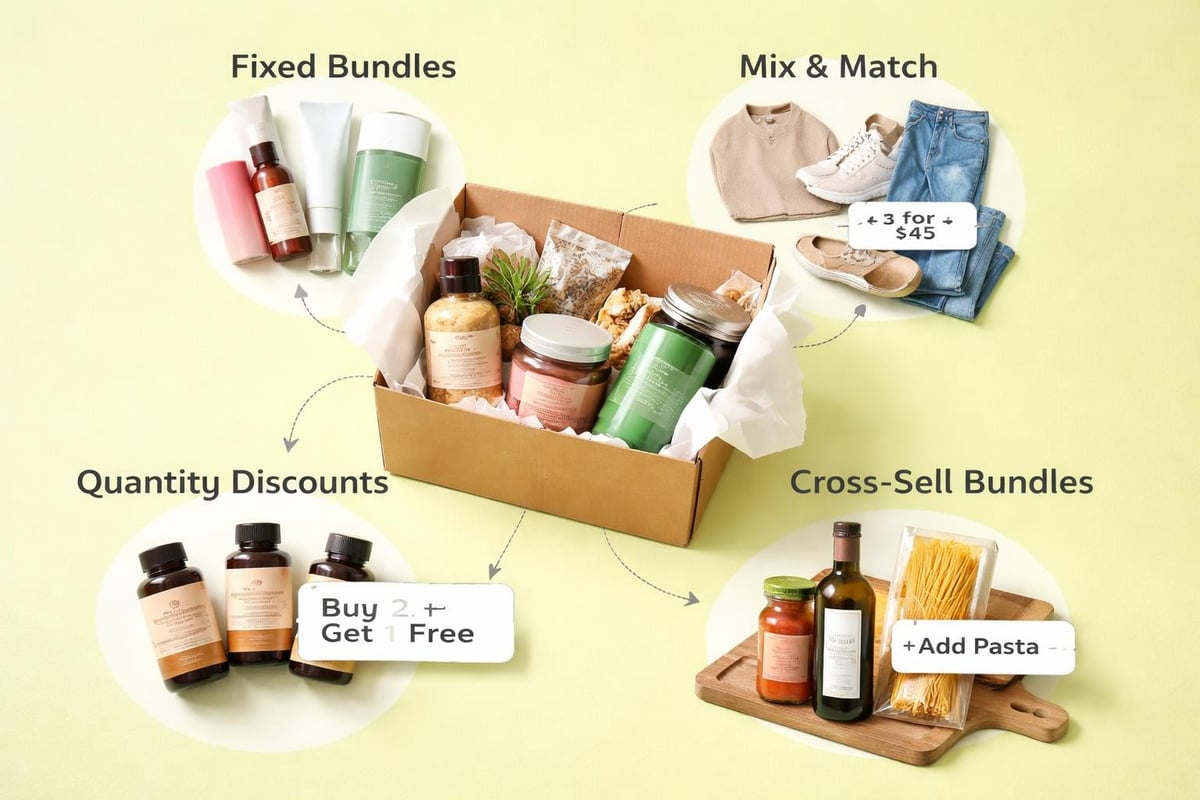
The ability to create diverse bundle types separates powerful apps from limited solutions. Premium bundling platforms support fixed bundles (preset product combinations), mix-and-match selections (customer-chosen combinations within parameters), quantity-based offers (bulk discounts), and subscription bundles for recurring revenue.
Visual customisation matters equally. Your bundle interface should seamlessly integrate with your existing Shopify web design rather than appearing as a disconnected element. Look for apps offering extensive styling options, custom CSS capabilities, and responsive design that performs across all device types.
Technical Performance
Bundle apps directly impact page load speeds and checkout functionality. Poorly coded solutions introduce latency, particularly on product pages where milliseconds affect conversion rates. The best bundle app for Shopify maintains sub-second load times even when displaying complex bundle configurations.
Performance MetricTarget RangeImpact on ConversionsPage Load TimeUnder 2 secondsCriticalTime to InteractiveUnder 3 secondsHighBundle Selection SpeedInstantaneousMediumCheckout IntegrationSeamlessCritical
Database efficiency becomes crucial as your product catalogue expands. Applications that generate excessive database queries or fail to implement proper caching create bottlenecks that degrade user experience during peak traffic periods.
Inventory Management Integration
Sophisticated bundle apps synchronise inventory across individual products and bundled offerings automatically. This prevents overselling scenarios where bundle components sell out independently, leaving incomplete bundles in circulation.
Real-time inventory updates ensure accurate stock levels display throughout the customer journey. When a product within a bundle reaches low stock, the best systems trigger alerts or automatically adjust bundle availability to prevent fulfilment issues.
Top Shopify Bundle Apps Compared
Several applications have established themselves as industry leaders through consistent performance, robust feature sets, and responsive developer support. Each brings distinct advantages suited to different business models and technical requirements.
Bundle Builder Applications
Comprehensive bundle builder tools focus on maximum customisation, enabling merchants to create virtually any bundling scenario imaginable. These platforms typically offer visual builders, advanced discount logic, and extensive integration capabilities with other Shopify apps.
Strengths include:
- Unlimited bundle creation with no artificial restrictions
- Advanced discount structures including tiered pricing and volume breaks
- Detailed analytics tracking bundle performance metrics
- Multi-language and multi-currency support for international stores
- A/B testing capabilities for optimising bundle configurations
These comprehensive solutions suit growing brands with diverse product catalogues requiring sophisticated bundling strategies. Implementation complexity typically necessitates technical expertise, making them ideal candidates for merchants working with agencies specialising in Shopify development.
BOGO and Discount-Focused Apps
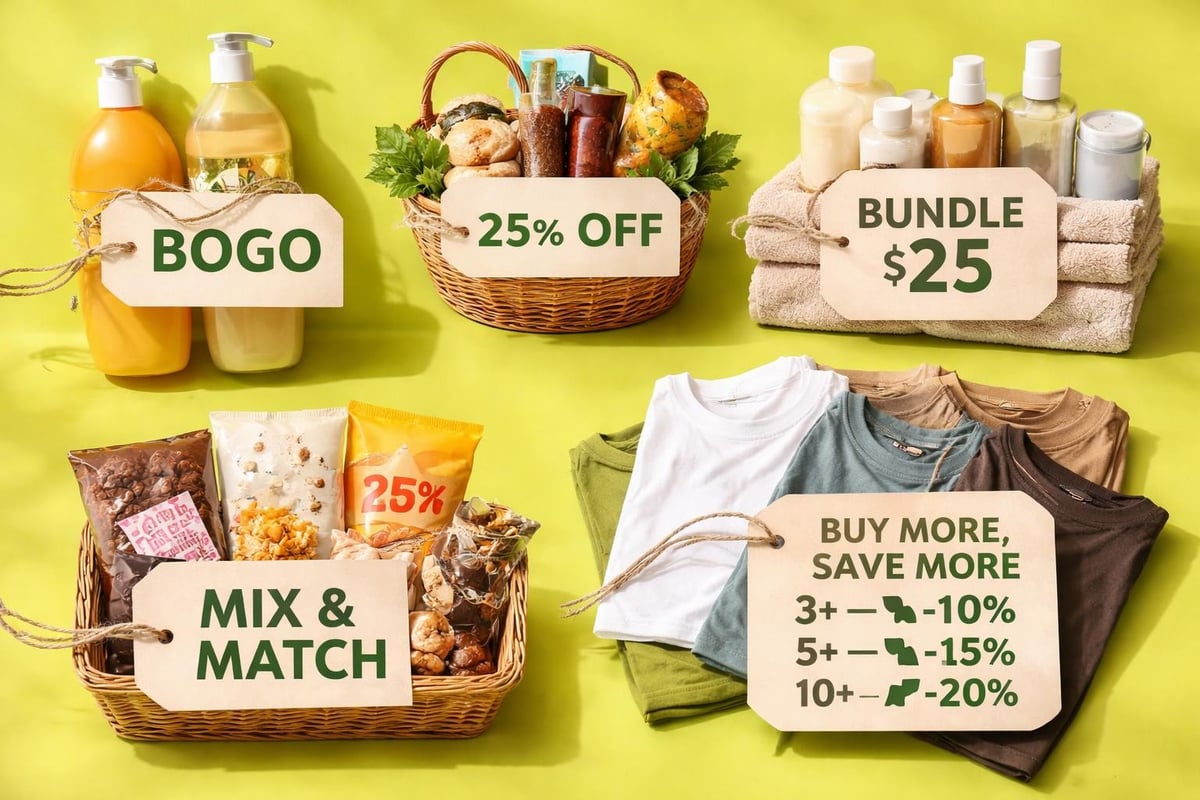
Buy-one-get-one and discount-oriented applications prioritise promotional simplicity over extensive customisation. These streamlined solutions excel at creating time-limited offers, flash sales, and straightforward bundle deals that drive urgency.
Their focused approach delivers benefits for specific scenarios:
- Rapid campaign deployment without technical configuration
- Mobile-optimised interfaces designed for impulse purchases
- Simple discount structures that customers understand immediately
- Minimal performance impact through lightweight code
Volume Discount and Quantity Break Tools
Quantity-based bundling apps specialise in wholesale scenarios and bulk purchasing incentives. Rather than grouping different products, these applications apply progressive discounts as customers increase order quantities of individual items.
This bundling style particularly suits:
- B2B merchants selling in bulk quantities
- Consumable products where customers benefit from stock-up purchases
- Seasonal items where volume incentives clear inventory efficiently
- Subscription box services offering quantity flexibility
Pricing Models and Cost Considerations
Understanding the financial implications of bundle apps requires looking beyond monthly subscription fees to consider transaction costs, revenue sharing, and scaling expenses. Popular Shopify bundle apps employ various pricing structures that impact profitability differently based on your sales volume and bundle adoption rates.
Subscription Tiers
Most bundle applications offer tiered pricing aligned with feature access and usage limits. Entry-level plans typically range from £15 to £30 monthly, providing basic bundling functionality suitable for stores generating under £10,000 monthly revenue.
Mid-tier subscriptions (£50-£100 monthly) unlock advanced features including unlimited bundles, detailed analytics, priority support, and removal of app branding. These tiers suit established stores where bundling contributes significantly to revenue.
Enterprise plans exceed £150 monthly but include dedicated account management, custom development, and white-label solutions. These premium tiers make financial sense for high-volume merchants where bundle revenue justifies enhanced support and customisation.
Commission-Based Pricing
Alternative pricing models charge percentage fees on bundle sales rather than fixed subscriptions. Whilst this reduces upfront costs, commission structures can become expensive as bundle adoption grows. Calculate your expected bundle revenue monthly and compare total costs across pricing models.
Pricing ModelBest ForWatch Out ForFlat Monthly FeePredictable expenses, high volumeFeature limitations at lower tiersCommission-BasedTesting bundle strategiesCosts scaling with successHybrid (Base + Commission)Mid-sized storesComplex cost calculationsFree (Limited Features)Small catalogues, basic needsScalability constraints
Implementation Best Practices
Successfully deploying bundle apps extends beyond technical installation to encompass strategic planning, design integration, and ongoing optimisation. These practices ensure maximum return on your bundling investment.
Strategic Bundle Creation
Effective bundles solve customer problems whilst supporting business objectives. Analyse your sales data to identify frequently co-purchased products, then formalise these natural pairings into structured bundles. This data-driven approach outperforms arbitrary product groupings that ignore actual purchasing behaviour.
Consider complementary product bundles that enhance primary purchases. If you sell cameras, bundle memory cards, protective cases, and cleaning kits. These logical combinations increase perceived value whilst improving customer satisfaction through comprehensive solutions.
Margin-conscious bundling balances customer value with profitability. Include high-margin accessories alongside popular low-margin items to maintain healthy overall margins whilst delivering competitive pricing perceptions. This strategic mixing protects profitability without sacrificing conversion potential.
Design Integration Considerations
Bundle presentations should feel native to your store aesthetic rather than appearing as aftermarket additions. Work with your development team to ensure bundle selectors match your site's typography, colour schemes, and interactive elements precisely.
Mobile experience demands particular attention, as research shows the majority of eCommerce traffic now originates from smartphones. Bundle interfaces must remain intuitive and functional on smaller screens where complex selections become frustrating quickly.
Clear value communication separates successful bundles from ignored offerings. Prominently display savings amounts, comparison pricing, and bundle benefits using visual elements that draw attention without creating design clutter. Customers should instantly recognise the value proposition without requiring calculations.
Testing and Optimisation
Continuous improvement through systematic testing elevates bundle performance beyond initial implementations. A/B test different bundle configurations, pricing structures, and presentation formats to identify what resonates with your specific audience.
Track these key performance indicators:
- Bundle conversion rate versus individual product purchases
- Average order value for transactions including bundles
- Bundle attachment rate across different product categories
- Customer lifetime value for bundle purchasers versus non-bundle customers
- Cart abandonment rates on bundle-inclusive transactions
These metrics reveal which bundles drive results and which require refinement or removal. Regular analysis prevents wasted effort promoting underperforming configurations whilst doubling down on successful strategies.
Technical Integration and Platform Compatibility
Modern Shopify stores rarely operate with bundling apps in isolation. Successful implementations require seamless integration with existing technology stacks including inventory management systems, email marketing platforms, and analytics tools.
App Ecosystem Compatibility
Conflicts between bundle apps and other installed applications create frustrating technical issues. Before committing to specific bundling solutions, verify compatibility with your essential apps, particularly those handling inventory, discounts, subscriptions, or checkout modifications.
Popular integration points include:
- Email marketing platforms for promoting bundle offers through automated campaigns
- Loyalty programmes ensuring bundle purchases earn appropriate rewards
- Review applications collecting feedback on bundle satisfaction
- Analytics tools tracking bundle performance within broader conversion funnels
- Subscription services combining recurring billing with bundle discounts
Testing these integrations in staging environments before production deployment prevents customer-facing issues that damage conversion rates and brand perception.
Theme Compatibility and Customisation
Shopify themes vary significantly in structure and coding standards. The best bundle app for Shopify should work seamlessly with both popular commercial themes and custom-developed designs without requiring extensive modifications.
Liquid template customisation may become necessary for precise design integration or unique functionality requirements. Ensure your development team possesses sufficient Shopify expertise to implement these customisations properly, or consider partnering with specialists who understand both bundling mechanics and theme architecture.
Common Challenges and Solutions
Even carefully selected bundle apps present implementation challenges that require proactive management. Understanding common obstacles and their solutions accelerates successful deployment whilst minimising frustration.
Inventory Synchronisation Issues
Bundle components selling at different rates creates inventory mismatches where some elements remain whilst others deplete. Configure your bundle app to automatically disable bundles when any component falls below threshold quantities, preventing customer disappointment from unavailable items.
Alternatively, implement dynamic bundling that suggests alternative products when primary options become unavailable. This approach maintains bundle availability whilst protecting customer experience through transparent substitutions.
Discount Conflict Management
Multiple concurrent discounts create confusion regarding which offers apply and in what sequence. Establish clear discount hierarchies within your Shopify settings, ensuring bundle discounts take precedence over automatic discounts or volume pricing that might conflict.
Detailed documentation of discount logic helps customer service teams address queries confidently whilst preventing disputes about pricing expectations. Transparency builds trust even when discount stacking isn't permitted.
Performance Optimisation
Bundle apps introducing noticeable page load delays require optimisation. Work with developers to implement lazy loading for bundle selectors, ensuring core page content renders before bundle interfaces. This approach maintains acceptable performance metrics even with feature-rich bundle presentations.
Consider server-side rendering for bundle calculations when possible, reducing client-side processing that impacts mobile devices disproportionately. These technical optimisations maintain smooth user experiences across all devices and connection speeds.
Advanced Bundle Strategies for Growth
Sophisticated merchants leverage bundling beyond basic product groupings to create comprehensive revenue growth strategies. These advanced approaches maximise the investment in bundle app infrastructure.
Seasonal and Event-Based Bundling
Time-limited bundles capitalise on seasonal demand patterns and calendar events. Create Valentine's gift bundles, back-to-school collections, or holiday gift sets that simplify purchasing decisions during high-intent shopping periods.
Limited availability creates urgency that accelerates purchasing decisions. Communicate bundle exclusivity through countdown timers and stock indicators that reinforce scarcity without appearing manipulative.
Tiered Bundle Structures
Progressive bundle tiers encourage customers to increase spending for enhanced value. Offer good, better, and best bundle options where each tier includes the previous level's products plus additional premium items. This structure guides customers toward higher-value purchases whilst maintaining accessible entry points.
Price anchoring through tiered bundles makes mid-tier options appear sensibly priced compared to premium alternatives, whilst entry-level bundles capture price-sensitive customers who might otherwise purchase nothing.
Subscription Bundle Combinations
Combining bundles with subscription models creates predictable recurring revenue streams. Offer discounted bundle pricing for subscription commitments, incentivising long-term customer relationships whilst simplifying inventory forecasting through predictable demand patterns.
This approach works particularly well for consumable products, regular-use items, and curated discovery boxes where customers appreciate convenience alongside economic benefits.
Measuring Bundle Success
Quantifying bundle performance requires tracking metrics beyond basic sales figures to understand true contribution to business growth. Comprehensive measurement informs strategic refinements that compound results over time.
Revenue Attribution
Isolate bundle-specific revenue from overall sales to calculate return on app investment. Compare this revenue against app costs, implementation expenses, and ongoing optimisation time to determine net contribution accurately.
Track revenue trends across different bundle types to identify which configurations deliver strongest results. This granular analysis prevents successful bundles from subsidising underperforming alternatives that dilute overall effectiveness.
Customer Behaviour Analysis
Bundle purchasers often exhibit different behavioural patterns compared to single-item customers. Analyse repeat purchase rates, lifetime value, and product category exploration to understand how bundles influence long-term customer relationships.
Customers introduced to your brand through strategically designed bundles may demonstrate higher retention rates than those acquiring individual products. This insight justifies viewing bundle apps as customer acquisition tools rather than purely transactional optimisations.
Competitive Positioning
Monitor competitor bundling strategies to ensure your offerings remain competitively positioned. Whilst avoiding race-to-bottom pricing, understand market expectations around bundle discounts, product combinations, and presentation standards that influence customer perceptions.
Differentiation through unique bundle configurations creates competitive advantages that transcend pricing comparisons. Exclusive combinations unavailable from competitors position your store as the destination for specific product needs.
Selecting Your Optimal Solution
Choosing the best bundle app for Shopify ultimately depends on your specific circumstances, technical capabilities, and business objectives. No single solution suits every merchant equally, making careful evaluation essential.
Evaluation Criteria Framework
Systematically assess potential apps against these dimensions:
Technical fit encompasses compatibility with your current theme, required integrations, and technical support availability matching your team's capabilities.
Feature alignment evaluates whether app functionality addresses your specific bundling requirements without unnecessary complexity that complicates usage.
Scalability potential considers whether the solution accommodates future growth in product catalogue size, traffic volume, and bundling sophistication.
Total cost of ownership includes subscription fees, transaction costs, implementation expenses, and ongoing maintenance requirements across your projected usage period.
Support quality examines developer responsiveness, documentation comprehensiveness, and community resources availability for troubleshooting and optimisation guidance.
Comprehensive app comparisons help narrow options to shortlisted candidates warranting detailed evaluation through trial installations.
Trial and Testing Approach
Most bundle apps offer trial periods enabling hands-on evaluation before financial commitment. Use these trials strategically by implementing representative bundle configurations that reflect your actual use cases rather than generic examples.
Measure performance impact carefully during trials, monitoring page load times, checkout completion rates, and customer feedback about bundle interfaces. These real-world metrics outweigh feature lists when determining practical suitability.
Involve customer service teams in trial evaluations, gathering feedback about bundle management interfaces, reporting capabilities, and support responsiveness. These operational perspectives complement merchant-focused assessments for comprehensive decision-making.
Selecting and implementing the best bundle app for Shopify represents a strategic investment that compounds returns through increased average order values, improved inventory efficiency, and enhanced customer satisfaction. Success requires matching app capabilities to your specific business model, ensuring seamless technical integration, and committing to ongoing optimisation based on performance data.
If you're building a high-performing Shopify store that maximises revenue through strategic bundling and conversion-focused design, Futur Media combines technical expertise with commercial insight to deliver measurable results. Our Cardiff-based team specialises in creating sophisticated eCommerce experiences that turn visitors into customers whilst supporting long-term growth through data-led optimisation.



.svg)