
.svg)






%201.avif)
The digital landscape in 2026 demands more than aesthetically pleasing websites. Businesses require strategic partners who understand the intricate relationship between design, functionality, and commercial outcomes. A web design consultancy offers this expertise, bridging the gap between business objectives and digital execution. Whether launching a new venture, refreshing an existing presence, or optimising for conversions, the right consultancy transforms websites from digital brochures into revenue-generating assets. For ecommerce brands particularly, choosing the right partner can mean the difference between incremental improvements and transformative growth.
What Defines a Web Design Consultancy
A web design consultancy extends far beyond template selection and colour schemes. These specialist firms combine strategic thinking, technical expertise, and commercial acumen to solve complex digital challenges.
Strategic vs Tactical Approach
Traditional web designers focus on visual execution. Consultancies begin with business objectives, customer behaviour, and market positioning. This fundamental difference shapes every subsequent decision.
Core consultancy competencies include:
- Business analysis and digital strategy development
- User experience research and testing
- Technical architecture and platform selection
- Brand alignment and visual identity
- Performance optimisation and conversion analysis
- Long-term roadmap planning
The consultative approach means asking difficult questions before opening design software. What revenue targets drive this project? Who are your competitors, and how do they perform online? Which customer segments generate the most value? These strategic conversations ensure design decisions support measurable business outcomes rather than subjective preferences.

Industry Specialisation Matters
Generic web design consultancies serve diverse sectors. Specialist consultancies focus on specific industries, developing deep expertise in particular platforms, customer behaviours, and commercial models.
For ecommerce businesses, platform-specific knowledge proves invaluable. A consultancy specialising in Shopify understands the platform's capabilities, limitations, and ecosystem far better than generalists. They know which apps integrate seamlessly, how to structure collections for SEO, and which customisations require development versus configuration.
This specialisation accelerates project timelines, reduces technical risks, and delivers solutions aligned with platform best practices. When evaluating consultancies, prioritise those demonstrating proven expertise in your specific sector and technology stack.
Services Offered by Web Design Consultancies
Modern consultancies provide comprehensive service portfolios addressing every stage of digital maturity.
Discovery and Strategy
Every successful project begins with thorough discovery. Consultancies invest time understanding your business model, competitive landscape, and customer journey before recommending solutions.
| Discovery Component | Purpose | Typical Deliverables |
|---|---|---|
| Business Analysis | Align digital strategy with commercial objectives | SWOT analysis, revenue models, KPI framework |
| User Research | Understand customer needs and behaviours | Personas, journey maps, usability insights |
| Technical Audit | Evaluate current platform performance | Performance reports, security assessments, migration planning |
| Competitive Analysis | Benchmark against market leaders | Feature comparisons, UX reviews, positioning recommendations |
These discovery phases prevent costly mistakes. Investing weeks in strategic planning saves months of redevelopment when projects head in wrong directions. The best consultancies challenge assumptions, question requirements, and ensure consensus before entering execution phases.
Design and User Experience
Visual design represents the most visible consultancy output, but effective UX work happens beneath the surface. Consultancies balance aesthetic appeal with functional excellence.
Modern web design prioritises mobile-first experiences, accessibility standards, and performance optimisation. Best practices for web design emphasise usability alongside visual impact, ensuring websites serve diverse user needs.
Essential UX deliverables include:
- Information architecture defining content structure
- Wireframes mapping functionality and layout
- Interactive prototypes for usability testing
- Visual design systems ensuring consistency
- Responsive designs across all device types
Consultancies increasingly incorporate conversion rate optimisation principles into initial designs. Rather than designing first and optimising later, they embed testing hypotheses, persuasion principles, and behavioural psychology from the start. This proactive approach delivers stronger commercial results faster.
Development and Implementation
Strategic thinking and beautiful designs require solid technical execution. Web design consultancies either maintain in-house development teams or partner with trusted technical specialists.
Development quality directly impacts website performance, security, and scalability. Poor code creates technical debt, slowing future enhancements and increasing maintenance costs. Professional consultancies follow established web design best practices, ensuring clean, maintainable, and performant code.
For ecommerce projects specifically, development encompasses payment gateway integration, inventory management, shipping calculations, and customer account functionality. Platforms like Shopify provide foundational features, but custom requirements often demand bespoke development work.
When evaluating consultancies, examine their technical capabilities carefully. Request code samples, review previous projects, and understand their quality assurance processes. Shopify Development expertise ensures stores leverage platform capabilities fully whilst maintaining performance and security standards.
Choosing the Right Web Design Consultancy
Selecting the appropriate partner represents one of the most consequential business decisions affecting your digital presence.
Evaluating Expertise and Experience
Portfolio quality indicates consultancy capabilities, but dig deeper than surface aesthetics. Examine projects similar to your requirements, focusing on commercial outcomes rather than visual appeal alone.
Critical evaluation criteria:
- Industry experience: Previous work in your sector demonstrates relevant knowledge
- Technical proficiency: Platform expertise matching your requirements
- Project scale: Experience handling projects of comparable complexity and budget
- Commercial results: Case studies demonstrating measurable business impact
- Client retention: Long-term relationships indicating satisfaction and trust
Request detailed case studies explaining project challenges, strategic decisions, and measurable outcomes. Portfolios showcasing design thinking reveal how consultancies approach problems, not just final deliverables.
Understanding Process and Methodology
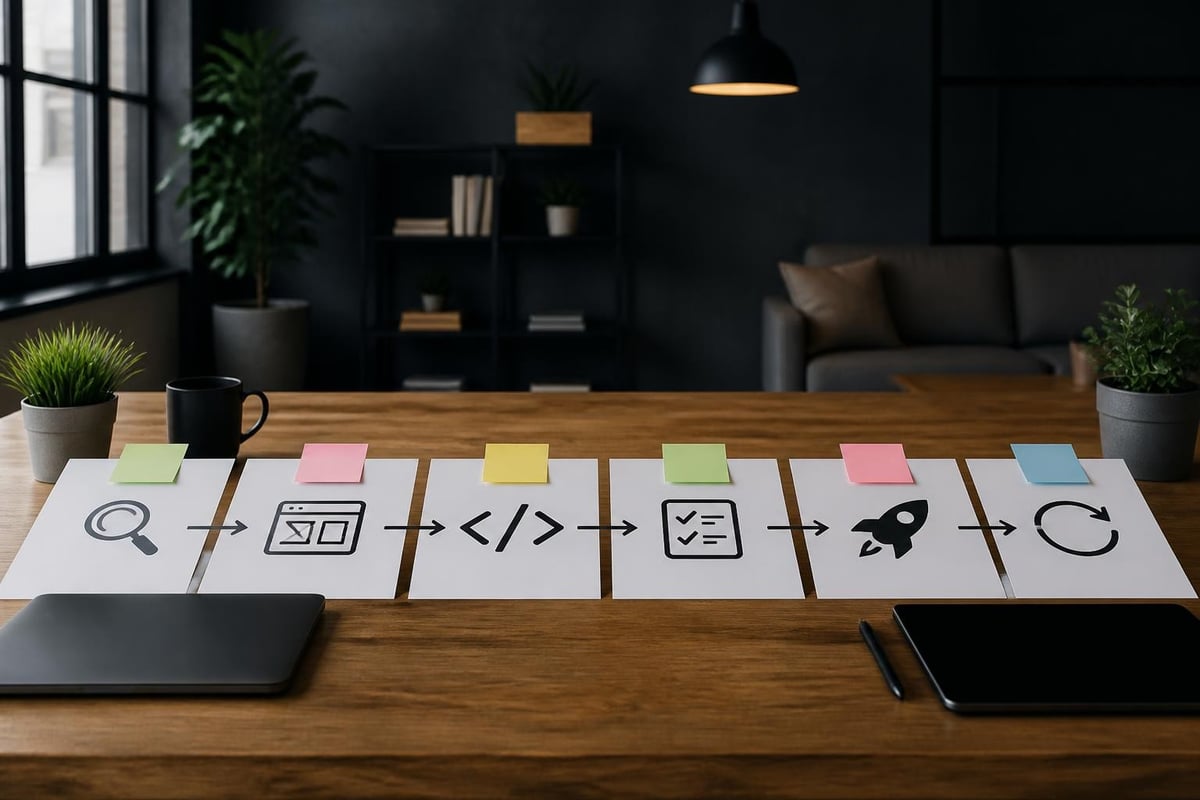
Professional consultancies follow structured processes ensuring predictable outcomes and transparent communication. Understanding their methodology helps set realistic expectations and identify potential friction points.
| Process Stage | Key Activities | Your Involvement |
|---|---|---|
| Discovery | Research, strategy, planning | High - providing insights and approvals |
| Design | Wireframes, prototypes, visual design | Medium - feedback and iteration |
| Development | Build, integration, testing | Low - periodic reviews |
| Launch | Deployment, training, optimisation | Medium - UAT and sign-off |
| Support | Maintenance, updates, improvements | Variable - depending on agreement |
Agile methodologies facilitate flexibility and iteration, whilst waterfall approaches suit projects with fixed requirements. Neither proves universally superior; match methodology to project characteristics and organisational preferences.
Budget and Investment Considerations
Web design consultancy fees vary dramatically based on scope, complexity, and expertise level. Understanding pricing models helps budget appropriately and compare proposals meaningfully.
Common pricing approaches include:
- Fixed-price projects: Set fee for defined scope
- Time and materials: Hourly or daily rates for flexible requirements
- Value-based pricing: Fees tied to projected business outcomes
- Retainer agreements: Ongoing monthly fees for continuous support
Cheapest rarely proves most economical long-term. Affordable web development companies balance cost with quality, but extremely low prices often signal offshore teams, junior developers, or template-based approaches lacking strategic value.
Investment should reflect website importance to business success. For ecommerce brands where websites drive revenue directly, allocating sufficient budget for professional expertise generates significant returns.
The Consultancy-Client Relationship
Successful projects require effective collaboration between consultancy and client teams. Understanding roles, responsibilities, and communication expectations prevents frustration and delays.
Defining Roles and Responsibilities
Clear accountability ensures smooth project execution. Consultancies handle design and technical work, but clients provide business knowledge, content, and decision-making authority.
Client responsibilities typically include:
- Defining business objectives and success criteria
- Providing timely feedback and approvals
- Supplying content, imagery, and brand assets
- Making strategic decisions on recommendations
- Coordinating internal stakeholder input
Consultancy responsibilities cover:
- Strategic recommendations based on research
- Design and technical execution
- Project management and timeline adherence
- Quality assurance and testing
- Documentation and training
Ambiguity around decision-making authority causes significant delays. Establish clear approval processes early, identifying who authorises design directions, feature additions, and budget changes.
Communication and Collaboration
Regular, structured communication maintains project momentum and alignment. Consultancies should establish communication rhythms matching project phases and client preferences.
Effective collaboration tools facilitate transparency and feedback. Platforms like Figma enable real-time design reviews, project management software tracks progress, and shared documents centralise decisions and approvals.
Communication best practices include:
- Weekly status meetings during active development
- Defined feedback windows preventing endless revisions
- Written documentation of key decisions
- Escalation paths for resolving disagreements
- Regular executive updates for stakeholder visibility
The best consultancies balance professional expertise with collaborative openness. They challenge your assumptions constructively whilst respecting your business knowledge and market understanding.
Specialised Consultancy Services for Ecommerce
Ecommerce businesses face unique challenges requiring specialised consultancy expertise beyond general web design knowledge.
Platform Selection and Migration
Choosing the right ecommerce platform represents a foundational decision affecting operations for years. Web design consultancies guide platform selection based on business requirements, technical constraints, and growth projections.
For many growing brands, Shopify provides the optimal balance of functionality, scalability, and ease of use. However, migrating from legacy platforms presents significant challenges. A Shopify migration consultancy manages technical complexity whilst preserving SEO value, customer data, and operational continuity.
Migration projects demand meticulous planning covering:
- Data mapping and transfer
- URL structure and redirect planning
- Design adaptation to new platform
- Integration with existing systems
- Staff training and change management
Consultancies with migration experience anticipate common pitfalls, reducing risks and accelerating time-to-launch.
Conversion Rate Optimisation
Beyond initial design and development, consultancies increasingly focus on continuous optimisation. Conversion rate optimisation transforms existing traffic into more revenue without increasing marketing spend.
| CRO Component | Focus Area | Common Improvements |
|---|---|---|
| Homepage | First impressions and navigation | Value proposition clarity, featured products |
| Product Pages | Conversion drivers | Better imagery, social proof, urgency elements |
| Checkout | Friction reduction | Guest checkout, progress indicators, trust signals |
| Mobile Experience | Device-specific optimisation | Touch-friendly elements, simplified forms |
Professional Shopify CRO services combine data analysis, user testing, and systematic experimentation to identify and implement high-impact improvements. This evidence-based approach generates measurable returns on consultancy investment.
Technical Performance and SEO
Site speed directly impacts both user experience and search rankings. Web design consultancies optimise technical performance through image compression, code minification, caching strategies, and content delivery networks.
Search visibility drives organic traffic and reduces customer acquisition costs. Consultancies integrate SEO best practices throughout design and development, ensuring technical foundations support long-term organic growth.
Technical SEO considerations include structured data markup, mobile responsiveness, page speed optimisation, and crawlability. These foundational elements work alongside content strategy and link building to improve search visibility.

Common Pitfalls and How Consultancies Prevent Them
Even well-intentioned projects encounter challenges. Experienced consultancies anticipate and mitigate common failure modes.
Scope Creep and Project Delays
Undefined requirements and evolving expectations cause budget overruns and timeline extensions. Professional consultancies establish clear scope boundaries, change request processes, and approval workflows preventing uncontrolled expansion.
Common web design mistakes often stem from inadequate planning and unclear requirements. Thorough discovery phases and detailed specifications reduce ambiguity and misalignment.
Scope management strategies include:
- Detailed project specifications with acceptance criteria
- Formal change request processes documenting additions
- Regular scope reviews ensuring alignment
- Phase-based delivery allowing controlled expansion
- Transparent communication about timeline and budget impacts
Design by Committee
Excessive stakeholder involvement dilutes design quality and extends timelines. Consultancies navigate organisational politics diplomatically whilst maintaining design integrity.
Effective consultancies establish single points of contact with decision-making authority. This streamlines feedback cycles and prevents conflicting directions from multiple stakeholders.
When broader input proves necessary, structured feedback processes ensure productive collaboration. Design workshops, user testing sessions, and phased reviews provide stakeholder visibility whilst maintaining project momentum.
Technical Debt and Shortcuts
Pressure to launch quickly tempts shortcuts compromising long-term sustainability. Professional consultancies balance speed with quality, avoiding technical decisions creating future problems.
Technical debt manifests as poor performance, security vulnerabilities, difficult maintenance, and limited scalability. The initial time savings from shortcuts cost significantly more when addressing consequences later.
Consultancies prioritise sustainable solutions over quick fixes. They educate clients about trade-offs, recommend appropriate technologies, and build foundations supporting future growth.
Measuring Consultancy Success
Defining success criteria early ensures accountability and enables objective evaluation of consultancy performance.
Quantitative Performance Indicators
Numbers provide objective success measures. Establish baseline metrics before projects begin, enabling accurate before-and-after comparisons.
Key performance indicators for web design projects:
- Traffic metrics: Sessions, unique visitors, traffic sources
- Engagement metrics: Bounce rate, time on site, pages per session
- Conversion metrics: Conversion rate, average order value, revenue
- Technical metrics: Page load time, mobile usability scores, uptime
- Search metrics: Organic rankings, organic traffic, click-through rates
Consultancies should commit to specific improvement targets based on industry benchmarks and your business context. Vague promises of "better performance" lack accountability; quantified objectives enable measurement.
Qualitative Success Factors
Numbers alone don't capture full project value. Qualitative factors including user satisfaction, brand perception, and operational efficiency matter significantly.
User testing reveals whether designs meet actual customer needs. Post-launch surveys, session recordings, and customer feedback provide insights beyond analytics dashboards.
Internal stakeholders evaluate consultancy success through criteria including communication quality, process efficiency, knowledge transfer, and ongoing support responsiveness. Design portfolios demonstrating strong client relationships often reflect consultancies prioritising these qualitative factors.
Long-term Partnership Value
Initial project delivery represents just the beginning of consultancy relationships. Ongoing support, continuous optimisation, and strategic guidance generate compounding value over time.
Evaluate consultancies' commitment to long-term success through their support offerings, training programmes, and strategic advisory services. The best partnerships evolve beyond transactional project delivery toward collaborative growth relationships.
Industry Trends Shaping Web Design Consultancies
The digital landscape evolves continuously, requiring consultancies to adapt approaches, technologies, and skill sets.
Mobile-First and Progressive Enhancement
Mobile traffic dominates ecommerce, with over 70% of shoppers browsing on smartphones. Consultancies now design for mobile experiences first, enhancing for larger screens rather than shrinking desktop designs.
Progressive web apps blur boundaries between websites and native applications, offering app-like experiences through browsers. Forward-thinking consultancies leverage these technologies delivering superior mobile experiences without app development costs.
Accessibility and Inclusive Design
Legal requirements and ethical considerations drive focus on accessible design. Consultancies implement WCAG guidelines ensuring websites serve users with diverse abilities.
Accessibility extends beyond compliance to commercial opportunity. Inclusive design expands addressable markets whilst improving usability for all users. Features like keyboard navigation, screen reader compatibility, and sufficient colour contrast benefit everyone.
AI and Personalisation
Artificial intelligence enables unprecedented personalisation, adapting content, recommendations, and experiences to individual users. Consultancies integrate AI-powered tools delivering tailored experiences at scale.
Personalisation increases engagement and conversion by presenting relevant products, content, and offers. However, implementation requires careful consideration of privacy, data ethics, and user control.
Emerging AI applications in web design include:
- Dynamic content personalisation based on behaviour
- Chatbots providing instant customer support
- Predictive search improving product discovery
- Automated image optimisation and alt text generation
- A/B testing and optimisation recommendations
Sustainability and Performance
Environmental awareness drives focus on digital sustainability. Efficient code, optimised media, and green hosting reduce websites' carbon footprints whilst improving performance.
Page speed impacts both user experience and search rankings. Modern web design principles emphasise performance optimisation through lazy loading, efficient caching, and minimal resource usage.
Building Internal Capabilities Alongside Consultancy Support
Effective consultancies don't create dependency; they build client capabilities enabling greater self-sufficiency over time.
Knowledge Transfer and Training
Comprehensive training ensures internal teams can manage routine updates, content changes, and basic troubleshooting independently. Consultancies provide documentation, video tutorials, and hands-on sessions transferring knowledge effectively.
Training should cover content management, basic customisation, analytics interpretation, and when to escalate issues requiring specialist expertise. This balanced approach maintains website quality whilst reducing ongoing support costs.
Establishing Governance and Processes
Websites require ongoing stewardship beyond initial launch. Consultancies help establish governance frameworks defining roles, approval processes, and update schedules.
Essential governance components include:
- Content update workflows and approval chains
- Quality assurance checklists for changes
- Performance monitoring and reporting routines
- Security update procedures
- Escalation protocols for technical issues
Clear processes prevent website degradation over time as multiple people make uncoordinated changes.
When to Re-engage Consultancies
Even with strong internal capabilities, periodic consultancy engagement proves valuable. Major redesigns, platform migrations, technical audits, and strategic reviews benefit from external expertise.
Annual Shopify consultancy reviews identify optimisation opportunities, assess competitive positioning, and recommend strategic improvements. These periodic check-ins ensure websites evolve with business growth and market changes.
Regional Considerations for UK Businesses
Location influences consultancy selection, particularly regarding face-to-face collaboration, cultural alignment, and market understanding.
Benefits of Local Consultancies
UK-based consultancies understand the British market, regulatory environment, and consumer preferences. They navigate regional nuances affecting design decisions, copywriting tone, and feature priorities.
Local partnerships facilitate in-person meetings, workshops, and collaborative sessions building stronger relationships and communication. Time zone alignment ensures responsive communication and efficient collaboration.
Remote Collaboration Effectiveness
Technology enables effective remote partnerships when geographic proximity proves impossible or unnecessary. Video conferencing, collaborative design tools, and project management platforms facilitate seamless cooperation regardless of location.
Evaluate consultancies on capabilities rather than location alone. Exceptional remote consultancies often deliver superior value compared to mediocre local alternatives.
However, for businesses valuing face-to-face interaction, regional consultancies offer advantages. Cardiff-based businesses might prioritise agencies with local presence understanding Welsh markets and accessible for in-person collaboration.
Future-Proofing Your Digital Presence
Strategic consultancies design for tomorrow's requirements, not just today's needs. Future-proof approaches balance current functionality with scalability and adaptability.
Scalable Architecture
Growth-oriented businesses require platforms and architectures supporting expansion without complete rebuilds. Consultancies design systems accommodating increased traffic, expanded product catalogues, and additional features.
Modular approaches enable incremental enhancement rather than monolithic redesigns. This architectural flexibility reduces future costs and risks whilst supporting continuous improvement.
Technology Selection and Vendor Relationships
Platform ecosystems matter as much as core platforms. Consultancies evaluate app marketplaces, integration options, and development communities when recommending technologies.
Selecting platforms with strong vendor commitment, active development, and robust ecosystems reduces obsolescence risks. Shopify's continuous innovation and extensive app ecosystem exemplify platforms supporting long-term growth.
Continuous Improvement Mindset
Websites never truly finish; they evolve continuously. The most successful businesses embrace ongoing optimisation rather than treating launches as endpoints.
Consultancies supporting this mindset provide ongoing Shopify support services ensuring websites remain current, secure, and optimised. Regular updates, performance monitoring, and incremental enhancements compound into significant improvements over time.
Selecting a web design consultancy represents a strategic decision affecting your digital success for years. The right partner combines technical expertise, commercial acumen, and collaborative spirit, transforming websites into powerful business assets that drive measurable growth. Whether launching new ventures, refreshing existing presences, or optimising conversion performance, professional consultancy guidance accelerates results whilst avoiding costly mistakes. At Futur Media, we specialise in building high-performing Shopify stores for ambitious UK brands, combining strategic thinking with technical excellence to deliver ecommerce experiences that convert visitors into customers and support sustainable growth.



.svg)