
.svg)





%201.png)
Searching for "ecommerce website development near me" reflects a fundamental business decision: you need an online store, and you want someone local to build it. The appeal of working with a nearby agency extends beyond geographical convenience. Local partnerships often mean easier communication, shared time zones, face-to-face meetings when needed, and a deeper understanding of your regional market. However, finding the right ecommerce development partner involves more than proximity. You need technical expertise, platform knowledge, design capability, and a proven track record of delivering stores that convert visitors into customers.
Why Businesses Search for Local Ecommerce Development
The rise of remote work hasn't diminished the value of local business relationships. When you search for ecommerce website development near me, you're seeking more than just a developer. You want a partner who understands your market context, can meet in person to discuss strategy, and operates within a similar business culture.
Local agencies offer several distinct advantages:
- Direct access for consultations and workshops
- Familiarity with regional customer behaviour and preferences
- Easier contract negotiations and legal clarity
- Potential for long-term, in-person strategic relationships
- Understanding of local logistics, suppliers, and market conditions
Yet proximity alone doesn't guarantee quality. The best local agency for your project must combine geographical convenience with technical excellence, platform expertise, and a portfolio that demonstrates successful ecommerce builds.
Geographic Considerations vs Digital Expertise
Modern ecommerce development spans both local and global elements. Your agency might be based in Cardiff, but your customers could be anywhere. This duality requires development partners who understand local nuances whilst building stores that perform internationally.
When evaluating agencies after searching ecommerce website development near me, assess their understanding of both local SEO for regional customers and broader ecommerce best practices. Choosing the right ecommerce platform forms the foundation, but implementation quality determines success.

What to Look for in a Local Ecommerce Development Agency
Finding an ecommerce development partner requires structured evaluation. Not every agency claiming expertise delivers results. Your selection process should examine technical capability, design standards, platform specialisation, and commercial understanding.
Platform Specialisation Matters
Generic web developers often struggle with ecommerce-specific challenges. The complexity of product catalogues, inventory management, payment processing, and conversion optimisation requires dedicated platform knowledge. Agencies specialising in platforms like Shopify bring deeper expertise than generalists who build on multiple systems.
Key platform capabilities to verify:
- Experience with your chosen ecommerce platform (Shopify, WooCommerce, Magento, etc.)
- Understanding of headless commerce and modern architecture
- Integration expertise for payment gateways, ERPs, and marketing tools
- Knowledge of platform-specific apps and extensions
- Performance optimisation specific to ecommerce requirements
When you find a Shopify-focused agency through your ecommerce website development near me search, you benefit from concentrated expertise. These specialists understand Shopify's architecture, best practices, and optimal workflows. They've solved similar challenges repeatedly, reducing your project risk and development time.
Portfolio Quality and Relevant Experience
Every agency showcases their best work, but portfolio evaluation requires critical assessment. Look beyond visual appeal to examine functionality, performance, and business results where shared.
Evaluation CriteriaWhat to Look ForRed FlagsDesign QualityModern aesthetics, clear navigation, mobile-first approachDated designs, cluttered layouts, poor mobile experienceTechnical ImplementationFast loading times, clean code, accessibility featuresSlow performance, broken functionality, technical debtBusiness ResultsConversion rates, revenue growth, traffic improvementsOnly aesthetic descriptions, no measurable outcomesRelevant IndustriesExperience in your sector or similar marketsOnly generic retail, no niche understanding
Request case studies that demonstrate problem-solving, not just final designs. The best agencies share challenges encountered and solutions implemented, providing insight into their thinking process and technical approach.
Communication and Project Management
Technical skills mean little if an agency can't communicate effectively. When working with a local partner found through ecommerce website development near me searches, you need clear processes, responsive communication, and transparent project management.
Strong agencies establish structured workflows from initial consultation through launch and beyond. They provide regular updates, involve you in key decisions, and explain technical concepts in accessible language. Poor communicators create frustration, delays, and misaligned expectations.
The Ecommerce Development Process Explained
Understanding what happens between initial contact and store launch helps you evaluate potential partners and set realistic expectations. Quality ecommerce development follows structured phases, each with specific deliverables and decision points.
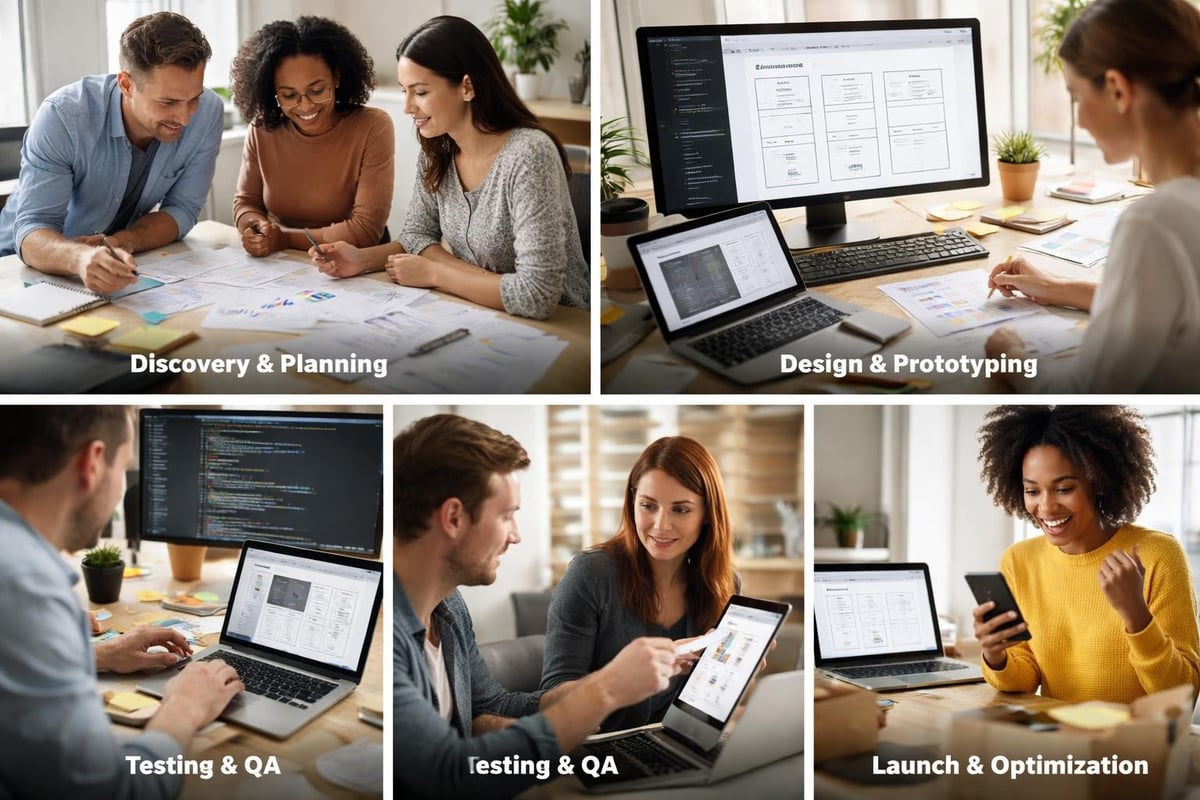
Discovery and Planning Phase
Professional agencies begin with comprehensive discovery, not immediate design. This phase establishes project scope, technical requirements, user needs, and business objectives. Skipping or rushing discovery leads to costly revisions later.
Essential discovery activities include:
- Business model analysis and revenue goals
- Target audience research and customer journey mapping
- Competitor analysis and market positioning
- Technical requirements documentation
- Content inventory and migration planning
- Integration requirements identification
For businesses migrating from other platforms, discovery must thoroughly audit existing functionality, data structures, and SEO assets. This ensures nothing critical gets lost during the transition.
Design and User Experience Development
Once strategy is defined, designers create the visual and interactive framework. Modern ecommerce design balances brand expression with conversion-focused layouts. Best practices in ecommerce web design emphasise mobile-first approaches, clear navigation hierarchies, and frictionless checkout experiences.
Design deliverables typically include:
- Wireframes showing layout structure and user flows
- Visual mockups representing final aesthetics
- Interactive prototypes for testing user journeys
- Design system documentation for consistent implementation
- Responsive variations for mobile, tablet, and desktop
Quality Shopify web design transforms these principles into working stores that reflect your brand whilst prioritising conversion and usability.
Development and Technical Implementation
Development brings designs to life with functional code, integrations, and backend configuration. This phase involves frontend development (what users see), backend development (how systems work), and integration of third-party services.
Critical development considerations:
- Clean, maintainable code following platform best practices
- Performance optimisation for fast loading across devices
- SEO-friendly URL structures and metadata implementation
- Accessibility compliance for inclusive shopping experiences
- Security best practices for payment and data protection
- Scalability to support business growth
Agencies offering custom Shopify development can extend platform functionality beyond standard templates, creating bespoke features that differentiate your store whilst maintaining platform stability and update compatibility.
Testing, Launch, and Post-Launch Support
Thorough testing prevents costly post-launch issues. Quality agencies test functionality across browsers, devices, and user scenarios before going live. They verify payment processing, inventory management, email notifications, and all customer-facing features.
Launch represents a beginning, not an endpoint. Ongoing support addresses issues, implements improvements, and adapts your store as your business evolves. When evaluating agencies through your ecommerce website development near me search, clarify what post-launch support includes and at what cost.
Cost Considerations for Local Ecommerce Development
Investment in professional ecommerce development varies significantly based on project scope, platform choice, customisation level, and agency expertise. Understanding cost drivers helps you budget appropriately and evaluate quotes.
Typical Investment Ranges
Basic ecommerce stores with standard features and minimal customisation typically require £5,000-£15,000 investment. These projects use existing templates with light modification, limited custom functionality, and straightforward integrations.
Mid-range projects with custom design, enhanced functionality, and professional implementation generally cost £15,000-£40,000. This tier includes bespoke design work, custom feature development, multiple integrations, and comprehensive launch support.
Enterprise-level stores with advanced functionality, extensive customisation, and complex integrations often exceed £40,000-£100,000+. These projects involve sophisticated architectures, custom applications, extensive third-party integrations, and ongoing development partnerships.
Project TypeInvestment RangeWhat's IncludedBest ForTemplate-Based£5,000-£15,000Customised template, basic setup, standard featuresNew businesses, limited budgets, simple product rangesCustom Build£15,000-£40,000Bespoke design, custom features, integrations, trainingGrowing brands, competitive markets, specific requirementsEnterprise£40,000-£100,000+Advanced functionality, complex integrations, ongoing partnershipEstablished brands, high volume, sophisticated needs
Remember that initial development represents only part of total cost. Factor in ongoing hosting, maintenance, apps, payment processing fees, and marketing investment when budgeting for ecommerce.
Evaluating Quotes from Local Agencies
When comparing proposals from ecommerce website development near me searches, look beyond headline prices. Cheap quotes often indicate corner-cutting, inexperienced developers, or hidden costs that emerge later. Expensive quotes aren't always better but may reflect deeper expertise or more comprehensive service.
Questions to ask when reviewing quotes:
- What exactly is included in the quoted price?
- Which features or integrations cost extra?
- What happens if requirements change during development?
- How is ongoing support structured and priced?
- What payment schedule applies throughout the project?
Transparent agencies provide detailed breakdowns showing what you're paying for. They explain their pricing rationale and help you prioritise features within your budget rather than simply quoting a figure.
Platform Selection: Shopify vs Alternatives
Your ecommerce platform choice fundamentally affects development approach, ongoing costs, and growth potential. When working with agencies found through ecommerce website development near me searches, platform recommendation should reflect your specific needs, not just agency preference.
Why Shopify Dominates UK Ecommerce
Shopify powers over 5 million stores globally, offering balance between functionality, ease of use, and scalability. For UK businesses, Shopify provides robust features without requiring extensive technical knowledge for day-to-day management.
Key Shopify advantages include:
- Intuitive interface for non-technical users
- Comprehensive app ecosystem for extended functionality
- Reliable hosting and security managed by Shopify
- Regular platform updates and new features
- Strong UK payment gateway support
- Scalable from startup to enterprise with Shopify Plus
Businesses setting up their first online store benefit from Shopify's structured approach, whilst growing brands appreciate the platform's ability to scale without requiring migration.
When to Consider Alternative Platforms
Whilst Shopify suits most ecommerce needs, specific scenarios favour alternatives. WooCommerce offers deeper WordPress integration for content-heavy sites. Magento provides extensive customisation for complex B2B requirements. BigCommerce delivers built-in features reducing app dependency.
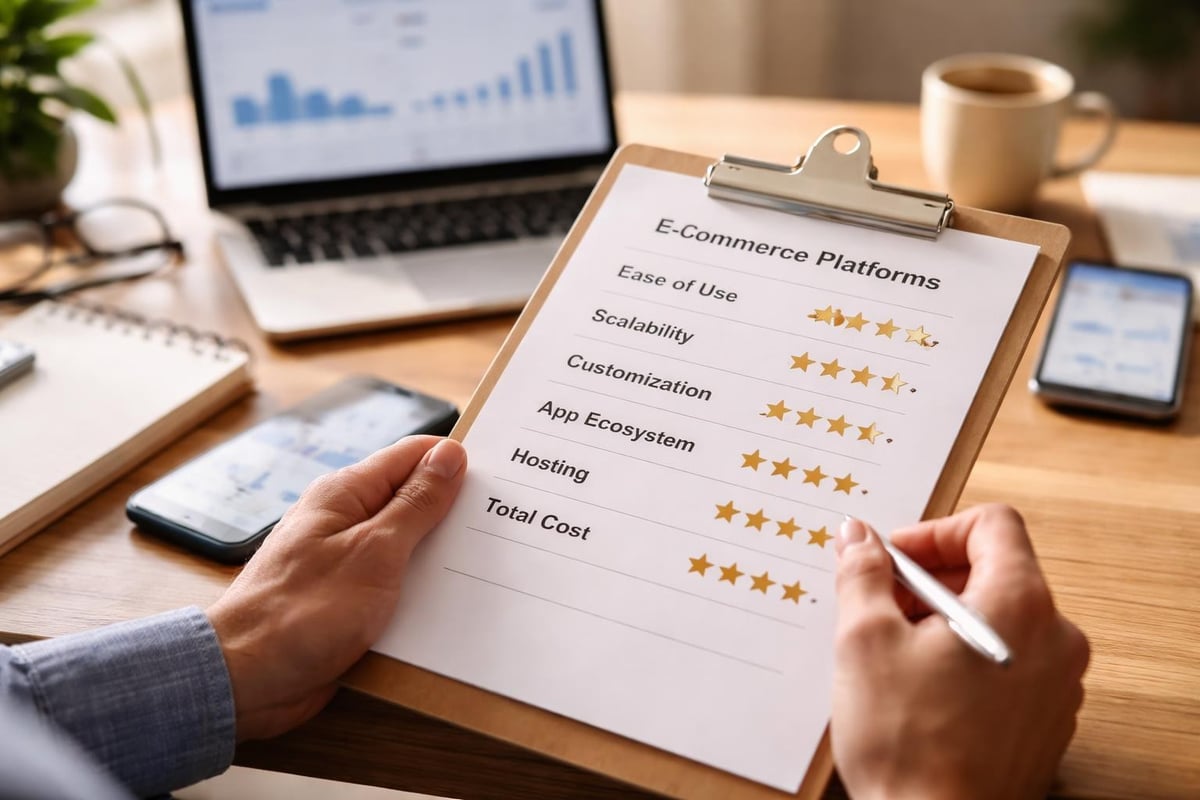
Guidance on choosing ecommerce platforms emphasises matching platform capabilities to business requirements rather than following trends. Discuss your specific needs with potential agencies to determine the optimal platform for your situation.
Local SEO and Marketing for Ecommerce Stores
Building a brilliant store means nothing if customers can't find it. Effective ecommerce combines technical excellence with strategic visibility. When working with local agencies, ensure they understand both development and digital marketing integration.
Building SEO into Development from Day One
SEO isn't an afterthought to apply post-launch. Professional development integrates search optimisation throughout the build process, creating foundations for organic visibility. SEO best practices for ecommerce include technical optimisation, content strategy, and structural decisions made during development.
Development-phase SEO priorities:
- Fast loading speeds through optimised code and images
- Mobile-responsive design meeting Google's mobile-first requirements
- Logical URL structures with descriptive, keyword-rich paths
- Proper heading hierarchies and semantic HTML markup
- Schema markup for rich search results
- XML sitemaps and robots.txt configuration
Agencies offering comprehensive Shopify SEO services build these foundations during development, then refine ongoing optimisation through content, link building, and technical improvements post-launch.
Integration with Broader Marketing Strategy
Your ecommerce store functions as the conversion hub within a broader marketing ecosystem. Development should facilitate integration with email marketing, social commerce, paid advertising, and content marketing initiatives.
Ensure your chosen agency through ecommerce website development near me searches understands how development supports marketing. This includes implementing tracking pixels, creating landing pages optimised for paid traffic, integrating email capture mechanisms, and building content management capabilities for ongoing SEO.
Questions to Ask Potential Development Partners
Structured questioning reveals agency capabilities beyond marketing materials. Prepare specific questions addressing your concerns and business context before initial consultations.
Technical and Process Questions
Understanding an agency's technical approach and project methodology helps predict the working relationship and final outcomes. Ask about their development process, quality assurance procedures, and how they handle challenges or changing requirements.
Essential technical questions include:
- Which platforms do you specialise in and why?
- How do you approach performance optimisation?
- What testing procedures do you follow before launch?
- How do you handle post-launch issues and support?
- Can you show examples of custom functionality you've built?
Request references from previous clients, particularly those with similar requirements. Speaking directly with past clients provides unfiltered insight into agency performance, communication, and results delivery.
Strategic and Commercial Questions
Beyond technical capability, assess whether agencies understand ecommerce as a business, not just a technical challenge. The best development partners think commercially, considering conversion rates, customer lifetime value, and return on investment alongside design aesthetics.
Ask how they approach conversion optimisation, what success metrics they track, and how they measure project success beyond launch. Agencies focused solely on delivery without considering performance miss opportunities to maximise your investment.
Working Successfully with Your Chosen Agency
Once you've selected a partner through your ecommerce website development near me search, project success depends on effective collaboration. Clear communication, defined responsibilities, and mutual accountability create conditions for excellent outcomes.
Setting Clear Expectations and Milestones
Well-defined project scope prevents misunderstandings and scope creep. Work with your agency to document detailed requirements, establish realistic timelines, and define success criteria for each project phase.
Critical project documentation includes:
- Comprehensive scope of work detailing all deliverables
- Timeline with specific milestones and decision points
- Communication protocols and response time expectations
- Change request procedures for scope modifications
- Acceptance criteria for each deliverable
- Post-launch support terms and conditions
Regular check-ins throughout development maintain alignment and catch issues early. Establish weekly or bi-weekly reviews where the agency presents progress and you provide feedback.
Providing Effective Feedback and Content
Development agencies need your input to create effective stores. Timely feedback, quality content, and decisive answers to questions keep projects moving forward. Delayed responses or unclear direction cause costly delays.
Prepare your content (product descriptions, images, brand materials) before development begins. Effective ecommerce website design relies on quality content as much as technical execution. Poor product photography or weak copy undermines even brilliant design and development.
The Value of Long-Term Agency Partnerships
Ecommerce success requires ongoing optimisation, not one-time builds. The most successful online retailers maintain long-term relationships with development partners who understand their business, customer base, and growth trajectory.
Continuous Improvement and Optimisation
Your store should evolve based on customer behaviour, market changes, and business growth. Regular updates, A/B testing, feature additions, and performance improvements drive incremental gains that compound over time.
Conversion rate optimisation through systematic testing and refinement often delivers higher returns than increased traffic. Long-term agency partners can implement structured testing programmes, analyse results, and continuously improve your store's performance.
Scaling Your Store as Your Business Grows
Initial launches rarely represent final form. As your business expands, your store must accommodate increased traffic, broader product ranges, additional markets, and enhanced functionality. Development partners who understand your journey can guide strategic evolution.
Consider case studies demonstrating long-term client relationships. Successful ecommerce projects often span years, with agencies supporting businesses from launch through substantial growth, adapting the store at each stage.
Finding the right ecommerce development partner through local searches requires looking beyond proximity to evaluate technical expertise, platform knowledge, and commercial understanding. The best agencies combine geographical convenience with proven capability, delivering stores that attract customers, facilitate seamless shopping experiences, and drive measurable business growth. If you're looking for a Shopify agency that understands both the technical and commercial sides of ecommerce, Futur Media specialises in building high-performing stores for ambitious UK brands. Based in Cardiff, we combine local partnership with deep Shopify expertise to help businesses launch, migrate, and optimise their online stores for long-term success.